

Blockchain technology is making waves across various industries, from finance to healthcare. But one sector where its potential is particularly transformative is energy. With its ability to enhance transparency, facilitate peer-to-peer transactions, and optimize energy distribution, blockchain is reshaping the way energy is produced, traded, and consumed.
In this article, we’ll explore how blockchain improves trust and transparency, enables peer-to-peer energy trading, integrates renewable energy sources, and optimizes energy distribution to reduce wastage. Whether you’re an energy consumer, investor, or policymaker, understanding blockchain’s impact on the energy sector is crucial.
What is Blockchain Technology?
Before we get into how blockchain technology affects the energy sector, let’s discuss what, exactly, it is first.
Blockchain technology is like a digital ledger that’s shared across a network of computers, making it secure, transparent, and unchangeable. Instead of relying on a central authority, it records transactions in a way that everyone can see, but no one can secretly alter. Each transaction gets verified by multiple participants, grouped into blocks, and linked together in a chain—hence the name blockchain. It’s the backbone of cryptocurrencies like Bitcoin, but it’s also being used in areas like finance, supply chains, and yes, energy, to improve security and efficiency. Think of it as a trustworthy digital record that keeps everything fair and fraud-proof without needing a middleman.
Enhancing Trust and Transparency in the Energy Sector
So how does blockchain impact the energy sector? In short, it makes the whole system more secure. The traditional energy market involves multiple stakeholders, from producers and grid operators to retailers and consumers. Each stage of the process requires record-keeping, verification, and trust—elements that blockchain can enhance dramatically.
Blockchain operates on a decentralized, immutable ledger, meaning that every transaction is securely recorded and easily verifiable. This eliminates fraud, manipulation, and human error, ensuring that data remains accurate and accessible to all relevant parties.
For instance, energy providers often struggle with certifying the authenticity of renewable energy sources. With blockchain, energy certificates such as Renewable Energy Certificates (RECs) or Guarantees of Origin (GOs) can be securely tracked and verified in real time. This ensures that consumers purchasing “green energy” are genuinely getting power from renewable sources.
Blockchain-based platforms have successfully implemented decentralized energy tracking systems, allowing consumers to verify the authenticity of their green energy purchases in real time. These systems ensure that RECs and carbon credits are securely recorded and transparently verified, enhancing trust in clean energy markets.
Moreover, blockchain eliminates intermediaries in energy trading, reducing administrative costs and ensuring fair pricing. This increased transparency builds trust among consumers and businesses, leading to a more open and efficient market.
Facilitating Peer-to-Peer (P2P) Energy Trading
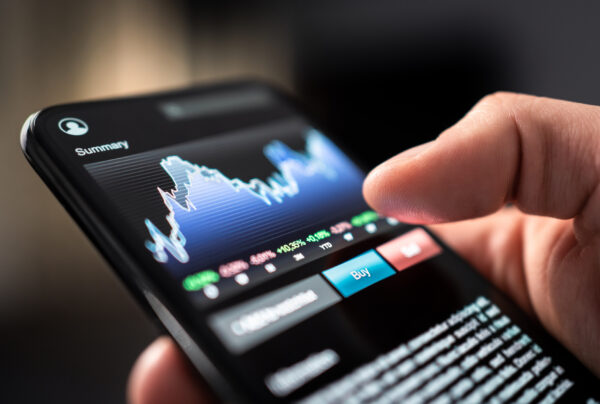
Stock market trade with phone. Finance analysis graph and chart in crypto currency, forex, index fund or etf mobile app. Stockmarket broker and investor holding smartphone in hand. Risk investing.
Image source: iStock by Getty Images | Tero Vesalainen
One of blockchain’s most exciting applications in the energy sector is peer-to-peer energy trading. Traditionally, electricity must flow through centralized grids controlled by utilities. However, with the rise of solar panels, battery storage, and microgrids, individuals can generate and store their own electricity.
Blockchain allows consumers, or “prosumers” (producers + consumers), to sell excess electricity directly to others in their community without relying on traditional energy providers.
How Does P2P Energy Trading Work?
- Smart meters record electricity production and consumption at each household or business.
- A blockchain-based marketplace allows participants to list their available energy for sale.
- Smart contracts automatically match buyers and sellers, ensuring fair pricing and instant transactions.
- Energy is delivered via local microgrids, reducing reliance on large-scale power plants.
Upsides of P2P Energy Trading
- Empowers prosumers: Homeowners and businesses that generate their own electricity through solar panels or wind turbines can sell excess energy directly to others, creating new revenue streams and encouraging investments in renewable energy.
- Lower energy costs: By cutting out middlemen and utility companies, P2P energy trading reduces transaction fees and overhead costs, allowing consumers to buy electricity at lower prices while still ensuring fair compensation for sellers.
- Decentralization increases energy security: Unlike centralized grids, which are vulnerable to outages or cyberattacks, P2P trading relies on local microgrids, making the system more resilient and less prone to blackouts.
- Automated and transparent transactions: Using blockchain-based smart contracts, P2P energy trading automates transactions and ensures fair pricing, secure payments, and transparency, reducing the risk of fraud or manipulation.
- Supports energy access in remote areas: In places with limited electricity infrastructure, P2P trading allows communities to generate and share power locally, reducing dependence on unstable central grids and increasing energy access.
- Flexibility and consumer choice: Consumers can choose their energy providers, selecting sources based on price, sustainability, or local availability, creating a more competitive and consumer-friendly electricity market.
Countries like Australia, Germany, and the Netherlands are already proving the effectiveness of blockchain-based P2P energy trading, showing that decentralized, community-driven energy networks can create cheaper, greener, and more resilient power systems.
Enter your ZIP Code and compare electricity rates
Downsides of P2P Energy Trading
- Regulatory and legal barriers: Many countries have strict energy regulations that require consumers to buy electricity from centralized utilities.
- High initial costs: Setting up a blockchain-based energy trading platform requires investment in smart meters, blockchain infrastructure, and secure network connections, which can be a barrier for small-scale users.
- Scalability challenges: Blockchain networks can face scalability issues, leading to slow transaction times and high fees.
- Energy storage limitations: P2P trading relies on immediate energy transactions, but excess energy needs storage for later use. Without affordable and efficient battery solutions, energy waste and instability can occur.
- Grid stability concerns: Traditional power grids are designed for centralized energy distribution. An increase in P2P transactions and microgrid usage could create challenges in balancing supply and demand, potentially affecting grid reliability.
- Cybersecurity risks: Since P2P trading relies on smart contracts and blockchain networks, it is vulnerable to hacking, fraud, and software bugs. If a security flaw exists, users could lose money or energy credits.
Despite these challenges, ongoing pilot projects in countries like Australia, Germany, and the Netherlands are working to refine blockchain-based P2P energy trading, aiming for a more decentralized and sustainable energy future.
How Blockchain Supports Renewable Energy Integration
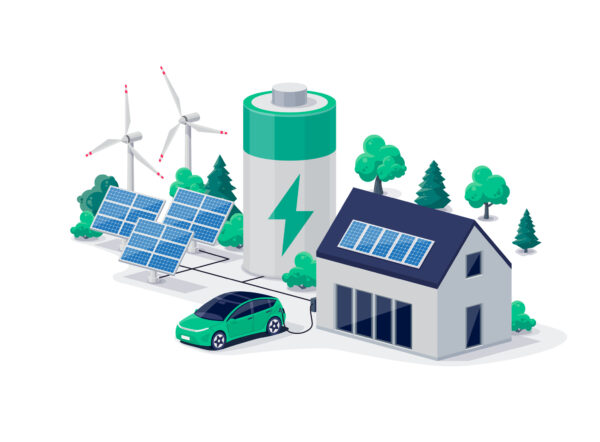
Home virtual battery energy storage with house photovoltaic solar panels plant, wind and rechargeable li-ion electricity backup. Electric car charging on renewable smart power island off-grid system.
Image source: iStock by Getty Images | petovarga
The transition to renewable energy is essential for reducing carbon emissions, but it comes with challenges such as intermittent energy supply, storage limitations, and inefficient distribution networks. Blockchain provides a decentralized, transparent, and automated solution that can help manage these challenges, ensuring that renewable energy sources are effectively integrated into the power grid.
Automated Energy Distribution
Renewable energy production is often inconsistent, as solar and wind power generation fluctuate depending on weather conditions. This variability makes it difficult to ensure a stable energy supply without effective distribution mechanisms. Blockchain-powered smart contracts enable real-time energy distribution by automatically matching supply with demand at any given moment.
Through decentralized energy networks, excess renewable energy generated in one location can be redirected to areas experiencing higher demand. Microgrid systems that incorporate blockchain can facilitate this by allowing neighborhoods or entire communities to share energy locally, reducing dependence on traditional utility providers. This results in less energy waste, greater energy efficiency, and reduced reliance on fossil fuels during peak demand periods.
Improved Grid Management and Stability
A major issue with integrating renewable energy into existing power grids is balancing supply and demand efficiently. Traditional grids are often designed for centralized power generation, making it difficult to incorporate distributed energy sources like wind farms, rooftop solar panels, and battery storage systems.
Blockchain helps by tracking real-time energy flow and enabling predictive analytics to forecast energy demand. With the integration of smart meters and internet of things (IoT) devices, blockchain-based systems can monitor fluctuations in electricity generation and consumption. This real-time data allows grid operators to make faster, more informed decisions on energy distribution, reducing the risk of power shortages or grid overloads.
Energy Certification and Green Energy Tracking
Many governments and companies rely on renewable energy certificates (RECs) and guarantees of origin (GOs) to verify clean energy usage. These certificates prove that a certain amount of electricity was generated from renewable sources, but traditional tracking methods can be inefficient and prone to fraud. Blockchain simplifies the process by making REC issuance and verification instant, transparent, and tamper-proof.
Blockchain also allows for automated compliance with renewable energy mandates and corporate sustainability commitments. Large corporations can use blockchain to track and verify their renewable energy purchases in real time, ensuring that their environmental impact reports are accurate. In the European Union, blockchain projects are being developed to streamline the certification and trading of renewable energy credits across multiple countries.
Blockchain and Energy Storage Solutions
As energy storage technology advances, blockchain is playing an increasing role in optimizing its use. Blockchain enables more efficient energy storage management by allowing stored electricity to be traded when demand is high.
Blockchain enables efficient energy storage management by allowing surplus renewable energy to be stored and automatically sold when demand spikes, ensuring better grid balance and reducing reliance on fossil fuels during peak hours.
Through smart contracts, energy stored in batteries can be sold automatically at optimal prices, maximizing financial returns for producers and stabilizing the energy supply. This is particularly useful in regions with high solar penetration, where excess daytime energy generation can be stored and redistributed during nighttime hours.
As blockchain adoption grows, its role in renewable energy integration will continue to expand, offering solutions that enhance grid stability, reduce waste, and create new opportunities for decentralized energy markets.
Optimizing Energy Distribution and Reducing Wastage
A major challenge in traditional energy systems is inefficiency. On average, 5-10% of electricity is lost during transmission and distribution due to outdated infrastructure and lack of real-time monitoring.
Blockchain helps optimize energy distribution by:
- Reducing transmission losses: Smart contracts can automatically redirect electricity to areas where demand is high, preventing overloads and inefficiencies.
- Enhancing grid resilience: Decentralized, blockchain-powered microgrids can operate independently, ensuring that power outages in one area don’t disrupt the entire network.
- Encouraging demand response programs: Blockchain enables real-time tracking of energy prices and usage, allowing consumers to adjust consumption when electricity is cheaper.
The Future of Blockchain in Energy
As blockchain technology matures, its applications in the energy sector will expand beyond initial pilot programs and niche implementations. Governments, energy companies, and technology providers are increasingly recognizing blockchain as a key enabler of decentralized, transparent, and efficient energy systems. The coming years will likely see blockchain move from experimentation to full-scale deployment, transforming energy markets, infrastructure, and consumer participation.
References
- https://justenergy.com/blog/energy-blockchain-technology/
- https://www.nexans.com/perspective/blockchain-transparency-and-trust-securing-the-future-of-electrification/?utm_source=chatgpt.com
- https://www.researchgate.net/publication/353154458_Blockchain-enabled_Peer-to-Peer_energy_trading?utm_source=chatgpt.com
- https://justenergy.com/blog/smart-meters-change-energy-industry/
- https://www.un.org/en/climatechange/what-you-can-do/decentralized-renewable-energy
- https://ieeexplore.ieee.org/document/7504022
- https://www.epa.gov/greenpower/renewable-energy-certificates-recs
- https://ec.europa.eu/energy/
- https://www.mdpi.com/2071-1050/15/18/13640?utm_source=chatgpt.com
Brought to you by energysavings.com
All images licensed from Adobe Stock.