

Imagine it’s a scorching August afternoon in Texas. Your air conditioner hums on full blast, the fridge is stocked, and your electric car is charging in the garage.
Then, the light flickers. The house goes dark.
You look outside the window and see it’s not just you; it’s the whole neighborhood. What you don’t know while peeking through the curtains is that it’s actually the majority of Texas.
This scenario is an urgent concern for the Lone Star State, whose power consumption has skyrocketed and is projected to nearly double by 2030.[1] Here are the challenges, projections, and solutions shaping Texas’ energy future.
What’s Causing Texas’ Strained Power Grid?
Exploding population growth, AI, and cryptocurrency are just a few factors driving Texas’ energy strain on its power infrastructure. Let’s take a closer look at these items and more.
The Data Center Boom
Texas is a hub for data centers, which are buildings that house computer systems, networking equipment, and storage needed to process, store, and manage digital data. These centers allow us to store data on the cloud and use artificial intelligence (AI) to answer questions or create better products and software.
This issue is that these data centers need a lot of electricity to work and keep servers cool. The growth of AI has caused energy demands to soar.[2] Their high energy usage is increasingly problematic on Texas’ electric grid, especially because of how rapidly new data centers are being added.
Cryptocurrency Mining
Texas’ low priced electricity and deregulated energy market make it popular for cryptocurrency mining operations. These facilities use high-powered computers to solve complex math problems that verify financial transactions on blockchain networks.[3] The verification process requires extreme computing power and electricity.
Exploding Population Growth
Texas is the fastest-growing U.S. state, with 562,941 new residents in 2024.[4] Its total population is over 31 million, second only to California. More people mean more homes, businesses, and industrial facilities, all needing electricity.
The Rise of Electric Vehicles (EVs)
While electric cars are a solution to Earth’s environmental problems, they’re causing challenges to Texas’ power grid as an increasing number of cars plug in to recharge. ERCOT predicts that by 2029, electric vehicles will add 1.36% of the electric load to ERCOT’s electric load forecast.[5]
Extreme Weather Events
In 2021, a string of devastating winter storms caused widespread blackouts in Texas, exposing the state’s vulnerable power system. While there have been no widespread blackouts since, the state’s record-breaking summer highs continue to stress the grid as people try to stay cool.
These extreme weather events were once just blips, but their increasing frequency makes them a pattern. This underscores the need to make the grid more resilient to higher energy demands.
Failures from extreme weather events also highlight Texas’ need to update its equipment to handle colder temperatures. While Texas’ generating and transmitting equipment work through scorching temperatures, they weren’t built to handle freezing temperatures, as winter storms in 2021 taught the state.
Enter your ZIP Code and compare electricity rates
What is the Electric Reliability Council of Texas (ERCOT)?
ERCOT manages Texas’ electricity grid and oversees 90% of the state’s power needs. Texas is the only state with its own electric grid. All other states work off of two main grids, the Eastern Interconnection and the Western Interconnection.
One of ERCOT’s main jobs is to make sure there’s a balance between electricity supply and demand. It also manages the state’s wholesale electricity market–the system where electricity is bought and sold in bulk before it reaches residents.
Unlike the two other U.S. grids, ERCOT can’t import electricity from neighboring states when there’s an electricity shortage. The state’s unique grid structure makes accurate energy forecasting and grid management especially crucial for Texas.
How does ERCOT Manage the Grid?
ERCOT plays a crucial role in keeping the Lone Star state lit. Some of its primary tasks are to:
- Adjust electrical supply in real-time to meet the state’s energy demands at any point in the day or week.
- Coordinate power generation and transmission across the state and direct energy when needed so that all homes can access as much power as they require.
- Oversee the wholesale electricity market by buying and selling energy in bulk before it reaches consumers.
- Work with power plants and energy transmission companies to keep the grid stable.
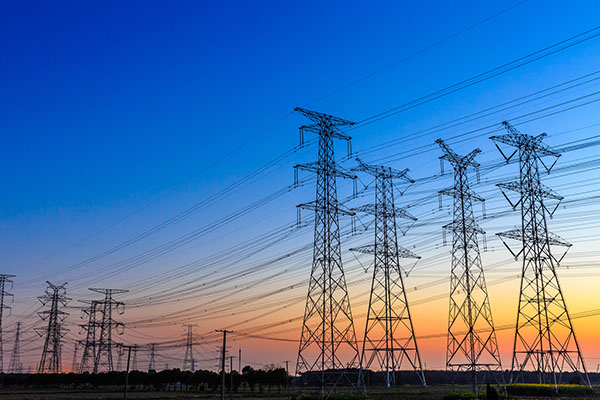
high voltage post,High voltage tower sky sunset background
Image source: iStock by Getty Images | zhaojiankang
How Does ERCOT Forecast Energy Demand?
There are three forecasting models that ERCOT uses: short-term, medium-term, and long-term.[6]
- Short-term forecasting: Predicts energy needs over the next few hours to days. Allows for real-time grid adjustments.
- Medium-term forecasting: Predicts energy needs over the next few months to several years. Allows for planning seasonal energy use, especially during peak seasons of summer and winter.
- Long-term forecasting: Predicts energy demands years into the future to prepare for future power use.
These forecasts consider multiple data points, including weather, economic growth, and available energy usage data.
Will Texas Have Enough Power in the Future?
Texas will have enough power in the future if it takes the proper steps now to ensure it can meet future demands. ERCOT warns that Texas could be 8% short in energy needs as early as 2027, with the deficit possibly reaching 32.4% by 2029 if the state doesn’t increase its capacity to generate energy.[7] ERCOT also estimates that by 2030, Texas will use almost twice as much energy as it does today.[1]
Failing to address the energy deficits could disrupt life and the economy in various ways, including:
- Putting public safety at risk
- Leaving millions of residents vulnerable to heatwaves and freezes
- Increasing costs for consumers as manufacturers cut production
- Making Texas a less attractive state to have a business
If Texas doesn’t proactively invest in its grid reliability, it risks repeating the devastating outages of past years, but on a much larger scale.
What’s Texas Doing to Address Future Energy Demands?
Texas officials are working to expand power generation and improve grid reliability so that the state can meet future energy demands.
At the State Level
For the near future, Governor Abbott has introduced several policies and initiatives to bolster Texas’ power grid, including:[8]
- Adding 7,300 megawatts (MW) to the total amount of electricity Texas’ power sources can produce at any given time.
- Doubling the amount of battery storage on the grid by April 2025 for more reliable energy.
- Establishing the Texas Energy Fund to finance new energy projects and encourage innovative solutions for Texas’ future energy demands.
Moreover, House Bill 5066, passed in 2023, states that Texas must invest more in dispatchable power sources, such as natural gas plants and battery storage. The bill emphasizes these power sources because they can quickly generate electricity when demand spikes.
ERCOT is also excited about House Bill 5066 because it will help usher the state into ERCOT’s New Era of Planning. The bill provides funding and state support to modernize Texas’ electric grid, better positioning ERCOT to achieve its long-term planning efforts to meet its forecasts.
At the Homeowner Level
For Texans wanting to support renewable energy growth, Just Energy’s green energy products provide a way. Our JustGreen Power buys Renewable Energy Credits on your behalf. These credits guarantee that 100% of your home’s power comes from wind, solar, and hydropower sources.
Just Energy’s JustGreen Natural Gas is another product that can help. We offset up to 100% of your home’s carbon emissions through it.
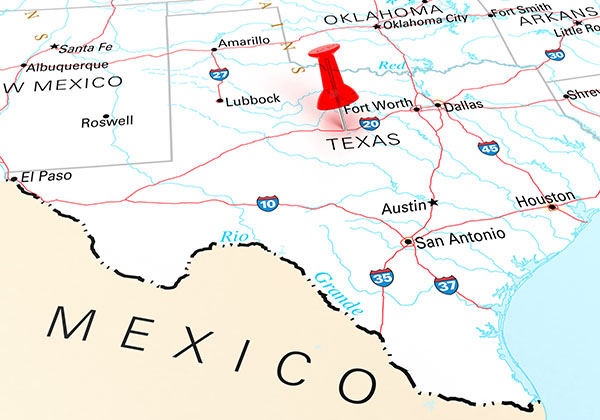
Red Thumbtack Over Texas State USA Map. 3D rendering
Image source: iStock by Getty Images | klenger
How Will Texas Balance Renewable Energy Expansion with Reliable Power Sources?
Texas is already a national leader in wind and solar energy production. Since 2010, its adaptation of these power sources has saved the state $31.5 billion.[9]
ERCOT’s New Era of Planning aims to update the state’s energy infrastructure.[10] The goal is to increase Texas’ renewable energy sources to meet the state’s need for stable power generation that flexes in unison with Texas’ growing energy needs.
Challenges to Consider
While these near- and long-term plans are exciting, they can only happen if Texas upgrades its electric grid and storage systems. Doing so would store renewable energy more efficiently and make it available as needed. However, because of the state’s current electrical infrastructure limitations, some of the added renewable power could be wasted without these improvements.
The Road Ahead: Powering Texas’ Future
Texas’ rapid growth and skyrocketing energy needs are forcing the government to rethink how it will meet future energy demands. The state plans to update its grid system, modernize energy storage systems, and create a balanced mix of fossil fuel and renewable power sources. Meeting Texas’ future power needs is within reach, but only if the state follows through on its plans and we do our part to support renewable energy.
Just Energy is here with green energy plans that can offset your home’s carbon emissions or make sure that all the power your house uses is from renewable energy sources. We also support renewable energy credits (RECs) and have bought over 25 million MWh of renewable energy certificates.
Sources:
- Comptroller.Texas.gov. “The future of Texas power.” September 2024. https://comptroller.texas.gov/economy/fiscal-notes/industry/2024/energy-demand/
- Goldman Sachs. “AI is poised to drive 160% increase in data center power demand.” May 14, 2024. https://www.goldmansachs.com/insights/articles/AI-poised-to-drive-160-increase-in-power-demand
- Library of Congress. “Cryptocurrency & Blockchain Technology.” Accessed February 23, 2025. https://guides.loc.gov/fintech/21st-century/cryptocurrency-blockchain
- United States Census Bureau. “Net International Migration Drives Highest U.S. Population Growth in Decades.” December 19, 2024. https://www.census.gov/newsroom/press-releases/2024/population-estimates-international-migration.html
- ERCOT. “ERCOT EV Allocation Study.” August 16, 2023. https://www.ercot.com/files/docs/2023/08/28/ERCOT-EV-Adoption-Final-Report.pdf
- ERCOT. “Item 7: Board Education – Load Forecasting.” June 18, 2024. https://www.ercot.com/files/docs/2024/06/11/7%20Board%20Education%20%E2%80%93%20Load%20Forecasting.pdf
- ERCOT. “Report on the Capacity, Demand and Reserves (CDR) in the ERCOT Region, 2025-2029.” February 13, 2025. https://www.ercot.com/files/docs/2025/02/12/CapacityDemandandReservesReport_December2024.pdf
- Texas Economic Development Corporation. “Texas Seeks to Boost Power Grid.” February 12, 2025. https://businessintexas.com/business-growth-and-expansion/texas-seeks-to-boost-power-grid/
- Comptroller.Texas.gov. “Texas Comptroller Energy Tour: Wind Energy Overview.” Accessed February 23, 2025. https://comptroller.texas.gov/economy/economic-data/energy/2023/wind.php
- ERCOT. “ERCOT Enters New Era of Planning to Meet Future Economic Growth.” April 23, 2024. https://www.ercot.com/news/release/2024-04-23-ercot-enters-new
Brought to you by energysavings.com
All images licensed from Adobe Stock.