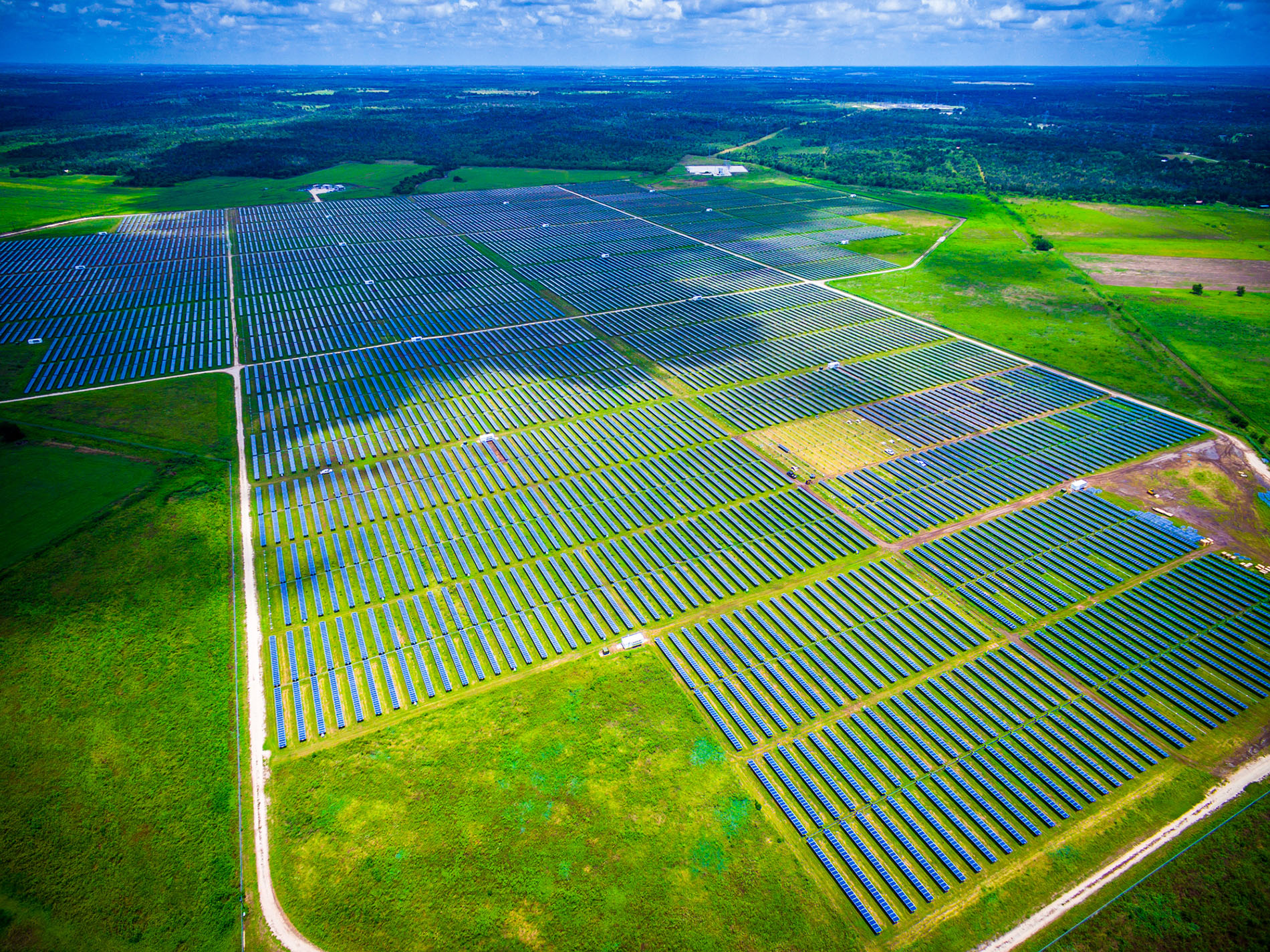
Solar panels cost about $3 per watt installed, bringing the average 7,000-watt system to $21,000.[1] While tax incentives can bring the price down, it can be years before you see a full return on investment. Solar Energy as a Service (SEaaS) is an alternative that allows you to benefit from solar energy without upfront costs or maintenance hassles. Below, we explore how SEaaS does this and whether it’s right for you.
In SEaaS, you pay for your electricity through a subscription, lease, or power purchase agreement (PPA), while a third-party provider or developer owns, installs, and maintains the system. The name has its roots in the software-as-a-service (SaaS) subscription model, in which tech companies let people use their software for a monthly fee instead of buying and owning the product outright.
How Does Solar Energy as a Service Work?
While there are various SEaaS models, you generally sign an agreement, have the panels installed, and pay for the generated solar power. Here’s a closer look at the process:
1. You Sign the Agreement
You choose the type of SEaaS you want and select an SEaaS provider to work with. The agreements can last up to 25 years or more and allow you to renew, buy, or remove the system at the end of the term.
Make sure to ask about costs and fees, such as early termination, sign-up, or other fees, and whether these fees change over time.
2. Provider Installs the Solar Panels
After the contract is signed, the provider installs the solar panels on your home or property. In community solar models, you subscribe to an off-site solar farm instead of having the panels installed on your property.
3. Provider Cares for the Panels
The nice thing about SEaaS is that you do no maintenance on the panels. The provider is responsible for it and any related costs.
4. You Pay for Solar Power
Since you don’t own the panels, you have to pay for the electricity it generates. Payment models vary by SEaaS but may involve fixed or variable kWh rates, monthly fees, or bill credits.
5. You Save on Electricity Bills
Regardless of the SEaaS model you choose, the end goal is to save more money on your electric bill than if you didn’t have solar panels. You may find that you pay less per kWh than what your local utility company offers or benefit from fixed rates that shield you from rising energy costs.
Many SEaaS contracts include an escalator clause allowing for small annual price increases, but your rates are generally less than local utility prices.
6. You Decide What to Do When The Contract Ends
Once your contract ends, you generally can renew it, buy the solar panels at fair market value, or have the providers remove them at no cost.
If your panels are part of a community solar farm, your options are more flexible. Besides renewing or canceling the contract, you may be able to adjust your subscribed share on the solar farm, enroll in a new program the provider offers, transfer the subscription to another eligible person, and more.
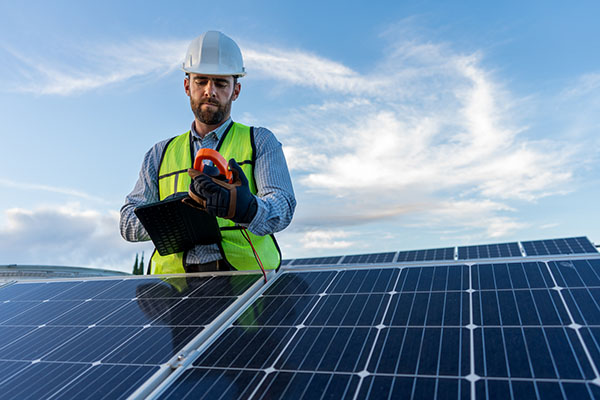
engineer technician checking output voltage level of inverter, electrician measuring power on solar panels
Image source: iStock by Getty Images | Alan Mazzocco
What are the Types of Solar Energy as a Service?
There are six main types of SEaaS models: power purchase agreements, solar leases, community solar subscriptions, solar-as-a-service subscriptions, solar rentals, and virtual power plant (VPP) participation.
Here’s a chart showing how they compare:
| SEaaS Model | How It Works | Payment Structure | Ownership and Maintenance | Best For |
| Power Purchase Agreement (PPA) | You pay per kWh of electricity your panels produce. | Per kWh pricing (variable or fixed) | Provider owns and maintains the system | Homeowners & businesses wanting lower electricity costs with no upfront investment |
| Solar Lease | You pay a fixed monthly fee to use the solar system in a long-term contract. | Fixed monthly payment | Provider owns and maintains the system | Homeowners preferring predictable payments instead of per kWh pricing |
| Community Solar Subscription | You subscribe to an off-site solar farm, receiving bill credits for solar energy. | Monthly subscription or bill credits | Provider owns and maintains the shared solar farm | Renters, homeowners, and businesses who can’t install solar but want solar savings |
| Solar-as-a-Service Subscription | You pay a subscription fee to access solar power from panels on your home or a solar farm. The contract length is usually more flexible than leases. | Monthly or annual subscription | Provider owns the infrastructure | Customers wanting flexible, off-site solar access with a subscription model |
| Solar Rental | You lease solar panels, typically for a few months to years. | Short-term rental fees | Provider owns and maintains the system | Short-term solar users needing temporary access to renewable energy |
| Virtual Power Plant (VPP) Participation | You sell the excess energy your panels generate back to the grid. A solar battery is often needed to store this energy and allow operators to dispatch to the grid. | Earnings on excess energy based on market rates and grid demand. | You own and maintain the system, but the provider manages the energy distribution | Homeowners & businesses with battery storage looking to sell excess energy |
How Much Can You Save with Solar Energy as a Service?
PPAs may provide the best savings, while solar rentals may have the lowest. Your savings depend on local electricity rates, contract terms, SEaaS model, and solar panel energy production. The efficiency of your panels is also an essential factor.
Here’s a general idea of how SEaaS models compare when it comes to savings.
- Purchase power agreements: Have no upfront cost, pay-as-you-go pricing usually lower than your area’s utility prices, and low or fixed escalation rates that can save you money if local utility rates rise faster than your escalation rates.
- Solar lease: Offers predictable payments, but that also means you don’t pay less if your solar panel produces more energy than needed.
- Community solar: Some community solar initiatives can save people at least 20% on their electric bills.[2] Others offer a guaranteed savings rate, such as 10%.[3]
- Solar-as-a-service and solar rental: Unlike PPAs, you pay a flat rental fee instead of per-kWh pricing. Rental companies also profit from the fixed fee, not the energy sold. So, there’s less of an incentive to maximize your solar production and savings.
- Virtual power plant participation: How much you earn with this model depends on your contract terms and your area’s grid demand.
Enter your ZIP Code and compare electricity rates
An Example of Savings with SEaaS
Let’s say you have a PPA agreement, and the developer charges you $0.10 per solar kWh of electricity used. Your utility company used to charge you $0.13 per kWh of traditional electricity.
The average Texas home uses 1,146 kWh per month.[4] So, let’s assume that in the first month of the agreement, your household consumes the exact amount of energy your panels produced–1,100 kWh.
Because you generated all the energy your home consumed, your bill with the local electric company would have been $0. If you hadn’t installed the panels, you would have paid $143 ($0.13 x 1,100 kWh) for the energy used. So, going solar saves you $143.
But since you have a PPA, you still have to pay the solar developer $0.10 per solar kWh of electricity that your household uses. Since your home used 1,100 kWh of solar energy, you pay your PPA provider $110 for your solar PPA bill.
Your actual savings for the month from going solar are $33 ($143-$110).
Just Energy Solar Buyback Program
Just Energy offers an Excess Generation Buy Back Program. It purchases your solar panels’ excess energy at a set rate. You receive the money as a bill credit, with unused credits rolling over to the next month.

confusion choice chaos concept
Image source: iStock by Getty Images | mirsad sarajlic
Who is SEaaS a good fit for?
Solar energy as a service might be a good fit if you don’t qualify for federal solar power tax credits, Solar Renewable Energy Certificates (SRECs), or solar loans that can make solar panels more affordable. SEaaS may also be beneficial for:
- Homeowners wanting solar without the $15,000 to $56,000 upfront costs (before any tax credits).[5]
- Renters or homeowners who can’t install solar panels.
- Anyone wanting lower electricity bills without the hassle and expense of maintaining solar equipment.
- People planning to move in five years or less.
- Homeowners in states with limited to no solar incentives
Making Solar Simple with SEaaS
Solar Energy as a Service is a way to jump into solar power for your home without the upfront costs or maintenance of owning it. With a PPA, lease, or subscription, homeowners and businesses can lower their electric bills and support renewable energy.
If you can’t install solar panels or don’t qualify for tax credits, community solar programs are another way you can benefit from solar energy. If you do own your panels, buyback programs like Just Energy’s help you save more.
As solar energy becomes more popular, SEaaS is a practical choice to reduce energy expenses without the responsibility and high startup costs of owning a system. See our energy plans today to get started.
Sources
- U.S. Department of Energy. “Residential Renewable Energy.” Accessed February 25, 2025. https://www.energy.gov/energysaver/residential-renewable-energy
- U.S. Department of Energy. “Community Solar Basics.” Accessed February 25, 2025. https://www.energy.gov/eere/solar/community-solar-basics
- ClearPath Energy. “Guide to Community Solar Billing: Bill Breakdown.” May 23, 2022. https://www.clearpath.energy/blog/guide-to-community-solar-billing-bill-breakdown
- EIA. “2023 Average Monthly Bill- Residential.” Accessed February 25, 2025. https://www.eia.gov/electricity/sales_revenue_price/pdf/table_5A.pdf
- HomeAdvisor. “How Much Are Solar Panel Prices?” Accessed February 23, 2025. https://www.homeadvisor.com/cost/energy-efficiency/solar-panel-prices/
Brought to you by energysavings.com
All images licensed from Adobe Stock.