
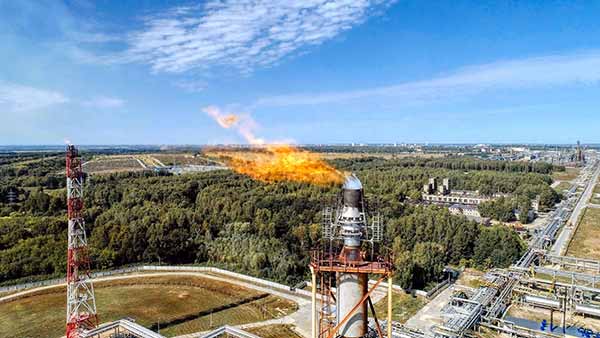
A three-year aerial survey of the Permian Basin has shown that just 30 oil and gas facilities produce the same climate pollution as about half a million automobiles.
Carbon Mapper and Environmental Defense Fund used remote sensing technology to monitor pipelines, processing stations, well pads, and compressor stations in the Texas and New Mexico area.
They found that significant but short leakages from 30 facilities pumped 100,000 metric tons of methane into the atmosphere every year. These so-called “super-emitters” make up just 0.001% of the Permian Basin’s oil and gas infrastructure.
Methane is a relatively short-lived gas but is very efficient at trapping radiation. Over 100 years, methane’s climate change impact, pound-for-pound, is up to 25 times higher than carbon dioxide emissions over a 100 year period.
What Did the Survey Find About Methane Leakages?
The flights detected more than 1,100 methane emitters across the Permian Basin. Collectively, these 30 facilities accounted for around half of the basin’s methane emissions.
The high-resolution data pinpointed leaks to within a few meters. Gathering pipelines contributed a fifth of the methane leaks. Gathering pipelines transport gases and liquids from their source to a refinery, processing facility, or transmission line.
Only 3% of 435,000 miles of U.S. onshore gathering pipelines are currently checked to see if they adhere to Pipeline and Hazardous Materials Safety Administration (PHMSA) standards. Another 5% of gathering pipelines — 20,336 miles — may be added to PHMSA’s oversight remit in May.
Most leaks were large but short in duration, and some were close to urban populations. The 30 super-emitters wasted around $26 million in methane gas through leaks. Riley Duren, chief executive officer for Carbon Mapper and research scientist at the University of Arizona, thinks the results make industry monitoring essential.
He said, “every molecule matters. The fact that some facilities are persistently leaking methane for years without detection or repair highlights the urgent need for comprehensive and transparent methane monitoring.”
What Can Industry Do to Address the Issue?
The Environmental Protection Agency and the New Mexico Environment Department (NMED) could soon introduce rules that require regular leak monitoring at most oil and gas processing facilities. Further proposed legislation may address flaring and issues for smaller wells, too.
In 2019, methane was responsible for 10% of U.S. greenhouse gas emissions, compared to 80% coming from carbon dioxide. This figure is targeted for reduction — the United States is one of more than 100 countries that have signed up to cut methane emissions by 30% by 2030 as part of a Global Methane Pledge.
How Did the Study Measure Methane Leaks?
Carbon Mapper is a non-profit organization that provides utility-scale data to help mitigate and reduce greenhouse gas emissions. Its work focuses on methane and carbon dioxide monitoring systems. The Environmental Defense Fund, also a non-profit organization, works on solutions to environmental problems.
Together, they spearheaded a team to lead the three-year project. The Carbon Mapper research team collected data using Arizona State University’s Global Airborne Observatory and the Jet Propulsion Laboratory’s Airborne Visible-Infrared Imaging Spectrometer – Next Generation (AVIRIS-NG).
Flights, funded by NASA, the University of Arizona, RMI, and EDF, crisscrossed the area from 2019 to 2021. The results are available online through PermianMAP and Carbon Mapper’s Data Portal.
Methane monitoring will go global in 2023, thanks to the launch of a new generation of satellites. MethaneSAT and the Carbon Mapper constellation will record the findings.
Leaky Infrastructure Not Helping Greenhouse Gas Emissions
Maximizing energy resources by reducing waste is one of many strategies that can help nations reduce their greenhouse gas emissions. However, the lack of legislation and monitoring of oil and gas infrastructures means many harmful methane leaks have gone undetected and unaddressed for decades.
A successful launch of Carbon Mapper’s satellites could create a game-changing global observation network. The more observations and unbiased data, the better. Governments and industries could then make data-driven regulations to reduce leaks that ultimately benefit both the environment and the bottom line.
Opinion writer: Tom Shearman
The opinions, beliefs, and viewpoints expressed by the various authors do not necessarily reflect the opinions, beliefs, or viewpoints of Interactive Energy Group, LLC (IEG) or its parent companies or affiliates and may have been created by a third party contracted by IEG. Any content provided by the bloggers or authors are of their opinion and are not intended to malign any individual, organization, company, group, or anyone or anything.
Brought to you by energysavings.com
All images licensed from Adobe Stock.
Featured Image