
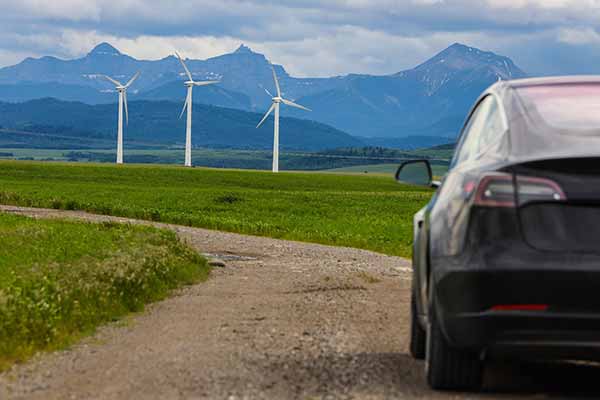
A group of U.S. utilities is working together to create a coast-to-coast fast-charging network for electric vehicles (EVs) by 2023.
The National Electric Highway Coalition (NEHC) will unite more than 50 investor-owned electric companies. It aims to give electric vehicle drivers the confidence to undertake longer journeys.
The collaboration, brought together by the Electric Edison Institute (EEI), will see more than $3 billion invested in improving infrastructure and access to fast-charge points.
Initial work will add charging points along major U.S. travel corridors to help make the transition to EVs as seamless as possible. The EEI then expects to see 100,000 fast charging points in place by 2030 to power an anticipated 22 million EVs on the road by decade end. That’s ten times as many charge points as there are today.
The Power of Unified Route Planning
The NEHC coalition draws on members across the country, serving more than 120 million electric customers across 47 states and the District of Columbia. Each will offer a tailor-made contribution to the coast-to-coast charging network, including extending high-voltage connections or installing new charging locations.
Journeys open to EV drivers include Seattle to Portland, Los Angeles to Miami, San Francisco to New York, and many more. Roads with chargers will crisscross the country, passing close to Denver, Dallas, Nashville, Salt Lake City, and many more.
According to the EEI, drivers should also feel the benefit in their pockets. Based on average residential electric rates, electric vehicles run at about $1.20 per gallon, half the cost of combustion engine automobiles.
EV Sales Expected to Rise Quickly This Decade
More than10 million electric cars are on the world’s roads after a record three million EV sales in 2020. In contrast, gas-powered car sales fell 12.6% globally last year, albeit the global pandemic hit figures harder than forecasted.
The EEI expects 27% of U.S. light-duty vehicle sales to be electric vehicles by 2030. Many big automakers have committed to boosting their EV manufacturing, including General Motors, Ford, and Stellantis (formerly Fiat-Chrysler).
California is at the forefront of the United States’ switch to electric vehicles, with some 600,000 electric and plug-in hybrid vehicles registered by the end of 2019.
Cheaper Batteries Could Further Boost EV Sales
While electric vehicles become more popular and desirable, the price of the lithium-ion batteries needed to run them has continued to drop.
A BloombergNEF study found that, in 2010, it cost $1,200 per kilowatt-hour (kWh) for the production of lithium-ion batteries. By 2020, that had fallen to $140 per kWh, while 2021’s costs have reduced to $132 per kWh, an 89% teal-term drop in 11 years.
The BNEF predicts that once battery production costs hit $100 per kWh, EV manufacturing costs will equal combustion engine vehicle costs. That should lead to similar if not better profit margins for making electric cars, increasing pressure on manufacturers to ditch combustion engines. Renault and Ford have targeted battery production costs of $80 per kWh.
A Powerful Message About Electric Vehicles
The transition from light-duty combustion vehicles to electric vehicles is integral to the United States’ plan to achieve net-zero emissions by 2050.
In 2019, transport accounted for 29% of the country’s total CO2 emissions, and light-duty vehicles some 58% of the transport sector’s emissions. That means almost 17% of U.S. emissions came from light-duty vehicles.
It’s also apparent America’s love affair with the automobile is unlikely to end soon. But all the signs are that a turning point is looming on the horizon, one where consumer demand for EVs pushes electric vehicles from niche products to mainstream adoption.
The dream of the open road remains compelling to many. By combining EV driving freedom with the emblematic coast-to-coast route, the National Electric Highway Coalition may provide the spark that captures the nation’s motoring imagination.
Opinion writer: Tom Shearman
The opinions, beliefs, and viewpoints expressed by the various authors do not necessarily reflect the opinions, beliefs, or viewpoints of Interactive Energy Group, LLC (IEG) or its parent companies or affiliates and may have been created by a third party contracted by IEG. Any content provided by the bloggers or authors are of their opinion and are not intended to malign any individual, organization, company, group, or anyone or anything.
Brought to you by energysavings.com
All images licensed from Adobe Stock.
Featured Image