
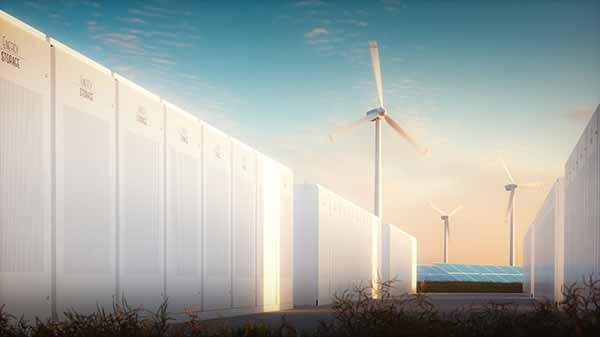
The usefulness of utility-scale batteries in balancing electricity grids has come to the fore as more capacity is added, according to a new report.
The U.S. Energy Information Agency’s (EIA) Annual Electric Generator Report tracked the performance of batteries with more than 1 megawatt (MW) capacity.
Data shows that utility-scale batteries boost grid stability and increase reaction time to demand and surges or drops in power. Batteries also make excellent excess energy stores for later use.
Such versatility could be good news for the whole nation and particularly Texas, a state with great renewable energy resources but that is still reeling from the deadly winter storm of February 2021.
How Can Batteries Balance Electricity Grids?
Utility-scale batteries can draw, discharge, and store energy that circulates in electricity grids. There are four main uses for these batteries:
Frequency regulation: This maintains the grid frequency at 60 hertz (Hz). Batteries quickly absorb surges, which helps stabilize the system. In 2020, some 59% of operators used batteries for frequency regulation, more than any other use.
Ramping: Also known as spinning, ramping needs power sources that can respond rapidly to changes in demand or power losses. Areas reliant on variable renewable energy sources like solar and wind can use this backup to keep services online. A total of 39% of operators deployed batteries in ramping last year.
Arbitrage: The most significant increase in utility-scale battery use was charging during low price periods and then returning power to the grid when prices were higher. This technique is known as arbitrage and retains excess renewable energy that may otherwise go to waste.
Load following: Utility-scale batteries are used for load following, thanks to their power generation agility. Operators following grid demand alter the output of generators to match these changes. For example, the digital operation of batteries is far more responsive than firing up a power plant to meet an energy demand spike.
How Could Batteries Affect Texas Power Supplies?
Renewable energy accounted for almost 20% of U.S. electricity generation in 2020. Wind (8.4%) and solar (2.3%) contribute significantly to the nation’s power but vary in supply and depend on weather conditions.
Texas is the leading wind energy producer in the United States, accounting for a third of the country’s entire generation.
The Public Utility Commission of Texas (PUC) has recently unveiled new rules to ensure the state’s power generators and utilities are prepared for weather emergencies. It wants to avoid a repeat of this year’s fatal energy supply collapse.
In its first phase, repairs and outstanding issues from the February storm must be completed before the end of 2021. More frequent inspections are promised, along with heftier fines for operators breaking regulations. A second phase aims to create a more prepared and reliable energy system for Texas.
PUC Chairman Peter Lake said: “This rule is a vital step in our ongoing efforts to harden the grid for future weather challenges … and give generators and utilities the guidance they need to provide the reliable service that Texans deserve.”
Falling Cost of Utility-Scale Batteries Are Vital to Success
The capital cost of large-scale battery storage has fallen in each of the last five years. By 2019, the dollar per kilowatt-hour price for building battery storage was around a quarter compared to 2015.
But at present, the EIA’s report reads more like a testing ground for batteries. In 2020, batteries were part of a wide range of “other” energy sources that provided just 0.3% of the United States’ electricity generation.
Battery adoption may well become an integral part of electricity grids worldwide. Operators may come to appreciate the day-to-day advantages they bring to controlling energy’s fluctuating supply and demand.
Texas is ideally placed to take advantage of its renewable-rich resources, backed up by the security of utility-scale battery storage.
Opinion writer: Tom Shearman
The opinions, beliefs, and viewpoints expressed by the various authors do not necessarily reflect the opinions, beliefs, or viewpoints of Interactive Energy Group, LLC (IEG) or its parent companies or affiliates and may have been created by a third party contracted by IEG. Any content provided by the bloggers or authors are of their opinion and are not intended to malign any individual, organization, company, group, or anyone or anything.
Brought to you by energysavings.com
All images licensed from Adobe Stock.
Featured Image