
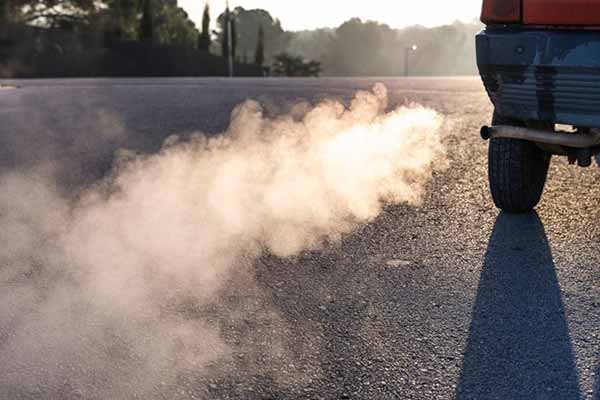
American car manufacturers will face stricter fuel economy rules for new automobiles as the federal government looks to reduce the country’s transport emissions.
The U.S. Department of Transportation (USDOT) National Highway Traffic Safety Administration estimates its efficiency targets could prevent up to 2.5 billion metric tons of carbon dioxide from entering the atmosphere.
USDOT’s new Corporate Average Fuel Economy (CAFE) standards aim to increase passenger car and light truck efficiency while saving people dollars at the pump.
Transportation is the United States’ most significant contributor to greenhouse gas emissions, accounting for almost 30% of greenhouse gas emissions in 2019. Light-duty vehicles make up 58% of transport’s emissions, making U.S. reliance on the automobile one of its most significant contributors to climate change.
What Are the New Corporate Average Fuel Economy Standards?
CAFE rules stipulate an 8% annual increase in fuel efficiency for model years 2024 and 2025, with a 10% yearly increase for 2026 models.
Such improved efficiency would see the average industry-wide vehicle achieving approximately 49 miles per gallon (mpg) for passenger cars and light trucks in 2026. The current efficiency rate is around 36 mpg. That means people buying new, higher-efficiency vehicles in 2026 will get 33% more miles per gallon compared to someone that bought new in 2021.
The National Highway Traffic Safety Administration (NHTSA) estimates drivers could save up to $1,400 at the pump over the 2026 model’s lifetime. It could also mean the U.S. avoids using 234 billion gallons of gas thanks to more fuel-efficient cars being sold between 2030 to 2050, rather than at present efficiency standards.
Greater efficiency would help reduce greenhouse gas emissions and air pollution and start to wean the nation from its oil dependency. Recent events have seen President Joe Biden ban imports of oil and gas from Russia, one of the world’s biggest producers, and release millions of barrels from American oil reserves.
California Leads the Way on Transport Emissions
California, the most populous state in the U.S., has recently had its power to implement its own Clean Air Act returned. The state has stricter efficiency and pollution rules than federal requirements, looking to phase out new gas-powered passenger cars and trucks by 2035.
California has 10% of the nation’s cars but 40% of all zero-emission vehicles nationwide. Last year, more than 250,000 of the automobiles sold in California were plug-in electric vehicles, some 12% of the light-duty vehicle market.
Some 17 states and the District of Columbia have followed California’s lead on emissions efficiency policies by adopting stricter standards.
Tesla Reports Record Sales in Electric Vehicles
While the government focuses on improving combustion engine efficiency, electric vehicles (EVs) continue to increase in popularity. Their rapid uptake may help reduce U.S. transport emissions more quickly than fuel-efficiency measures.
Tesla produced a record 305,000-plus EVs in the first quarter of this year and delivered more than 310,000 vehicles in the same period. In the same quarter last year, Tesla produced 180,000 EVs and delivered nearly 185,000 vehicles.
In 2021, combined all-electric vehicle (EVs) and plug-in hybrid electric vehicle (PHEVs) sales doubled to 608,000 units nationwide, with 73% of those EVs. Total light-duty vehicle sales rose just 3% over the same period.
Global EV sales forecasts for 2022 are expected to show an increase of 55% over last year, up to 10.5 million vehicles.
Efficiency on the Road and for the Wallet
The United States federal government is keen to demonstrate to drivers that a greener automobile can bring both health and financial benefits without compromising lifestyle.
U.S. Transportation Secretary Pete Buttigieg said: “These vehicles will be better for the environment, safer than ever, and cost less to fuel over their lifetimes. Today’s rule means that American families will be able to drive further before they have to fill up, saving hundreds of dollars per year.
These improvements will also make our country less vulnerable to global shifts in the price of oil.”
Slowly but surely, the United States’ transport industry is addressing and changing its relationship with gasoline and greenhouse gas emissions. The question remains if it’s quick and radical enough to offset the worst effects of climate change.
Opinion writer: Tom Shearman
The opinions, beliefs, and viewpoints expressed by the various authors do not necessarily reflect the opinions, beliefs, or viewpoints of Interactive Energy Group, LLC (IEG) or its parent companies or affiliates and may have been created by a third party contracted by IEG. Any content provided by the bloggers or authors are of their opinion and are not intended to malign any individual, organization, company, group, or anyone or anything.
Brought to you by energysavings.com
All images licensed from Adobe Stock.
Featured Image