
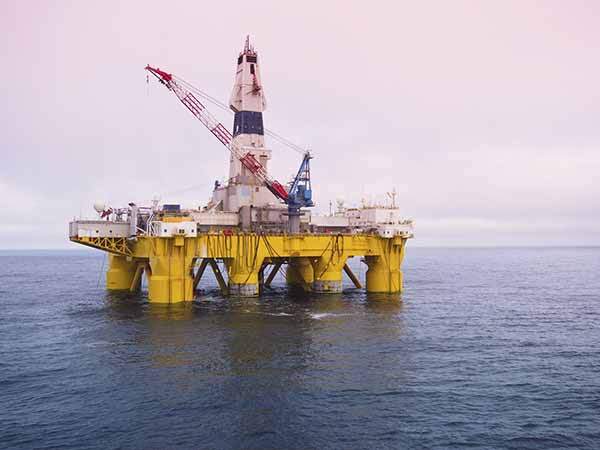
Just a few days after the conclusion of the COP26 climate conference in Scotland, President Joe Biden’s administration auctioned leases for several million acres to be used by oil companies in the Gulf of Mexico, following a ruling by a federal court that required him to do so. The President was also scheduled to visit General Motors’ retrofitted factory that will produce that company’s electric vehicles (EVs), as the automaker looks to roll out several new models of EVs in the new year.
Biden Offers Largest Acreage in History to Oil & Gas Companies
A few days after the close of the COP26 climate conference in Glasgow, Scotland, President Joe Biden offered up 80 million acres in the Gulf of Mexico for auction to oil and gas companies seeking new opportunities. It is said to be the largest such auction in history.
After President Biden took office, he had put a pause on oil and gas leasing. In response, more than a dozen states filed a lawsuit, saying the decision harmed their states’ economies. A federal judge issued a preliminary injunction.
The move to resume lease sales prompted environmentalists to say the Biden administration could have done more to stall the auctioning of the leases for oil and gas exploration. However, the administration said it didn’t have another option in the wake of the federal court ruling.
In explaining the decision, some experts said that the Biden administration could be held in contempt of court if it did not comply with the court ruling to rescind his decision to stop the sale of leases for fossil fuel extraction.
However, others say there were options available that would have permitted the president to delay further any such sales until the courts heard an appeal against the federal court’s ruling.
Republicans claim that the current spike in energy prices is largely the result of climate policies that limited fossil fuel production. They also say that sales of additional acres for fossil fuel exploration and extractions would help to bring those prices down.
But others say, since it will take years for the auctioned blocks to become productive, it seems unlikely they will play a role in reducing energy prices in the short term.
Only a fraction of the area offered for leasing attracted bids from energy companies. These firms have bid for under 2 million acres of the 80 million acres offered.
An energy expert said the Gulf of Mexico is one of the most attractive locations for oil and gas extraction, with the area’s production currently being among the highest it has ever been.
The Gulf of Mexico is estimated to contain more than 1 billion barrels of oil and 4 trillion cubic feet of gas. The greenhouse gas emissions that would be released if these were extracted would add hundreds of millions of tons of additional CO2 into the environment.
Energy Prices Predicted to Fall
The International Energy Agency (IEA) is predicting an increase in daily, worldwide oil production by about 1.5 million barrels during the last two months of 2021, which it suggested could put a damper on oil prices.
Much of that oil production is expected to come from the United States where production from its Gulf of Mexico reservoirs are now recovering post-Hurricane Ida.
The agency says the U.S. will likely be producing 300,000 additional barrels per day in the final part of this year. This production will likely compensate for OPEC’s refusal to heed a request from the U.S. to increase oil output beyond what it had already planned.
At the same time, however, there has been an increased demand for fuel as mobility increases worldwide. That may lead to an increased demand for gasoline, the IEA said. Europe is seeing higher demand for gasoline despite skyrocketing prices, and China and India are using 10% more gasoline than it did prior to the pandemic.
As such, prices for US and Brent crude oil are currently above $80 a barrel.
The IEA says the daily global demand for oil will grow by millions of barrels a day during 2021 and next year.
In December, Saudi Arabia and Russia are each expected to increase production to 10 million barrels per day, contributing to the increased global output.
However, the IEA said that other factors, including less industrial activity and a resurgence of COVID-19 infections in Europe, will likely help to soften any rise in prices that might occur due to increased demand.
Scotland’s Leader Leaning Toward Phasing Out Oil & Gas
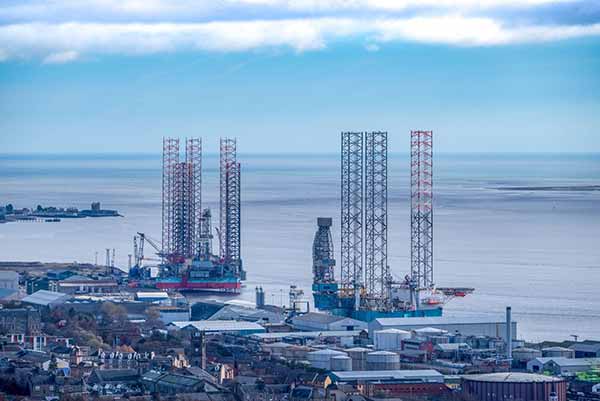
Scotland’s First Minister Nicola Sturgeon has indicated she may wish to see an end to exploitation of that country’s fossil fuel resources, after months of hesitancy on the issue.
Though stressing the need to move slowly on the transition from fossil fuels to renewables, Sturgeon said she was considering affiliating Scotland with a group of nations called the Beyond Oil and Gas Alliance. That group — comprising eight full members — has made a commitment to end all oil production in their countries by a given date.
Sturgeon is opting for the lowest tier of membership in the group known as “friend” to the group that does not require firm commitments with regard to an end to fossil fuel production.
The party led by Ms. Sturgeon has long campaigned for Scotland’s independence and supported North Sea exploration. Her government has only recently changed its position with regard to fully exploiting the country’s oil reserves, saying it acknowledges the need to start easing off of production in the interests of climate protection.
Her position on the development of a new oil field known as Cambo has also shifted. Cambo is projected to yield hundreds of millions of barrels of oil and is due to begin operations next year.
The U.K. government wants the Cambo field to begin production, on the premise that it will take years before the U.K. can rely solely on renewables for its energy supply.
The Conservative party in Scotland has criticized Ms. Sturgeon for her leaning toward phasing out the oil and gas industry because of its importance to the country’s economy.
Biden Visits GM’s Electric Car Factory

General Motors’ Factory ZERO welcomed President Joe Biden for a tour to get a close-up view of GM’s facilities dedicated to producing electric vehicles.
GM spent $2 billion retrofitting the Detroit factory to facilitate the focus on EVs. The company has said it plans to be producing only battery-powered vehicles for retail sale by the year 2035.
At the same time, analysts predict that dozens more models of EVs will be manufactured next year, widening the choice for consumers.
Automakers worldwide are expected to invest upwards of $500 billion by 2030 to make the transition to EVs, and many of the new car models automakers launched this year were battery-electric powered.
The companies are also offering a wider range, to include more popular types of vehicles like GM’s Hummer and Ford’s Mustang. Battery-electric vehicles accounted for around 1% of new vehicle sales in the U.S. in 2020, but sales have been steadily increasing, and analysts predict EVs will likely account for as much as 10% of new vehicle sales by 2030.
However, the issue of EV battery charging remains a concern for many. The President’s $1.2 trillion infrastructure bill is expected to finance the deployment of a countrywide electric charging network — with $15 billion of it focused on electrification, including the provision of electric charging stations across the U.S.
Some states are working on establishing their own statewide electric charging networks, while some have also made plans to eliminate the use of internal combustion vehicles in their state in due course.
The Biden administration is also working on plans for electrifying the transport sector and other heavy-duty vehicles.
Ontario Pushes EV Manufacturing as Path to Prosperity
The province of Ontario, Canada, has stated it plans to promote EV manufacturing as a way to generate well-paying jobs.
It will focus on servicing the EV supply chain by producing electric batteries and parts for EVs. The province also hopes to use its resources to supply the types of minerals used in EV manufacture.
Ontario is hoping to produce 400,000 electric or hybrid vehicles by the end of the decade. However, the province’s government has declined to offer Ontario residents rebates when they buy EVs. It also put a stop to plans to build electric vehicle charging stations.
The government says its focus for the time being is on building up the province’s capacity to service the EV supply chain. It is also seeking to encourage migration of workers to Ontario to help with establishing it as a major EV supply chain hub.
Opinion writer: Jewel Fraser
The opinions, beliefs, and viewpoints expressed by the various authors do not necessarily reflect the opinions, beliefs, or viewpoints of Interactive Energy Group, LLC (IEG) or its parent companies or affiliates and may have been created by a third party contracted by IEG. Any content provided by the bloggers or authors are of their opinion and are not intended to malign any individual, organization, company, group, or anyone or anything.
Brought to you by energysavings.com
All images licensed from Adobe Stock.
Featured image: