

While British Airways celebrated a demonstration flight showing potential strategies for reducing the carbon footprint of its airline, the U.K. government was faced with calls from various industries to deal with the negative impact of skyrocketing natural gas prices that have affected energy suppliers as well as the food industry. At the same time, Royal Dutch Shell announced a $9 billion sale of some of its U.S. oil and gas assets.
British Airways Demonstrates Low-Emissions Flight
British Airways demonstrated how it may succeed in reducing emissions from its flights when it recently flew an aircraft to Scotland that produced 62% less emissions than a similar flight did in 2010.
The airline made use of a sustainable jet fuel blended with regular aviation fuel to help cut emissions. The aircraft selected for the flight was also one that burns significantly less fuel and is lighter in weight.
In addition, to ensure the flight was carbon neutral, only one engine was used for taxiing on the runway, and electric vehicles were used to move the plane.
Renewable energy was provided by Heathrow Airport, where the flight took off, to provide electricity for the vehicles that moved the aircraft. The airport has spent 7 million pounds on electric vehicle charging ports to power its own vehicles because it plans to convert to nearly 100% electric vehicles.
The carbon-neutral flight also used other aviation techniques to further reduce consumption.
To compensate for emissions that could not be eliminated, the airline also made use of carbon offsets. Businesses acquire carbon offsets by buying carbon credits from projects like planting trees, where the capacity to absorb carbon dioxide is said to compensate for emissions produced by businesses operations.
Delta and Air France are among other airlines making use of carbon offsets to compensate for their emissions.
U.K. Grapples With Soaring Gas Prices
The U.K. government is holding emergency talks with energy suppliers as the country faces soaring gas prices brought on by a long winter last year, in which gas storage levels across Europe were severely depleted.
The result is that electricity prices in the country have risen considerably because many of Britain’s electricity plants use gas as fuel. Adding to the troubles are lower supplies of renewable energy from wind farms because of reduced wind speeds and the closure of some energy suppliers that were unable to withstand the impact of rising prices.
The concern over energy supplies is especially urgent because winter is approaching. However, the government said the country has enough energy supplies to meet its needs this winter.
The U.K. is also considering short-term measures to help households and businesses affected by the high gas prices. Some suppliers are in support of a model adopted by Spain to create a fund for homeowners by taxing excess profits earned by gas suppliers.
At the same time, Russia is viewing the current energy crisis in Europe as an opportunity for its own gas supplies.
It hopes the spiraling gas prices in Europe will persuade European governments of the necessity of projects like the Nord Stream 2 gas pipeline. President Vladimir Putin pointed out that those countries that had already secured long-term contracts with Russia for gas supplies are now benefiting because they do not have to pay higher prices as demand escalates.
Russia’s state gas company, Gazprom, has seen its share price rise significantly in recent weeks.
Coal Prices Rise Steeply
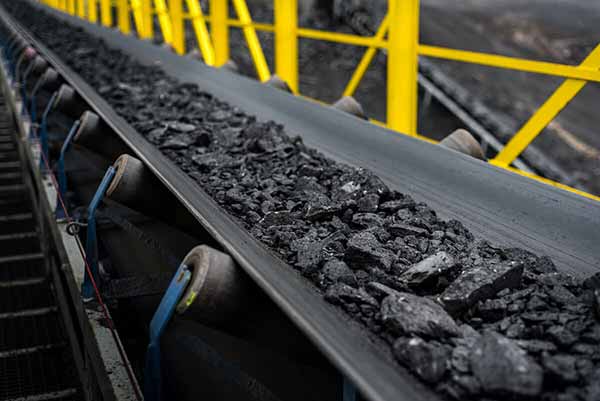
In Europe and Asia, the price of coal has more than doubled this year, with prices in Europe moving from $65 a few months ago to over $160 per metric ton currently.
The rise in coal prices has been blamed partly on the shortfall in gas supplies worldwide as well as the reduction in coal production as investments move away from coal over concerns about climate change.
Utility companies in the U.S. are expected to significantly increase their use of coal to reduce the expense of reliance on gas since gas prices have risen dramatically. Consequently, U.S. coal mining companies are expected to increase their production by about 12%, though this will probably not be enough.
A potentially long, cold winter is expected to push demand for coal higher. Meanwhile, a drought in South America has led to a decrease in hydropower and a subsequent increase in demand for power from thermal plants that run on coal.
Analysts do not expect, however, a rush to invest in new coal mines given the sentiments against coal as a dirty fuel, and the pandemic has also contributed to the closure of coal mines.
Honda Sets Sales Goal for New EV
Honda will be rolling out a new electric vehicle in partnership with General Motors Co. and says it hopes to sell 70,000 of the new vehicles annually.
The electric sport utility vehicle named Prologue is being jointly developed by Honda and General Motors, and the car will be assembled at a General Motors’ factory.
Honda and General Motors are planning on beginning sales of the Prologue and another electric vehicle, an Acura branded SUV, in 2024.
In keeping with its target of selling 100% zero-emission vehicles in the U.S. by 2040, Honda has set an interim goal of selling 500,000 electric vehicles in the U.S. by 2030.
The company also plans to expand its suite of hybrid models in the U.S.
Currently, electric vehicle sales make up less than 3% of the total automobile sales annually in the U.S.
U.K. Food and Drink Industry in Crisis Due to Gas Shortage
The dwindling supply of carbon dioxide is placing a strain on the ability to operate, U.K. food and drink industry spokespeople have said.
Carbon dioxide production has dropped recently because fertilizer companies that produce CO2 as a byproduct have cut production in the face of skyrocketing natural gas prices in the U.K. and Europe.
CO2 is used to stun animals in preparation for slaughter, and there is said to be no alternative currently. This has meant that farmers have been left with tens of thousands of animals on their hands that cannot be sent to slaughterhouses because of the shortage of CO2.
Drink manufacturers also use CO2 to create fizzy drinks, and it is used to extend the shelf life of foods. A food industry spokesperson said the government should consider extending any help given to the energy sector to the fertilizer industry as well.
The health sector and the nuclear industry are being given priority for obtaining supplies of CO2 in the U.K. Nuclear reactors use it as a coolant.
Shell Sells Permian Assets

Royal Dutch Shell has announced the sale of its oil and gas assets in the U.S. Permian Basin, one of the most productive and profitable oil-producing regions in the U.S.
The sale to ConocoPhillips for just over $9 billion means that Shell is relinquishing assets that yielded more than 175,000 barrels of oil a day.
Shell’s assets covered more than 200,000 acres. The sale means it will no longer do onshore oil production in Texas, though it will maintain its offshore oil production.
Illinois Passes Sweeping Climate Law
A climate bill that will see the closure of all coal-fired plants in Illinois by 2045 and hundreds of millions of dollars in subsidies for nuclear power plants has been signed into law by the governor.
The law lays out an energy plan for the state for the next 25 years and also enforces strict oversight over the utility company Exelon. The company has been fined $200 million for paying bribes to an official to ensure its interests were protected.
Subsidies for renewable energy projects will double under the law, as the state hopes to be getting 40% of its power from renewable energy within the next decade. The law will also offer rebates to residents of the state who buy electric vehicles.
Grant for African Hydropower Facilities
The African Development Bank has approved a $1 million grant to be spent on modernizing and upgrading Africa’s hydropower facilities.
The hope is that it will lead to an additional 200 megawatts of power generation capacity as well as another 150 jobs.
The International Hydropower Association is a partner on the project.
African countries are aiming for universal energy access and are focusing on renewable energy as the preferred source to meet demand.
Trinidad’s Oil and Gas Industry Benefits From New Technology
Trinidad and Tobago’s energy minister told geologists at a conference that while his country is aware of the momentum toward clean energy, it will continue to exploit its fossil fuel resources for the time being.
He said recent deep-water explorations and the use of new technologies, including 3-D imaging, have revealed previously untapped resources of additional oil and gas reserves. He noted that onshore exploration has also yielded positive results.
Opinion writer: Jewel Fraser
The opinions, beliefs, and viewpoints expressed by the various authors do not necessarily reflect the opinions, beliefs, or viewpoints of Interactive Energy Group, LLC (IEG) or its parent companies or affiliates and may have been created by a third party contracted by IEG. Any content provided by the bloggers or authors are of their opinion and are not intended to malign any individual, organization, company, group, or anyone or anything.
Brought to you by energysavings.com
All images licensed from Adobe Stock.
Featured image