
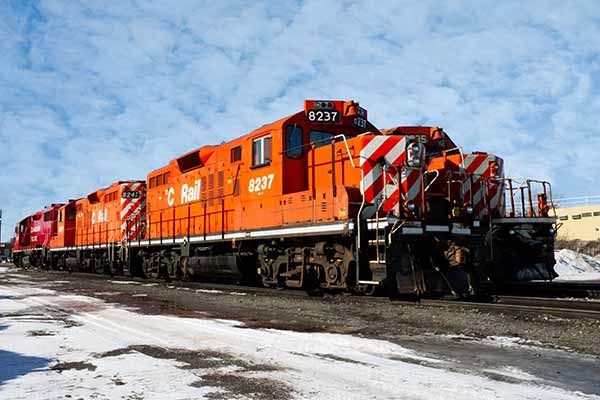
Canadian Pacific Railway has expanded its program to transition its locomotives from diesel to hydrogen fuel, as it seeks to reduce its carbon footprint. Meanwhile, Shell’s carbon capture and storage project in Alberta, Canada, has been criticized for failing to deliver on the promise that it would capture substantial emissions generated by the production of hydrogen fuel. The company, however, rejected that criticism, saying the purpose of the project has been misinterpreted.
Canadian Railway Increases Hydrogen Fuel Use
Canadian Pacific (CP) Railway has partnered with Ballard Power to expand its program to convert its diesel burning locomotives to run on hydrogen power using fuel cells and batteries.
This expanded program means CP is commissioning an additional eight hydrogen fuel cells from Ballard to increase the number of locomotives running on hydrogen from one to three.
While the railway company has made significant strides over the past 10 years in improving its fuel efficiency, it’s seeking to further reduce its emissions by converting its diesel-powered trains to hydrogen fuel, particularly for those types of locomotives that make up the bulk of what it and other train services in North America use.
Emissions Reduction Alberta supported the CP program expansion with $15 million in funding. Ballard says the market for hydrogen electric trains could be as much as $4 billion by 2030. It has also supplied the UK, European, and Asian markets with hydrogen power cells for railways.
Hydrogen fueling facilities will be built at CP rail yards in Edmonton and Calgary. While the facilities at Edmonton will use natural gas for hydrogen production, the Calgary facilities will run off green energy from solar panels to produce hydrogen using hydrolysis.
Shell’s CCS Project Given Failing Grade
Shell’s $1 billion carbon capture and storage facility in Alberta, Canada, is emitting far more carbon emissions than it captures, an international organization of activists said in a report they published recently.
The Quest CCS facility that Shell built with more than $650 million in subsidies from the Canadian government opened in 2015, and was meant to showcase how CCS technology can significantly reduce emissions from hydrogen fuel by storing it underground.
The facility is located in a Shell complex where bitumen from oil sands mining is refined using hydrogen.
At the complex, Shell produces the hydrogen used to refine the bitumen into lighter crude products. The Quest CCS was designed to capture and store the CO2 emissions from the hydrogen production thousands of meters below the ground.
Shell said the Quest project is meant to be a demonstration project and was never intended to capture more than one-third of the emissions resulting from the bitumen refinery complex’s operations.
The activist group, Global Witness, pointed out that while the Quest CCS stored 5 million tons of CO2 emissions, it produced more than 7 million tons of greenhouse gases in a five-year period.
They based their calculations on reports submitted by Shell to the local provincial government and other available data that the company is not required to report to the government. The authors of the report have accused Shell of misleading the government to promote the use of blue hydrogen as a sustainable way to continue producing fossil fuels.
Global Witness said the facts show blue hydrogen is neither climate-friendly nor a suitable alternative to using renewables like wind or solar.
Shell has pushed back against the report, saying the Quest facility doesn’t produce blue hydrogen and is merely a project that shows the feasibility of using CCS to capture emissions from such production.
The company says it’s hoping to build an actual blue hydrogen production facility within the next few years, and that facility will capture more than 90% of emissions because of new technology to be introduced.
The process of extracting oil from Canada’s oil sands is said to produce more emissions than any other form of fossil fuel extraction.
$3.9 Billion Renewables Project Planned for Iowa
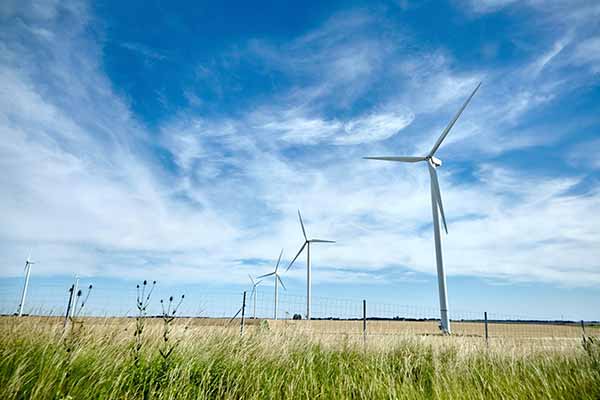
A nearly $4 billion wind and solar power project that’s estimated will produce enough energy to power 600,000 homes is being proposed for the State of Iowa by Warren Buffett’s firm MidAmerican Energy.
The project, called Wind PRIME, will likely be the largest of its kind in the U.S., and is expected to generate more than 5 GW of wind power, along with a considerably smaller share of solar power.
A 2019 report showed Iowa receiving more than 40% of its power from wind, and Buffett’s company Berkshire Hathaway credits its $14 billion investment in wind power as contributing significantly to reducing its customers’ electricity bills.
The company announced it’s also looking into the potential for other clean energy technologies, including carbon capture and modular nuclear reactors.
Once regulators approve the project, MidAmerican Energy hopes to finish building the new plant by 2024.
Onshore wind power capacity has grown tremendously in the U.S. since 2010, and the country now has nearly 17,000 MW of onshore wind power capacity. There’s considerably less offshore wind capacity, and the U.S. government has stated its intention to increase offshore wind installations to achieve 30 GW of capacity by 2030.
EU Urged to Limit Bitcoin Mining Activity
The EU is being encouraged by one of its financial regulators to curtail the type of bitcoin mining known as “proof of work,” because it is endangering the bloc’s climate goals.
A senior official of the European Securities and Markets Authority said the intensive computing work required to perform “proof of work” in order to validate a bitcoin transaction uses too much energy. Such intensive energy use in turn poses a threat to the EU’s efforts to reduce emissions.
The official suggested that the EU ban “proof of work” within its borders and require that bitcoin miners substitute “proof of stake” in its place.
This latter method depends on bitcoin miners putting up a stake of digital coins as collateral for the validity of a bitcoin transaction. This process is considerably less energy intensive.
Some governments have already moved to curtail bitcoin mining in their territories after suffering severe adverse impacts on their electricity supply.
Blackouts in Kosovo led that country’s government to ban bitcoin miners. And Kazakhstan has also imposed tight controls on the sector. Many bitcoin miners moved to Kazakhstan in search of cheap energy after China decided to clamp down on the practice within its borders.
The U.S. is now the most popular destination for bitcoin miners.
Norway said it too may limit bitcoin mining in its territory because of the drain on energy resources.
Bitcoin and Ether are the world’s two largest bitcoin currencies. Ether recently announced that it will stop using proof of work by the end of this year, and use proof of stake instead to validate its bitcoin transactions.
Officials stressed they weren’t seeking an outright ban, in light of the benefits from bitcoin technology, but they saw a need to limit its consumption of national power supplies.
Nigeria Invites Renewable Energy Investors
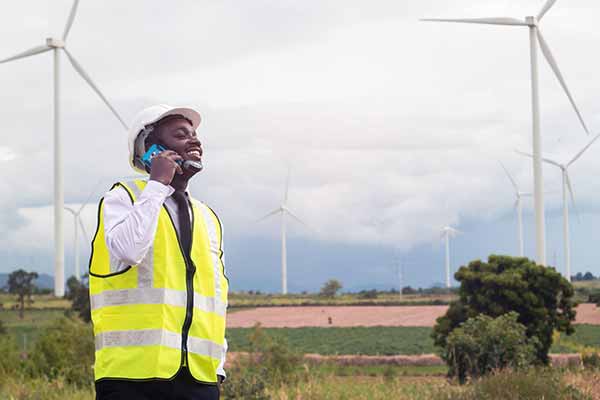
Nigeria invited renewable energy investors to consider opportunities in that country, as part of a program to power 5 million homes with solar.
The country’s vice president told the World Economic Forum that Nigeria has been rolling out the plan to provide solar energy for millions of homes over the past 12 months, as part of an overall economic sustainability drive.
He said his country hopes to achieve net zero emissions by 2060, but there’s a need for continued international investments in natural gas as a transition fuel. Rejection of natural gas in the efforts to curb global warming would place a severe economic burden on African economies, the government official said.
Experts have pointed out that forcing Africa to forgo investments in natural gas in the interests of climate change would effectively end economic development on a continent where hundreds of millions still do not have access to electricity.
Sub-Saharan Africa has considerable natural gas deposits and the EU’s focus on Africa transitioning to renewables has been labeled green colonialism.
BP Funds CCS Research in Trinidad and Tobago
BPTT has entered into an agreement with Trinidad and Tobago’s two leading universities to help fund research into potential sites for carbon capture and storage (CCS) there.
The oil company is providing TT$340,000 to help with the CCS Storage Atlas Project, which will see the University of the West Indies and the University of Trinidad and Tobago develop a map of underground sites where carbon emissions from the country’s oil and gas industry can be sequestered.
BP will also provide technical support and reservoir data to help with the research, as it pursues its goal of becoming net zero in its operations by 2050.
The Trinidad and Tobago government sees the CCS project as an avenue to ensure its oil and gas sector can continue to be viable as the world seeks to curb climate emissions.
Opinion writer: Jewel Fraser
The opinions, beliefs, and viewpoints expressed by the various authors do not necessarily reflect the opinions, beliefs, or viewpoints of Interactive Energy Group, LLC (IEG) or its parent companies or affiliates and may have been created by a third party contracted by IEG. Any content provided by the bloggers or authors are of their opinion and are not intended to malign any individual, organization, company, group, or anyone or anything.
Brought to you by energysavings.com
All images licensed from Adobe Stock.
Featured image: