
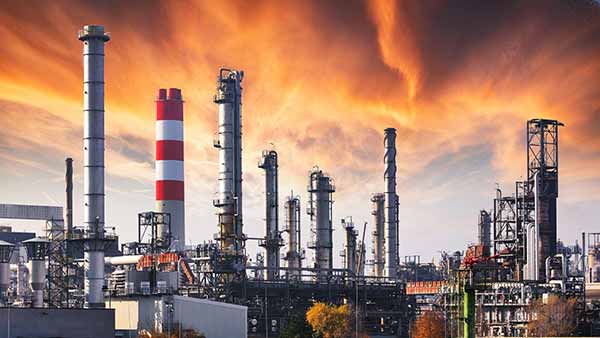
World leaders are attending the climate conference, COP26, in Glasgow, Scotland, during the first week of November. There, it is hoped they will reach an agreement on ways to curb carbon emissions that drive climate warming. However, the U.N. Secretary General expressed his disappointment at the slow pace of progress on the issue, and he condemned what he described as an ongoing addiction to fossil fuels. Meanwhile, India has finally announced its net-zero emissions goal, but has set it for the year 2070.
Leaders at COP26 Urged to Price Carbon
A group known as the Carbon Pricing Leadership Coalition has sent a letter to the world leaders attending the COP26 climate talks in Glasgow, Scotland, this week. It urges them to set a realistic price on carbon emissions.
The group says unless countries and companies work together and agree to imposing a price on carbon emissions, there would be little hope of stopping climate change.
Members of the group include government ministers from Canada and Chile, as well as company executives.
The EU also spoke directly to leaders at the conference about the need to price carbon adequately. European Commission President Ursula von der Leyen told leaders at the summit that they should make it a priority to establish a global carbon market to successfully combat global warming.
The COP26 is being held during the first week of November, and most of the world’s leaders are attending. It is considered a major event for the world to tackle the issue of climate change and onlookers are hoping that decisions there will result in firm policies to meet the goals of the Paris Agreement.
However, so far, no country has met any of the agreed-upon goals to halt global warming.
U.N. Chief Slams Fossil Fuel “Addiction”
The U.N. Secretary General Antonio Guterres has expressed disgust at the world’s “addiction” to fossil fuels and lack of real progress made in reducing carbon emissions.
He told leaders convened at the conference that the world would soon be at the point of no return. When changes brought about by global warming permanently alter the earth, it would make it inhospitable for humanity.
Gutteres also said that if countries failed to make the required commitments at this conference, they would need to meet annually instead of every five years to force progress on the climate issue.
He also criticized the failure of developed countries to deliver the funding promised to help developing countries achieve the energy transition.
Gutteres said the impression that progress has been made on the climate issue is merely an “illusion,” and the proliferation of global initiatives has produced no significant results.
He also noted disastrous changes already taking place worldwide, with sea levels expected to double by 2050 and the Amazon rainforest now emitting more carbon than it absorbs.
India Aiming to Be Carbon Neutral by 2070
India’s Prime Minister Narendra Modi told leaders at the global climate summit in Glasgow that his country would achieve net-zero emissions by the year 2070.
He also announced that India would aim to provide half of its energy needs from renewable sources by 2030, partly through increasing its solar energy installations within that period. His country expects to have a total renewable energy capacity of about 500 gigawatts (GW) by 2030, Modi said.
India is also increasing its ambition with regard to the amount of energy used to produce a unit of goods and aims to reduce this by 45% by 2030.
Modi also stressed the need for lifestyle changes, including an end to conspicuous consumption that is helping to fuel the growth in emissions.
As one of the global economies that contributes the most to carbon emissions, India is responsible for 5% of global emissions. At the same time, it has one of the smallest per-capita emissions among the global economies.
In 2019, its per-capita emissions were just under 2 tons, whereas per-capita emissions for the U.S. for that same period were nearly 16 tons, and for Russia, the per-capita emissions were nearly 13 tons.
Renewables Ahead in Europe as Source of Electricity
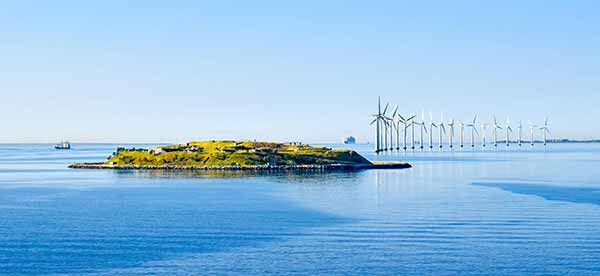
Europe obtained slightly more of its electricity from renewables than fossil fuels in 2020, with 38% of electricity obtained from renewable sources like wind and solar, and 37% obtained from oil and gas.
Europe’s renewable energy comes mainly from hydropower and wind, with smaller amounts from solar and biofuels.
The EU’s energy commissioner explained that fossil fuel sources are only used when there is a shortfall in renewable energy for electricity.
At the same time, the continent obtained about a quarter of its electricity supply from nuclear power, though reservations continue with regard to its use and designation as a clean fuel.
Europe has succeeded in reducing its greenhouse gas emissions by approximately 30% relative to 1990 levels, though this is still short of the target of a 55% reduction by 2030.
Only a small portion of the transportation sector uses clean energy, however, and much of the heating continues to rely on fossil fuels.
Maine Voters Get Final Say on Canadian Hydropower Project
Maine residents will determine whether a hydropower transmission line project goes ahead when they vote on a referendum this Tuesday.
The transmission corridor that Central Maine Power Co. wants to build would run through western Maine, including forested areas, to transport 1,200 megawatts (MW) of electricity from Quebec’s dams to Massachusetts.
Voters are being asked to decide whether the construction of high-impact electric transmission lines should be allowed in the designated region.
The project, known as the New England Clean Energy Connect Project, is being undertaken by the Maine authorities to help Massachusetts reach its climate goals of a 50% reduction in carbon emissions by 2030.
Supporters of the $1 billion project say it will provide hundreds of jobs, and the corridor will be built through forest that is already exploited for commercial logging. However, opponents say the project would be environmentally damaging and would harm the region’s tourism industry.
Massachusetts’ utility companies are required by law to reduce their reliance on fossil fuels and to incorporate more renewable energy sources into their energy supply.
G20 Vague on Commitments
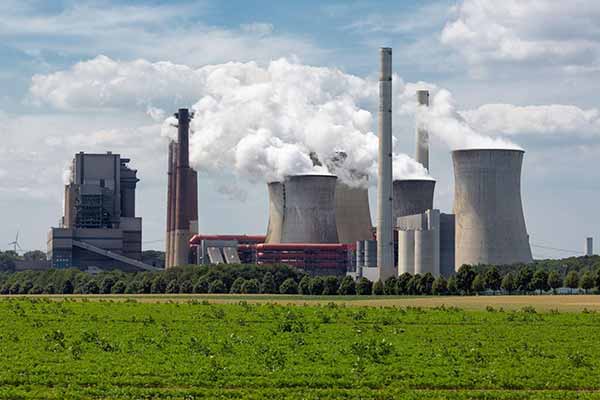
The G20 summit held in Rome on the eve of the COP26 ended with vague promises by the leaders of the world’s richest countries to curtail greenhouse gas emissions and limit the use of coal.
Leaders at the summit agreed to end financing for the construction of coal projects overseas but declined to commit to ending the use of coal in their own countries.
China, one of the members of the G20, continues to build coal plants to meet its energy needs.
At the same time, the leaders agreed to achieving carbon neutrality somewhere in the middle of the century, without committing to a firm date.
The world leaders described the G20 summit as very productive and as “building momentum” for the climate negotiations that begin this week in Glasgow.
Major Caribbean Cruise Line Aims for Net Zero
A major cruise line operating in the Caribbean has announced that it plans to achieve net-zero emissions by 2050.
To achieve its goal, the Royal Caribbean Group plans to commission energy-efficient ships that may also use alternative fuels. It has already commissioned a hybrid-powered ship that it will put into service in 2023.
The group is also the first in the cruise industry to pledge to align its emissions reduction targets with the Science Based Targets initiative, once guidelines become available for the marine transport sector.
The company is looking to form partnerships with governments, shipyards, and others to help it develop the requisite technology. It already has a partnership with the World Wildlife Fund that focuses on ocean conservation.
Guyana and Ghana Discuss Cooperation on Oil Industry
Ghana will be sharing its expertise in oil production with Guyana, as the South American country seeks to develop its new oil and gas industry.
Guyana’s President Irfaan Ali told the media that oil and gas experts from Ghana would be arriving in Guyana shortly to help with oil money legislation, gas to energy development, the establishment of a sovereign wealth fund, and other issues connected with its nascent oil and gas industry.
The two countries also expect to explore opportunities for investment in various sectors of each other’s economies.
Ghana’s President will also likely attend the oil and gas conference that Guyana will be hosting in 2022.
Opinion writer: Jewel Fraser
The opinions, beliefs, and viewpoints expressed by the various authors do not necessarily reflect the opinions, beliefs, or viewpoints of Interactive Energy Group, LLC (IEG) or its parent companies or affiliates and may have been created by a third party contracted by IEG. Any content provided by the bloggers or authors are of their opinion and are not intended to malign any individual, organization, company, group, or anyone or anything.
Brought to you by energysavings.com
All images licensed from Adobe Stock.
Featured image: