

China may be facing a drop in its GDP growth rate due to its efforts to reduce its carbon footprint. Factories have been hard hit by the requirement to reduce energy use, and shortages of coal are adding to the problem. Meanwhile, former U.S. Vice President Al Gore’s investment fund invests hundreds of millions into a U.K. energy company that is taking the lead in that country’s energy transition. Finally, ExxonMobil has been added as a co-defendant in a case brought by Guyanese activists seeking to have oil exploration cease on environmental and health grounds.
Power Shortage Leads to Downgrade of China GDP Forecast
China is facing power outages that threaten its economic growth as it pushes forward to meet its goals for curbing emissions despite an increase in industrial activity.
Analysts said the situation lead to a cut in their China’s GDP growth forecast by half a percent, dropping it to just over 7% for 2021.
The power shortage, worsened by tight coal supplies, has seen shopping malls close as early as 4 p.m. and several factories reduce or stop production. At the same time, residents in the country’s northeast have been experiencing intermittent blackouts and have been told to exercise care with high-energy appliances like microwaves.
Key industries — including steel and aluminum as well as factories that supply global brands like Apple and Tesla — have experienced serious disruptions to their operations.
Some companies said they stopped operations after local authorities insisted they comply with efforts to curb emissions and energy intensity. China has vowed to cut its energy intensity — or amount of energy used to produce one unit of economic growth — and wishes to reach peak carbon emissions by 2030.
The power cuts have affected everyday life, and as many as 100 million people may be experiencing the effects. Cars are being driven at night without the aid of traffic lights, and residents in high-rise buildings have to climb several flights of stairs.
U.K. Drivers Panic Over Fuel Supply
About two-thirds of the U.K.’s gas stations were almost out of fuel following panic buying.
The panic has been linked to a lack of truck drivers to deliver fuel, after more than 70,000 drivers returned to the EU after Brexit.
Though fuel stations are receiving supplies, the panic buying is emptying them so swiftly that they are unable to maintain their normal levels of supply.
To compensate for the problem, the U.K. government is relaxing anti-competition laws that will allow oil companies, including Shell and ExxonMobil, to share information about where supplies are most urgently needed. The companies emphasized the problem did not stem from a shortage of fuel but from panic buying.
The government is also encouraging people who have licenses to drive trucks to take up work in the sector again to help alleviate the shortage of delivery drivers. It also plans to issue short-term visas to help make up for the lack of U.K. truck drivers.
Though there has been some discussion about using military truck drivers to help ease the situation, Prime Minister Boris Johnson said it was not necessary at this time.
There have been lengthy lines at fuel stations, and fights have occasionally broken out between customers waiting in line.
U.K. City Funds Solar Power for Low-Income Homeowners

The city of Nottingham in the U.K. will use a 4 million pound grant to provide solar panels for houses that have poor energy efficiency.
To qualify for funding through the grant, the homeowner or renter must be earning less than 30,000 pounds a year and must be living in government housing that is located within the Nottingham city boundary.
Applicants who need help installing the solar panels in their home may receive up to 10,000 pounds, but where the applicant is a renter, the landlord must pay at least a third of the cost of the solar panel installation.
It’s anticipated the grant will be utilized by just over 600 homeowners, who are expected to achieve savings on energy bills of around 240 pounds per year. The solar installations are expected to lead to a reduction of emissions of about 400 tons.
This grant is part of an ongoing initiative by Nottingham that began in 2012 to improve energy efficiency in government housing.
Gore’s Fund Investing $600 Million in U.K. Energy Firm
An investment fund founded by former U.S. Vice President Al Gore, which focuses on support for climate-friendly companies, has invested $300 million into a U.K. energy company, with another $300 million planned once certain conditions are met.
The U.K. company, Octopus Energy, and Gore’s equity fund have been in talks about the deal for several months. Octopus Energy says the money will be used to help it meet the needs of almost half a million new customers that were formerly serviced by one of several U.K. utilities that went out of business because of high gas prices.
Octopus Energy has been appointed by the U.K.’s energy regulator to take up responsibility for power supply to the customers of the former Avro Energy Inc. It says it will use Gore’s investment to improve the use of renewables on the grid along with other emissions reduction measures.
Since beginning operations five years ago, Octopus Energy has acquired $4 billion in renewable energy capacity and is now the U.K.’s fifth-largest power supplier. It also has customers in other European countries and the U.S.
It is said to serve 17 million customers globally, including 3 million in the U.K.. The company was previously valued at $2 billion last year, but Gore’s fund has doubled its estimated value to over $4 billion. The investment fund said that Octopus Energy is at the forefront of companies innovating for the energy transition.
Little Impact Expected From Carbon Removal Plant
Iceland recently opened a carbon removal facility, named Orca, that removes as much carbon as 200,000 trees but situated on an area 1,000 times smaller.
The facility’s operators say it will remove about 4,000 metric tons of carbon dioxide annually from the air, which one scientist points out is the equivalent of three seconds’ worth of global emissions each year.
However, it may prove useful for removing carbon dioxide that the world would find very difficult to eliminate otherwise, such as from agriculture, experts say.
Deployment of carbon capture technology is an important part of the strategy to tackle global warming, outlined in the latest Intergovernmental Panel on Climate Change report.
The facility’s designer says it costs $600 to capture 1 metric ton of carbon dioxide, which means that it would require several trillions of dollars to remove all of the carbon dioxide already in the atmosphere if this technology is used.
The Orca technology is different from the current carbon capture and storage (CCS) technology in widespread use in the United States. The standard CCS technology captures the gas produced during operations and stores it underground or converts it to other materials. But Orca captures the carbon dioxide that is already present in the air.
Plants similar to Orca are now being planned with backing by Bill Gates. These plants are expected to have considerably greater carbon capture capacity than the Iceland plant.
However, in a book authored by Gates, he acknowledges that carbon removal facilities such as the ones he is backing are among the most expensive options for reducing greenhouse gases in our environment.
ExxonMobil Added As Defendant in Guyana Case
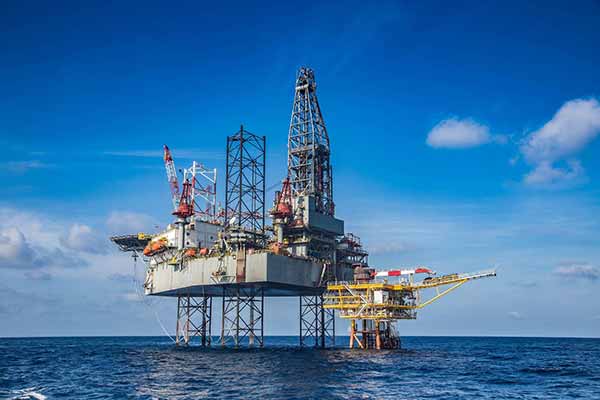
A judge hearing the lawsuit filed against the oil exploration work being carried out by ExxonMobil and other companies has ordered that the companies be added to the lawsuit as defendants.
Two Guyanese plaintiffs filed the case earlier this year. In their lawsuit, they asked for the court to rule against the government’s decision to permit oil exploration, on the grounds that it damaged the environment and posed a threat to health.
The plaintiffs had objected to the oil companies being added to the case, insisting their complaint was against the government of Guyana.
At the same time, concerns over ExxonMobil’s flaring of gas were raised at a press conference. Guyana’s Vice President Bharrat Jagdeo said there was no cause for concern and that Guyana had imposed a $45 tax on every metric ton of natural gas flared above a certain threshold.
Sudanese Tribes Block Pipeline
Tribes in eastern Sudan, protesting against poor economic conditions, have blocked the pipeline that supplies the oil refinery in the nation’s capital.
That refinery normally provides domestic fuel supplies and will be able to supply the domestic market for at least another week if the blockage continues.
However, prolonged blockage of the pipeline could affect oil field production and exports, a government spokesman said.
The tribes have also shut down ports and roads.
Opinion writer: Jewel Fraser
The opinions, beliefs, and viewpoints expressed by the various authors do not necessarily reflect the opinions, beliefs, or viewpoints of Interactive Energy Group, LLC (IEG) or its parent companies or affiliates and may have been created by a third party contracted by IEG. Any content provided by the bloggers or authors are of their opinion and are not intended to malign any individual, organization, company, group, or anyone or anything.
Brought to you by energysavings.com
All images licensed from Adobe Stock.
Featured image: