

The COP26 climate conference ended with a mix of hope and disappointment. While leaders agreed to work on reducing coal use, analysts said the final outcomes from the conference would do little to keep global warming beneath 1.5 degrees Celsius above pre-industrial levels. At the conference, the U.S. and China also agreed to put their differences aside and work together to reduce global emissions.
COP26 Agreement on Coal Hailed as Progress
Global leaders at the COP26 climate conference in Glasgow, which ended on Friday, November 12, agreed for the first time to tackle the issue of coal in the fight to reduce global warming.
The final version of the agreement, which went through many iterations, promised to “accelerate efforts” to reduce the use of coal. Earlier versions that had sought to make firmer commitments were watered down after India and China objected to their language.
The statement also urged countries to end fossil fuel subsidies that were deemed inefficient.
COP26 President Alok Sharma apologized tearfully for the backpedaling.
However, the conference might be considered the beginning of the end of climate change, said U.K. Prime Minister Boris Johnson. He pointed to the fact that this was the first time the international community had agreed to work to cut down on the use of coal.
Johnson and other leaders said they remained committed to the target of keeping global warming below 1.5 degrees. To achieve this target, the world must reduce CO2 emissions by almost 50% by 2030 and achieve net-zero emissions by 2050.
Coal is currently responsible for about 40% of global emissions.
While a Greenpeace spokesperson hailed the COP26 conference as signaling the end of coal, Switzerland’s environment minister expressed deep disappointment over the lack of firm commitments with regard to coal, oil, and gas. She said the agreement was unlikely to achieve the 1.5 degrees Celsius target set at the Paris Agreement.
Other commitments made at the conference include one by more than 100 countries to significantly slash methane emissions within the next decade and a promise to assist South Africa in replacing its coal plants with renewable energy to meet its electricity needs.
The U.S. did not join a commitment made by some countries to stop using coal for electricity generation.
U.S. and China Will Cooperate on Climate Action
The U.S. and China announced at the COP26 conference, a few days before it closed, that they would work together to tackle climate change.
The two countries, whose combined emissions account for about 40% of the global total, have agreed to work together on climate policy and new technologies to deal with climate change. They also agreed they would set new emissions reduction targets by 2025.
U.S. special climate envoy John Kerry said that announcement means a lot in light of China’s track record of doing more than it promised thus far on the climate issue.
Kerry said that the U.S. has a moral obligation to proactively tackle the climate change issue since its economy and great wealth have contributed significantly to the problem of climate change.
Several officials praised the agreement between China and the U.S., describing it as encouraging. Analysts said this announcement helps bolster confidence in the effectiveness of the COP26 climate conference.
Carbon Capture Pipeline Planned for Midwest Ethanol Plants
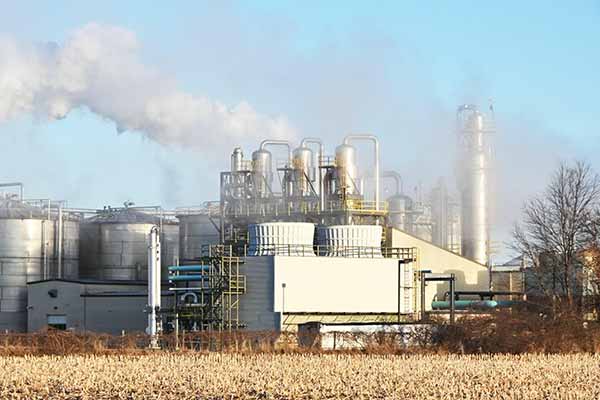
A 2,000-mile pipeline is being planned for the Midwest that would capture the carbon emissions from 31 ethanol plants and bury them underground, removing 12 million metric tons annually.
The pipeline’s developer, Summit Carbon Solutions, said the amount of emissions that would be captured from the pipeline would be equivalent to that produced annually by 2.6 million cars.
Known as the Midwest Carbon Express, the pipeline is to be built at a cost of $4.5 billion and is expected to make the ethanol from the plants more competitive in states where regulations favor low-carbon fuels.
Ethanol plants in the Dakotas, Iowa, and Nebraska are among those that will benefit from the pipeline’s services. They will be connected by small branches to the main pipeline.
The carbon emissions collected by the pipeline will be stored about 10 feet underground in rock formations.
Dakota already has the Dakota Access pipeline, which is approximately the same length, and North Dakota officials are enthusiastic about the economic opportunities the line will present. However, some people have expressed concern about its environmental impact and safety.
As many as 500 permanent employees will be needed to run the facility, which is expected to be completed in time to begin operations in 2024.
Shell to Move Headquarters to the U.K.
Oil giant Shell has decided to move its headquarters from the Netherlands to the U.K., a move that it said would aid in simplifying its structure and is also likely to help it transition out of fossil fuels.
The company, whose official name is Royal Dutch Shell, will consequently be dropping the “Royal Dutch” part of its brand name and will take the name Shell Plc, once the move is approved.
Only 150 companies among more than half a million Netherlands-based companies are entitled to carry the Royal title. That privilege was granted to Shell by the Dutch monarchy in the late 1800s.
The Dutch government is unhappy with the decision. Shell paid $212 million in taxes to the Netherlands in 2020.
Shell’s decision to relocate also raises concerns about the Dutch business environment, analysts said, pointing specifically to a dividend tax that is imposed on companies in the Netherlands.
The Dutch government expressed its concerns to Shell about possible job losses and the impact on investment decisions. However, Shell sought to reassure Dutch authorities that there would be no major dislocation for employees in that country, since only senior management personnel would be relocated to the U.K.
Shell executives said the move and restructuring of the company would both simplify it and make it more competitive. They said Shell would also be in a better position to maintain the company’s viability as it transitions to business outside of fossil fuels.
The company is still in the process of appealing a ruling by a Dutch court earlier this year that requires it to reduce its emissions substantially by the year 2030, following a case brought by climate activists.
Belarus Threatens to Cut EU Gas Supply
Belarus has threatened to cut off Europe’s supply of gas from Russia that is channeled through its territory after the European Union said it would impose additional sanctions for a migrant crisis at its borders.
The EU said it would impose further sanctions because Belarus encouraged a group of mostly Kurdish refugees to arrive and mass at its border with Poland, en route to the rest of Europe. The EU believes Belarus facilitated the refugees’ arrival as an act of revenge in response to the bloc’s imposition of sanctions earlier this year, following a disputed election in Belarus and a brutal crackdown by the incumbent president.
Alexander Lukashenko, Belarus’ president, told the media that his country provides the heating for Europe, and any further sanctions will meet with a response, including a possible blockage of gas supplies.
About 2,000 migrants, mainly from the Middle East, are stuck at the border between Belarus and Poland in freezing weather. Poland has refused to let the migrants through and has sent thousands of troops to the border, as well as erected a barbed wire fence.
The EU has refused to negotiate with Belarus.
Surrounding countries have expressed fears of an escalating military conflict, and Russia, an ally of Lukashenko, has begun flying bombers over Belarus.
Dominica Signs MoU at COP26 to Develop Geothermal Power
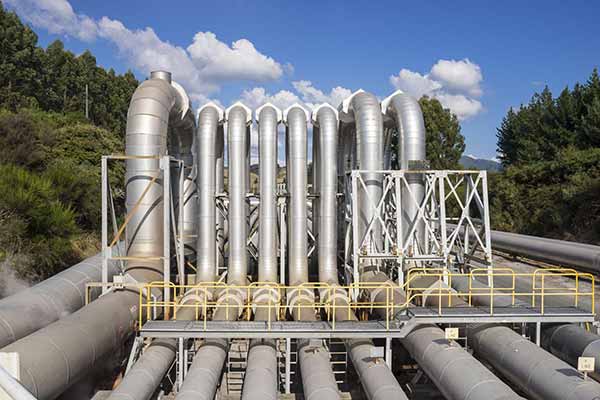
The Caribbean island of Dominica is looking to develop its geothermal resources and signed a memorandum of understanding (MoU) toward that end on the sidelines of the COP26 conference in Glasgow.
The MoU that Dominica signed with the Trinidadian green energy company Kenesjay Green Ltd. (KGL) will enable the country to develop projects that will use its 2 gigawatts (GW) of geothermal energy.
Dominica hopes to position itself as an important player in the global green hydrogen supply chain. The MoU commits Dominica to working with KGL to develop a green hydrogen industry, as well as carbon sequestration and other green energy projects.
The drive toward green investments is in keeping with Dominica’s goal to become climate resilient. The island suffered a devastating hurricane in 2017 that increased its sense of urgency with regard to climate change.
Ghana to Build 8 Solar Plants
Ghana’s Bui Power Authority (BPA) has made deals with investors to fund the construction of eight solar plants in the country and is aiming to have 700 megawatts (MW) of installed solar power capacity by 2024.
Construction work on the solar plants, which will be located in the country’s north, is expected to begin early next year.
The Ghanaian government is also hoping that some of the country’s university graduates will get experience working on the projects.
Ghana aligned its power sector with the Paris Agreement by signing the BPA Amendment Act.
Opinion writer: Jewel Fraser
The opinions, beliefs, and viewpoints expressed by the various authors do not necessarily reflect the opinions, beliefs, or viewpoints of Interactive Energy Group, LLC (IEG) or its parent companies or affiliates and may have been created by a third party contracted by IEG. Any content provided by the bloggers or authors are of their opinion and are not intended to malign any individual, organization, company, group, or anyone or anything.
Brought to you by energysavings.com
All images licensed from Adobe Stock.
Featured image: