
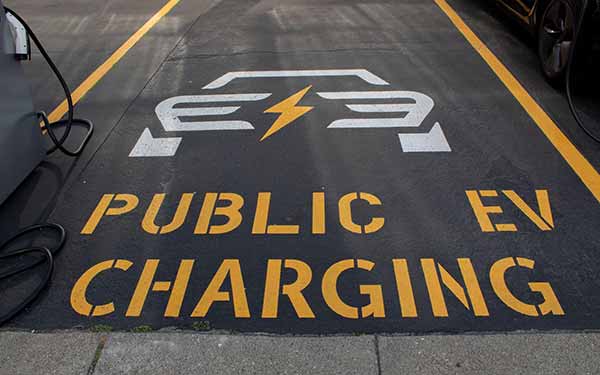
The Build Back Better bill that’s currently in the Senate would help the U.S. achieve its carbon emissions reduction goals, experts say. While the infrastructure bill does play a role, they say, it is not sufficient on its own to ensure the U.S. fulfils its obligations under the Paris Agreement. On the other side of the pond, the U.K. government is facing a legal challenge brought against it by climate activists over its continued payouts to fossil fuel companies. One group of activists allege the U.K. government gave fossil fuel companies billions in the aftermath of the Paris Agreement.
Build Back Better Bill Important for U.S. Climate Goals
The $2 trillion Build Back Better bill that President Joe Biden’s administration is now seeking to have passed will fill in the gaps left by the $1 trillion infrastructure bill in the United States’ fight against climate change.
Experts said that while the infrastructure bill helps to build resilience into the country’s electric grid and roadways, the Build Back Better bill is necessary to ensure that the U.S. can meet its obligations under the Paris Agreement to slash climate-warming emissions.
At the COP26 climate conference in Glasgow in November 2021, the President moved up his country’s commitment to reducing emissions, promising to cut them by 50% below 2005 levels by 2030. The goal has been described as an ambitious one.
The infrastructure bill will contribute to a limited degree in reducing emissions because nearly $80 billion of it has been earmarked for upgrading the electricity grid and building electric charging stations for electric vehicles.
However, the Build Back Better bill invests far more on climate initiatives — with $555 billion of the $2 trillion allocated to projects to combat climate change, including significant investments in clean energy technology.
One analysis of the likely impact of the Build Back Better bill suggests that its implementation would lead to a reduction of nearly 1 gigaton of U.S. carbon emissions, which is the amount of annual emissions produced by light-duty vehicles in the U.S.
Some point to recent record floods in the U.S. as proof of the need for the bill to become law. On the other hand, some say the bill will fuel inflation, leading to a steep increase in gasoline prices.
The United States House of Representatives has already given its approval to the Build Back Better bill.
Climate Activists Challenge U.K. Government in Court
Climate activists with the group Paid to Pollute are challenging the U.K. government’s decision to continue investments in new oil and gas fields.
The group alleges that after signing the Paris Agreement, the U.K. government went on to provide support for oil and gas exploration with almost 10 billion pounds in corporate tax relief and an additional 3.7 billion pounds for decommissioning projects.
Currently, the U.K. government is reviewing applications for 18 new projects presented for approval by the oil and gas industry. These include Scotland’s Cambo project that may begin operations next year and is expected to yield 170 million barrels of crude oil over a 25-year period.
Paid to Pollute says such investments and support are incompatible with the goal of keeping global warming below 1.5 degrees Celsius, as well as being incompatible with the UK’s commitments under the Paris Agreement.
While declining to comment on the court case, a U.K. government spokesperson denied that the government has given subsidies to the fossil fuel industry. The spokesperson said that the U.K. has been outstanding in the steps it has taken to help the energy industry make the transition away from fossil fuels.
The government points to its North Sea Transition Deal as evidence of its commitment to helping the energy sector make the transition to green energy while gradually phasing out the sector’s involvement in oil and gas. It said until the transition is complete, oil and gas production will need to continue to meet the country’s energy needs.
However, climate activists dispute there is a need for new oil and gas exploration. They say the UK already has enough oil and gas in production to meet its needs while it makes the transition to a low-carbon society.
Global Automaker Secures Lithium Supply From Germany
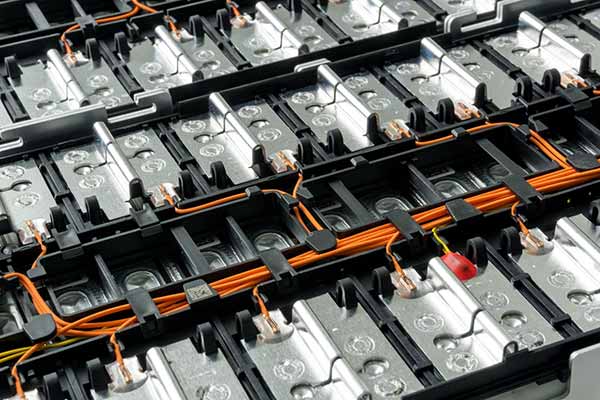
Stellantis, the corporation formed by the merger of Groupe PSA and Fiat Chrysler Automobiles, has entered into a contract for the supply of between 81,000 and 99,000 tons of battery-grade lithium to support the expansion of its EV production.
Vulcan Energy Resources has agreed to supply Stellantis with lithium hydroxide from mines in Germany over a five-year period. Vulcan will use geothermal energy to extract the lithium and thus reduce its carbon footprint.
Stellantis announced this summer that it is spending 30 billion euros on EV production and its associated software. It plans on producing electric batteries that provide more than 250 gigawatt hours at factories in the U.S. and Europe.
Other major automakers have entered into similar agreements to secure supplies of essential materials for EV production.
Stellantis says nearly 100% of its vehicle production will use electric or hybrid batteries within the next few years. It said by 2030 around 40% of the vehicles it sells in the U.S. will be low emission.
BP to Build Major Green Hydrogen Plant in U.K.
BP is hoping to begin large-scale production of green hydrogen in the U.K. by 2025. The hydrogen will be green since it will use renewable energy for its production.
The plant will be in England’s northeast in Teeside and is expected to yield 60 megawatts of electrical input (MWe) within the next two years.
Known as the HyGreen Teeside proposal, the green energy project may eventually scale up to produce as much as 500 MWe by 2030. In conjunction with another BP project in Teeside that produces blue hydrogen, the BP Teeside facilities may be able to meet as much as 30% of the U.K.’s total hydrogen production goal as the country endeavors to slash its reliance on fossil fuels.
The U.K. government is aiming to have 5 gigatons of low-carbon hydrogen available by 2030 to power up to 3 million homes and industry.
The HyGreen Teeside project is part of BP’s strategy to transition its business from fossil fuel production to renewables. The strategy — announced by the company in 2020 — includes the goal of controlling 10% of the hydrogen market.
BP executives say it is easy to sell low-carbon hydrogen, and the company has received numerous requests to supply it to customers.
They point out that low-carbon hydrogen will be especially wanted in industries where renewables are less viable as energy sources, such as shipping and trucking.
Nissan Announces 5-Year Electrification Plan
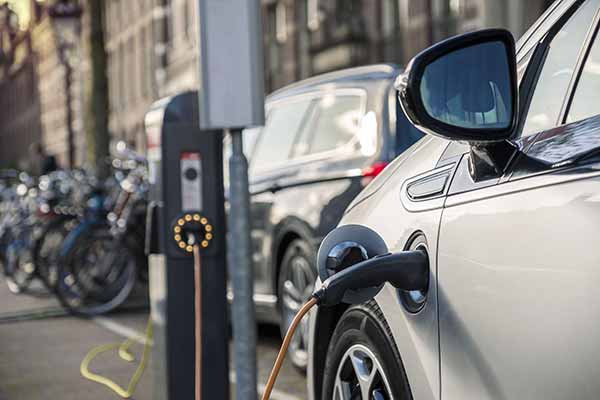
Japanese automaker Nissan has announced plans for the next five years that will see it launch 23 electrified vehicles.
The plans to move toward greater electrification of its vehicles is in keeping with trends in the industry, as major car dealers, including Japanese rival Toyota, focus on making the transition away from gasoline-fueled vehicles.
At the COP26 conference in Glasgow in November 2021, General Motors and Ford signed an agreement to end the manufacture of vehicles using gasoline by 2040. Nissan and Toyota have made no commitment to completely eliminate their lineup of gasoline-powered models. Nevertheless, Nissan says it wants half of all vehicles it manufactures to be electrified, including hybrid models, by 2030.
To support its electrification drive, Nissan says it will spend approximately $18 billion. It also intends to introduce solid-state batteries by early 2029.
The company will use its proprietary solid-state batteries for building a new line of EVs; that battery is said to significantly reduce charging times and increase EV efficiency.
Nissan was one of the first automakers to introduce a line of EVs when it launched its Leaf model in 2010.
Greece to Auction Licenses for 1 Gigawatt of Renewables
The government of Greece will be inviting bids for the supply of 1 gigawatt (GW) of mixed renewables next year.
The auctions will begin in March when bids will be invited for 600 megawatts (MW) of combined wind and solar technologies. The European Union is supplying aid of 2.27 billion euros to support these auctions for electricity production.
Award of the tender is conditional on the supplier providing an adequate mix of solar and wind technologies to meet the energy requirements. If the mix is insufficient, the Greek government reserves the right to hold separate auctions for wind and solar.
The tender contracts have built-in guarantees that protect the supplier from price volatility while limiting the cost incurred by the state.
Greece took steps earlier this year to reduce the number of companies responding to tenders, by increasing the amount of guarantee payable under licensing arrangements. Despite this, licenses for the provision of hundreds of megawatts of renewable energy with storage capacity have recently been approved.
Trinidad and Tobago Sticking With Fossil Fuels
Trinidad and Tobago’s Energy Minister assured worried executives in the oil and gas sector that his government will work to ensure their survival.
The minister said that the natural gas produced by Trinidad is a transition fuel and will continue to be needed for a long time, even as the world transitions to renewables. He added that the government will work to ensure the success of companies making new investments in that country’s oil and gas sector.
Opinion writer: Jewel Fraser
The opinions, beliefs, and viewpoints expressed by the various authors do not necessarily reflect the opinions, beliefs, or viewpoints of Interactive Energy Group, LLC (IEG) or its parent companies or affiliates and may have been created by a third party contracted by IEG. Any content provided by the bloggers or authors are of their opinion and are not intended to malign any individual, organization, company, group, or anyone or anything.
Brought to you by energysavings.com
All images licensed from Adobe Stock.
Featured image: