
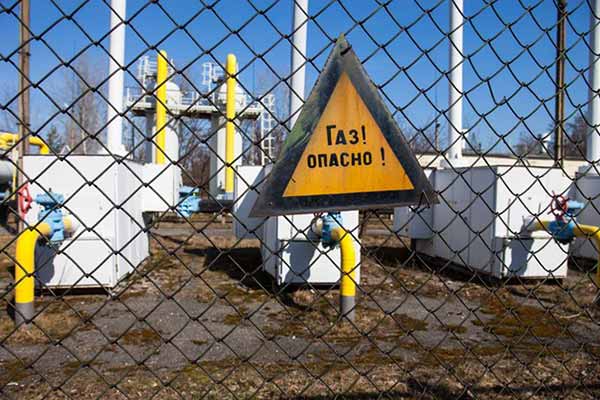
The European Union and United States have threatened to block Russia’s Nord Stream 2 pipeline operations if Russia attacks Ukraine, as one possible retaliatory measure against Russian aggression. At the same time, U.S. and EU officials said they’ll work to secure alternative supplies of gas for Europe. In Asia, the continent’s richest man has announced a $75 billion investment in renewable technologies, which will be used partly to advance India’s ambitions to be a global hydrogen production hub.
Russia’s Nord Stream Pipeline Focus of Retaliation
The U.S. and its EU partners have threatened to stop the $11 billion pipeline built by Russia to funnel gas to Europe, should Russia attack Ukraine.
The Nord Stream 2 pipeline, whose construction was completed late last year, was expected to provide enough gas to heat more than 25 million homes in Germany. But German regulators have withheld permission for it to begin sending gas to Western Europe since its completion.
The pipeline, owned by Russia’s Gazprom, has been a bone of contention between the U.S. and Germany, with the U.S. expressing strong fears that Russia would use the pipeline to increase its influence over the Western Europe countries.
Currently, Russia provides nearly half of Europe’s gas supply. However, the White House and the European Commission issued a joint statement that they were working together to source other supplies of natural gas for Europe, in the event that gas supplies are disrupted if Russia attacks Ukraine.
The U.S. and EU officials said the collaboration would help to protect the U.S. and the rest of the world from any sudden escalation in prices brought on by a military conflict in Ukraine.
Most of the gas supply from Russia to Europe flows through Ukraine. Russia opted to build the Nord Stream 2 along a route that would bypass the usual route through Ukraine.
One potential effect of Russia’s decision to bypass Ukraine with Nord Stream 2 is that Ukraine could lose the $2 billion in annual transit fees that it levies on Russia for any gas pipelines running through its territory.
Asian Billionaire Invests $75 Billion in Renewables
A billionaire who became Asia’s richest man through investments in fossil fuels is now looking to put $75 billion into renewables technology that may transform India’s economy.
Mukesh Ambani has announced he will be making investments in electrolyzers, solar plants, and other renewables technology. Analysts predict the investment will position his firm, Reliance Industries Ltd., to take the lead in India’s effort to become a major producer and exporter of green hydrogen.
Ambani hasn’t indicated just how much of the sizable investment in renewables will be spent specifically on hydrogen, but stated he’s aiming to produce green hydrogen at a cost that’s less than half the going rate.
His goal is to produce the fuel at a cost of $1 per kilogram, and he expects to achieve this goal before 2030.
However, such a goal faces considerable hurdles, including the need for an uninterrupted supply of ultra-low-cost electricity from clean energy sources to drive the electrolysis process to create green hydrogen. The cost of electrolyzers will likewise need to fall significantly.
Analysts said Ambani is also likely avoiding investments that would require his company to seek customers operating in India’s wholesale electricity market.
India’s prime minister has expressed the desire for his country to be a major hydrogen producer that will serve the global export market; the country will soon lay out its plans for investments in the green hydrogen sector in the coming days.
The government will also facilitate the sourcing of clean energy for the production of green hydrogen, as well as provide land to build renewable energy facilities.
Ambani’s company has requested 450,000 acres of land in western India for its renewable energy project.
Experts have pointed out that Reliance may also need government support, including subsidies, to make its goal of low-cost green hydrogen production a reality.
Shell China to Supply Winter Olympics With Green Hydrogen

Shell China is partnering with a Zhangjiakou company to produce green hydrogen for use in vehicles deployed at the Winter Olympics in Hebei in February.
The company announced it has begun operating an electrolyzer that uses wind power to split water into hydrogen, the process used in the production of green hydrogen.
The 20-megawatt electrolyzer will power fuel cell vehicles within the Olympic city.
China’s president has said the Winter Olympics being held in his country beginning on Feb. 4 will be a “green” one, with all event venues in Hebei and Beijing operating solely on renewable energy.
Seven hundred hydrogen-fueled vehicles are being made available for transportation throughout the Olympic zone.
The joint venture with Zhangjiakou City Transport Construction Investment Holding Group Co. is Shell’s first commercial project in China to focus on green hydrogen production.
There are plans to scale up by tripling production within the next two years, the two companies have said.
The hydrogen supply will continue to be made available in the Chinese region after the Olympics, with plans to use the green fuel in public transportation and commercial vehicles.
1.6 Billion-Euro Undersea Electricity Cable Planned
Israel, Cyprus, and Greece have signed an agreement for the laying of an undersea electricity cable that will connect the three countries’ power grids at a cost of roughly 1.6 billion euros.
Partial funding for the cable comes from the European Union, which is expected to supply just over 650 million euros through its Connecting Europe Facility.
The first phase of the project is scheduled for completion in 2025, and the agreement signed by the three countries will facilitate its progress by speeding up approvals and permits.
Known as the Eurasia Interconnector, the 2-gigawatt cable is expected to boost energy security and help with the transition to renewable energy.
The Interconnector has lessened interest in a plan by the three countries to lay a natural gas pipeline that would have carried gas through Greece to Europe. That proposed project had attracted opposition because of environmental concerns.
The Eurasia Interconnector will be 1,208 kilometers (750 miles) long and run to a maximum depth of 3,000 meters (9,842 feet).
Canadian Firm Halts Work on Maine Power Line
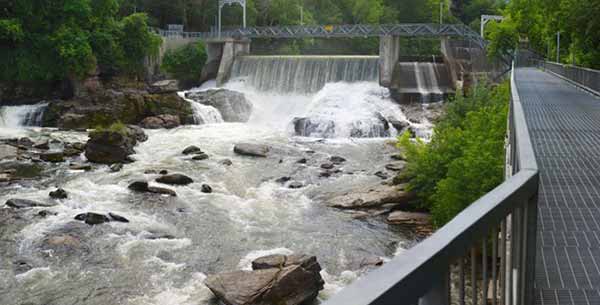
Hydro-Quebec has temporarily halted work on construction of a 60-mile interconnection that would have brought its hydropower from Canada into the U.S. over the Maine border.
The company told Canadian regulators that though it remains convinced of the value and importance of the New England Clean Energy Connect, it would suspend work for the time being. The decision follows suspension of the work on the project in the U.S. following a referendum in which the majority of residents voted against the project.
The U.S. partners on the New England project, Central Maine Power, ceased construction on the project following the referendum and revocation of a permit by regulators. They were preparing to cut through more than 53 miles of woods in Maine to run the transmission lines to the Canadian border.
Opponents of the $1 billion project say it would be harmful to the environment, whereas Central Maine Power and its supporters contend it’s necessary to achieve the energy transition.
The two companies have challenged the project’s suspension in the state’s supreme court.
Report Shows Energy Efficiency Lowered UK Energy Bills
U.K. households have seen significant savings on their energy bill, a recent analysis shows. This is in large part thanks to EU energy-efficiency directives for appliances, including refrigerators and light bulbs, and a U.K. government mandate with regard to gas boilers.
Overall, since 2000 energy consumption by U.K. households has dropped by more than 15%, even though many homes are now larger than when the policies were first implemented. The result is that the average English family pays 1,000 pounds less than it would today without implementation of the energy-efficiency measures.
However, the U.K. government’s failure to follow through on schemes set up to assist lower-income households to better insulate their homes has resulted in the savings being considerably lower than might otherwise have been achieved, the report said.
The analysis pointed out that savings from more energy-efficient appliances do not continue to grow with the years, since improvements in their energy performance weren’t expected beyond a certain point.
The government’s failure to successfully manage the home insulation schemes was a missed opportunity to protect British citizens from skyrocketing energy prices, the experts said. Another report suggested the failure has resulted in an additional 1 billion pounds annually in energy costs that might have been avoided.
A government official welcomed the report and said it will be investing nearly 7 billion pounds to make homes in the U.K. carbon neutral and more energy efficient.
Opinion writer: Jewel Fraser
The opinions, beliefs, and viewpoints expressed by the various authors do not necessarily reflect the opinions, beliefs, or viewpoints of Interactive Energy Group, LLC (IEG) or its parent companies or affiliates and may have been created by a third party contracted by IEG. Any content provided by the bloggers or authors are of their opinion and are not intended to malign any individual, organization, company, group, or anyone or anything.
Brought to you by energysavings.com
All images licensed from Adobe Stock.
Featured image: