
The European Union has devised a plan that it hopes to begin implementing this year to achieve a significant reduction in its need for imports of Russian gas. The plan includes increased stored gas supplies, accelerated green hydrogen production, and increased energy efficiency. Meanwhile, concerns are being felt around the world as supplies of metals crucial to the building of EVs are not keeping up with demand, and automakers find themselves increasingly dependent on China for the processed metals used in EV manufacture.
EU Takes Steps to Wean Itself From Russian Oil, Gas
The European Union has launched its REPowerEU plan that it hopes will reduce its fuel imports from Russia by nearly 70% by year end.
The plan is a collection of measures decided upon in response to Russia’s invasion of its neighbor Ukraine. It includes increasing stores of gas supplies ahead of the next winter and greater investment in renewables. Russia has been Europe’s main supplier of gas and accounted for almost half of the continent’s gas imports in 2021.
In order to wean itself from its dependency on Russian supplies, the European Commission has announced a proposal for all EU countries to have in storage 90% of their gas supply needs for the coming winter, no later than October of this year. The proposal will be put to the vote no later than next month.
The EU is also boosting its gas imports from the U.S., Africa, and Asia, and expects those channels to supply an additional 50 billion cubic meters of gas annually. Plans are also being drawn up to significantly speed up the pace of green hydrogen production, with the hope of this fuel replacing as much as another 50 billion cubic meters of gas currently being obtained from Russia by the end of the decade.
The EU will also spend more on energy efficiency that can reduce gas needs by as much as 25 billion cubic meters annually, while also encouraging significantly greater investments in rooftop solar systems.
These efforts to reduce reliance on Russian fuel will, however, likely drive up costs for householders, analysts said.
The EU bloc is hoping to provide some relief from the expected price increases by granting economically disadvantaged consumers and small businesses support in paying their energy bills. The funds to do so will come from temporarily increasing taxes on energy companies’ surplus profits and by using revenues from the EU emissions trading scheme.
Nevertheless, there are fears that the sanctions against Russia will exacerbate energy poverty in Europe, which likely won’t be completely allayed by such measures and consumers can expect to experience some degree of distress.
In addition, the efforts to end dependency on Russia’s fuel supplies are likely to increase greenhouse gas emissions as more countries will be forced to rely on coal to meet their energy needs. However, even this workaround is challenging since nearly a third of the bloc’s coal supplies come from Russia.
Global EV Supply Dependent on China for Materials
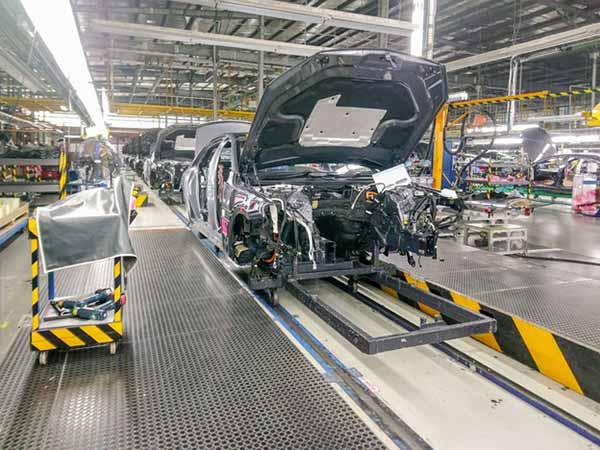
Western countries are concerned about the overreliance of the EV industry on China for crucial metals that are used to build the batteries of electric vehicles.
Electric vehicles depend on the use of certain metals, including cobalt and lithium, for their electrification. However, one report shows that last year, roughly three-quarters of the world’s supply of these metals in the processed form used in EV manufacture came from China.
Whereas China has to import the raw materials, it’s ahead of the West in terms of the capacity to refine the metals for use in electric vehicles.
The EU is committed to widespread adoption of electric vehicles to help combat climate change, however, and has begun initiatives to develop a sustainable supply of the metals used in EV batteries, one of these being the European Battery Alliance.
Of particular concern to the West is China’s control of the graphite market. Graphite is a key component of the lithium-ion batteries currently used to power electric vehicles.
Experts say that the expected surge in EV production will likely lead to a major global supply deficit in the key material graphite. This year the shortfall in the graphite supply is expected to be well over 80,000 tons and the cost of this material has been steadily climbing.
Since the battery’s cost makes up a significant share of the overall cost of producing an EV, any increase in the price of the battery will likely drive up the overall costs of EVs, which is a setback for manufacturers seeking to make them comparable in price to gas-fueled vehicles.
Graphite can be mined or produced synthetically, but while the latter is preferred by manufacturers, the process tends to have a much larger carbon footprint than mining. On the other hand, naturally produced graphite has a bad reputation for the damage done to the environment and the health of the workers employed in mining it.
To counteract the reliance on China for processed minerals used in EV production, the U.S. has allocated $3 billion to support U.S. companies working on extracting and processing them. At the same time, global automakers are establishing direct relationships with mines producing the metals in other countries and investing in some of them, in order to ensure their supply.
However, experts have cautioned that it’ll take time for the West to build up its capacity for mining and processing these minerals, especially since China’s advantage resulted from years of strategic planning and investment.
Australian Experts Fear Grid May Be Hacked
Cybersecurity experts in Australia say a serious ransomware attack on one of the country’s major generators last year, launched by Russian hackers, highlights the need to boost security for the nation’s electricity grid.
The attack on CS Energy in Queensland, Australia, was one of many such incidents targeting the power supply, experts said. Hackers are able to exploit the increased use of the internet for connecting home solar systems and smart devices to the grid, to infiltrate state electricity companies’ computer networks and disrupt their operations.
Households are increasingly being targeted by phishers who use the household’s interaction with the grid’s IT system to gain access to that system.
The invasion of Ukraine by Russia could potentially lead to an increase in such cybersecurity threats, the experts said. Industry spokesmen said cybersecurity threats are among their top concerns and hackers are becoming increasingly more sophisticated in their cyberattacks.
The need to protect the grid from these attacks has led the federal government to consider implementing legislation requiring electricity companies to increase their defenses against cyberattacks. Failure to do so could lead to a cascading series of catastrophic disruptions to daily life should a cyberattack succeed in doing serious damage.
Such increased defenses may lead to an increase in the price of power supplies, but experts said the lower costs for providing renewable energy will offset those increases.
Scotland Takes Steps to Mitigate Fuel Poverty

Scotland’s government is working to support citizens struggling with rising fuel prices and fuel poverty, and has introduced a series of measures that include repayments to homeowners who spend money on energy efficiency.
The rebate allows homeowners to claim up to 6,000 pounds for expenses incurred when introducing energy-efficiency upgrades to their homes, under one of three schemes to support energy efficiency upgrades in the country.
The government has allocated 160 million pounds altogether to the three schemes. The funds will also permit more people to become eligible for benefits designed to alleviate fuel poverty. An additional 10 million pounds has been injected into the Fuel Insecurity Fund that was established to prevent households being forced to disconnect their energy supplies or ration their use.
Advisory services for families about ways to implement energy efficiency measures are also being expanded.
The funding for the three schemes is part of a wider package to tackle the rising cost of living in Scotland and the U.K..
Several human rights and environmental groups in the U.K. have banded together to urge the government to do more to tackle fuel poverty. They say rising costs have forced parents to make the untenable choice between meeting the basic needs of their children or keeping the home warm. The groups also encourage greater efforts to diversify from fossil fuels, which they said only makes citizens more vulnerable to fluctuations in gas prices.
Scotland’s government has said decisions with regard to the composition of the U.K.’s energy market remain the purview of the central government in England. However, it’s doing its best by providing both short-term support and encouraging longer-term change through promoting energy efficiency.
Trinidadian Car Dealers Urge Removal of Tax on Hybrids
Trinidadian car dealers are urging the country’s government to remove taxes on hybrid vehicles to make them more affordable.
Despite encouragement from the Trinidad and Tobago government for citizens to opt for EVs, the country’s car dealers say only the rich will be able to afford them at the current prices.
The country’s prime minister has announced plans to make the public bus service 100% electric and has given instructions to the Ministry of Finance to support purchasing of EVs by consumers. But the national car dealers’ association said that the only EVs and hybrid vehicles available for sale in the country are beyond the reach of most Trinidadians.
The association suggests the government relax the policy on age limits for second-hand vehicle imports and allow imports of EVs that are as many as four years old, to facilitate purchases by lower- and middle-income earners.
An association spokesperson also pointed out that nickel, one of the primary materials in EVs, had doubled in price between February and March, moving from $24,000 per ton to over $48,000 per ton. He said this would likely further increase the price of EVs. Russia is one of the world’s main suppliers of nickel.
Opinion writer: Jewel Fraser
The opinions, beliefs, and viewpoints expressed by the various authors do not necessarily reflect the opinions, beliefs, or viewpoints of Interactive Energy Group, LLC (IEG) or its parent companies or affiliates and may have been created by a third party contracted by IEG. Any content provided by the bloggers or authors are of their opinion and are not intended to malign any individual, organization, company, group, or anyone or anything.
Brought to you by energysavings.com
All images licensed from Adobe Stock.
Featured image: