

The United States federal government has received an executive order from the president to implement measures immediately that would move the government toward carbon neutrality by 2050. The order means government agencies must now buy electric vehicles in place of gas-powered ones, and work to increase the share of renewable power in meeting its energy needs. Meanwhile, Shell’s shareholders have given the greenlight to the company to move its headquarters to the UK, ending more than a century of a dual tax structure.
Federal Government Receives Directive to Go Green
U.S. President Joe Biden has issued a formal directive for the federal government to accelerate the energy transition with the goal of achieving full carbon neutrality in 2050.
The executive order mandates the federal government to spend billions on purchases that would reduce greenhouse gas emissions. Those purchases include replacing gas-powered vehicles with EVs, ensuring that emissions from federal buildings are net-zero by 2045, and meeting more of the government’s electricity needs from renewable sources. The latter provision is expected to considerably boost the supply of renewable electricity to the grid over the next nine years.
Last year, the government’s vehicle fleet numbered approximately 650,000, including civilian and military vehicles. Replacing these with American-made EVs fulfills an election campaign promise made by the president. The switch to EVs means that the government will no longer buy vehicles that run on gas after 2035.
In keeping with the president’s plan, Ford has announced it will make an almost-$30 billion investment in new EV production, whereas GM has launched a new company focused specifically on producing electric delivery vehicles.
The executive order is a significant step in transitioning the U.S. economy from fossil fuels and spur new investments in clean technologies.
Some federal agencies have already begun work on clean energy projects. A Pentagon solar project will soon add more than 500 megawatts of clean energy to the nation’s power supply while also providing union jobs to hundreds of workers.
Vote Favors Shell Moving HQ to UK
Nearly 100% of Royal Dutch Shell’s shareholders have given their consent to the proposal to move the company’s headquarters to the UK.
They didn’t consider it to be a controversial proposal, and Shell said it would simplify the legal and tax structure of the company and make it easier to pay out dividends to shareholders. The proposal needed to garner 75% of votes to be approved.
The company is now expected to move to the UK next year, where it will likely drop “Royal Dutch” from its name. The Dutch government is reportedly very unhappy with the decision.
However, the company stressed to the Netherlands government that it remains committed to and proud of its Dutch heritage and will continue to play an important role in the Dutch economy, where it has over 8,000 employees.
Following consultations with staff organizations, the company will finalize the decision to make the move. It said the move to London will be done as expeditiously as possible once circumstances confirm the move remains in the company’s best interests.
The Shell’s chair had initially suggested that the decision was partly driven by the Dutch government’s decision to retain a withholding dividend tax.
The company was required to pay the Dutch government 15% withholding tax on all dividend payouts once its headquarters remained in the Netherlands.
Shell became a dual company at the start of the 20th century when a Dutch oil company and Shell Transport and Trading merged. It later became incorporated in the UK while having a Dutch tax residence in the early part of this century.
Exxon Faces Demand to Publish Emissions Targets
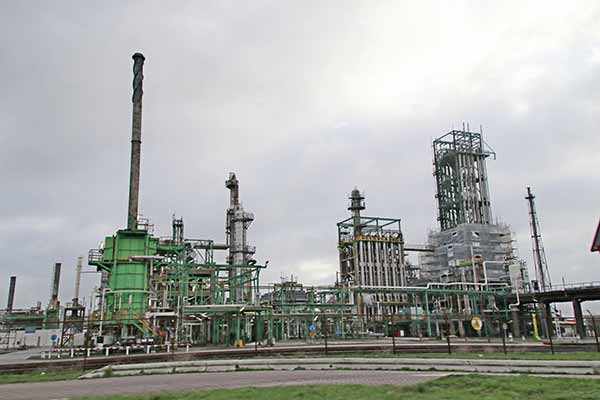
A group of activists known as Follow This are urging shareholders to demand that Exxon publish its emissions-reduction goals for the medium and long-term.
The activist group, which originated in the Netherlands and first targeted Shell, has expanded to initiating action at other Big Oil companies. It has gained growing support from shareholders to file climate-related resolutions at investor meetings, though this is the first time it’s targeting Exxon.
At its urging, several such resolutions have been presented for consideration at shareholder meetings of major oil companies in 2022. Follow This said it had adopted this strategy because the oil companies will not act on climate concerns unless their shareholders express concern about the issue.
Another activist group, the hedge fund Engine No. 1, successfully sought to gain seats on Exxon’s board of directors earlier this year. They and other investors say that Exxon isn’t doing enough to cut the carbon emissions from its operations.
A recent Exxon document shows the company will be spending $15 billion over the next six years on various emissions-reduction projects.
Germany, U.S. Threaten to Retaliate With Nord Stream Pipeline
Germany and the U.S. have agreed to block the Nord Stream 2 pipeline as a retaliatory measure against Russia if it moves to increase hostilities against Ukraine.
The Nord Stream 2 pipeline carries Russia’s gas to Europe and has been a source of contention and tension among several European countries, as well as the U.S., which fears the continent’s growing dependence on Russian gas.
Ukraine is also concerned that the pipeline, which bypasses its territory and runs under the sea, will weaken it economically and deprive it of revenue it usually earns for having gas pass through its terrain to Europe.
The pipeline is owned by Russia’s Gazprom and runs 1,200 kilometers from Russia, including under the sea, to Germany. It was completed in September at a cost of $12 billion, but has encountered regulatory obstacles in starting operations.
Though previous sanctions against Russia over the years have had only a small impact, U.S. officials said they believe blocking the Nord Stream 2’s operations would likely be more effective because of the project’s importance to Russia. Ongoing hostile acts by Russia against Ukraine prompted the U.S. to issue a warning to Russia that any move to escalate hostilities would result in dire consequences, including a possible halt to the Nord Stream 2.
UAE Launches Project to Become Green Hydrogen Hub
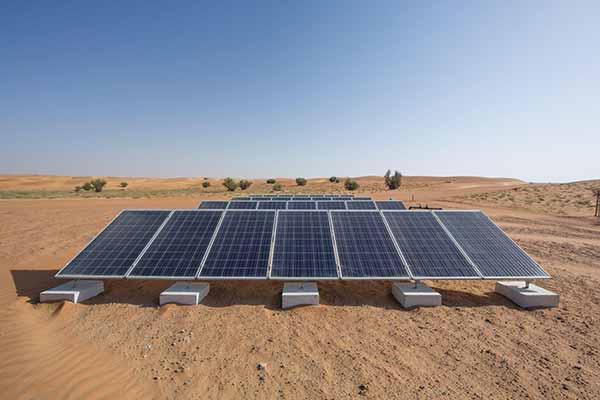
The United Arab Emirates has announced it has entered an agreement with Engie, a French company, to work on a project whose goal is to make the Arab country a hub for green hydrogen.
The project will have an investment of $5 billion and is expected to have a capacity of about 2 gigawatts.
The UAE is aiming, in the first instance, to supply green hydrogen to the Gulf Cooperation Council, consisting of five major Arab states. It hopes to be able to meet demand further afield in due course.
The project is expected to draw on the UAE’s abundant solar energy to produce green hydrogen, with the country having made significant investments in solar projects over the past year. Hydrogen is considered to be green when renewable energy sources are used for its production.
While the UAE is a major producer of gas and crude oil, the project is seen as a major step toward achieving the energy transition.
Activists Sue UK Government Over Gas Project Funding
Climate activist group Friends of the Earth is challenging in court the UK government’s decision to provide $1.15 billion in funding for a gas project in Mozambique.
The group’s lawyer argued that such financing is contrary to the UK’s commitments under the Paris Agreement to do its part to keep global warming below 2 degrees Celsius. The lawyer said even though the project may have aligned with Mozambique’s approach to tackling the climate issue, the overall effect would be inconsistent with helping it to lower its emissions.
The UK government’s lawyers have asked the court to dismiss the lawsuit, citing the government’s oversight of the decision in the public interest, including UK business interests and the expected transformation of the Mozambican economy from the project.
However, the investment may actually be driving a violent insurgency in the country, one official said.
Friends of the Earth said the assessment of the Mozambique gas project’s climate impact was also inadequate. Further, it suggested that the UK’s export credit agency, UKEK, which did the financing, was afraid to pull out of the project because of potential repercussions, despite concerns by several officials about the decision to finance it.
The UKEK is a co-financier with the African Development Bank on the gas project that’s being carried out by French oil company Total.
Iran Keen to Share Energy With Region
Iran has outlined plans for a common power grid with other Persian Gulf Arab countries, and currently exchanges electricity with several countries, including Afghanistan, Iraq, Azerbaijan, and Turkey.
At a recent meeting, the country said it’s a producer of high-quality electrical equipment, including F-turbines, and is a major player in the hydropower market contributing to the development of hydropower plants in several neighboring countries.
It’s hoping to add 6,000 megawatts of additional power capacity in the new year, in time to meet summer peak demand. More than 99% of the country’s population already has access to electricity, the government said.
Opinion writer: Jewel Fraser
The opinions, beliefs, and viewpoints expressed by the various authors do not necessarily reflect the opinions, beliefs, or viewpoints of Interactive Energy Group, LLC (IEG) or its parent companies or affiliates and may have been created by a third party contracted by IEG. Any content provided by the bloggers or authors are of their opinion and are not intended to malign any individual, organization, company, group, or anyone or anything.
Brought to you by energysavings.com
All images licensed from Adobe Stock.
Featured image: