During the week after Christmas, Germany announced the closing of the last of its nuclear power plants, three of which have already been shut down. At the same time, Europe celebrated the successful manufacture of the first EV lithium-ion battery cell by a European company, while also seeing a significant drop in the gas prices that have roiled the continent for the past several weeks.
Germany Shutting Down Last Nuclear Reactors
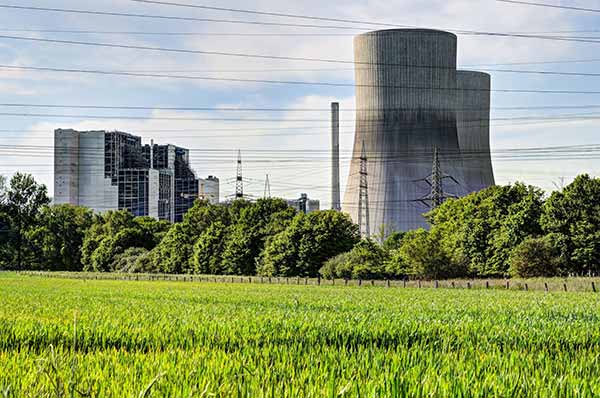
The last six of Germany’s nuclear power plants will be shut down soon with three of them already closing and the remaining three by the end of 2022.
The six nuclear power plants contributed a little over 10% of Germany’s electricity supply, while the three that will shutter on Friday have been operating for almost 40 years.
The closing down of nuclear power plants is in keeping with a commitment made by German authorities a decade ago to phase out nuclear power as a source of energy after the Fukushima nuclear disaster occurred in 2011.
Germany hopes to step up its production of energy from renewable sources to help fill the void. Currently, the country gets 41% of its energy from renewable energy sources, and hopes to increase that share to 80% by 2030. Natural gas supplies 15% of the country’s energy needs and coal around 28%.
There won’t be significant job losses from the shuttering of the nuclear plants, officials say, because it’ll take another decade at least to fully decommission the reactors.
It will cost more than 10 billion euros to dismantle all of the plants and conduct post-operational activities, including cleaning up radioactive waste.
However, environmental activists pointed out that uranium-enrichment work continues in Germany.
Meanwhile, Belgium announced plans to shutter all its nuclear reactors by 2025 while investing 100 million euros in new-generation nuclear technology.
Experts have pointed out that a main reason countries favor nuclear power for electricity is that it creates a support system for military use of nuclear power, including weaponry and submarines.
Ten percent of the world’s energy supply comes from nuclear sources, provided by more than 400 nuclear reactors. China has been building 18 of the 50 currently under construction globally.
The United States, United Kingdom, France, India, Russia, and China are continuing to use nuclear energy, which generates much fewer carbon emissions than fossil fuels and is considerably more expensive to produce than power from renewables.
Swedish Gigafactory Begins Operations
The first European EV battery producer began production the week after Christmas, with stated ambitions to become the world’s greenest battery cell producer.
Swedish company Northvolt announced the assembly of the first battery cell entirely produced from beginning to end by a European manufacturer at its gigafactory in northern Sweden, where it’s able to access considerable renewable energy resources.
The development is viewed as significant since most EV batteries are produced by Asian companies, some of which own manufacturing operations in Europe. Tesla is expected to open its first European gigafactory in the new year.
Northvolt hopes to ramp up production capacity to 60 gigawatts per hour annually. That’s enough battery power for one million EVs. It hopes to achieve 16GWh of battery cell production within the next two years.
The company currently employs 500 people and expects to significantly increase that number in order to achieve the 60 GWh production.
With shareholders including Spotify’s founder, as well as Goldman Sachs and BMW, among other big names, the company has already secured billions of euros in funding. Northvolt was established by two former Tesla employees.
Investors estimated the company was worth $12 billion earlier this year, and it already has several billion dollars’ worth of contracts to supply automakers including BMW, Volkswagen, and Volvo.
Meanwhile, there are plans to build 25 gigafactories in Europe by 2030, nine of these by Asian firms. A gigafactory is defined as a plant capable of producing batteries supplying 15GWh annually.
Investors are hoping the Northvolt factory will start a trend that’ll break the monopoly of Asian manufacturers on the EV lithium-ion battery cell market.
European Gas Prices Go Down
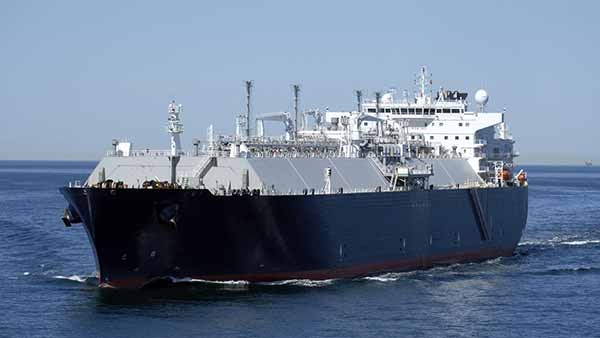
Following a record-high jump in gas prices in Europe the week before Christmas, the week after saw a significant and ongoing decline thanks largely to increased LNG (liquified natural gas) shipments.
The increased availability of gas supplies to the bloc has been helped by the decision of Asian buyers to use up their stocks rather than purchase new supplies.
At the same time, warmer weather across Europe is playing a role in driving down demand, though analysts say the region’s energy troubles are far from over.
Several tankers carrying LNG from the U.S. are heading to Europe, and U.S. shipments to the region increased by a third over the Christmas period. Europe has been willing to pay LNG suppliers considerably more than Asia will for gas supplies to alleviate a desperate shortage.
No gas supplies have been delivered by Russia’s Gazprom pipeline to the bloc for several days, and analysts say that the increased supplies from the U.S. will make no real, lasting difference to the energy crunch in Europe.
Tesla Recalls Nearly Half a Million Vehicles
Tesla is recalling almost half a million cars it’s sold in the U.S. since 2014 over technical issues that may lead to accidents. The number of recalls is almost equal to its global sales last year.
The bulk of recalls are for the Model 3 cars made and sold between 2017 and 2020. The remainder are for Model S cars sold since 2014.
Tesla explained to the National Highway Traffic Safety Administration (NHTSA) that after reviewing over 2,000 warranty claims it decided to recall the vehicles, whose defects it’ll fix at no cost to the customer.
The issues identified are with the Model 3’s rear-view camera’s cable harness and the front trunk latch of the Model S.
This year, Tesla has also had to fix software in most of the vehicles it sold to China because of safety concerns.
In 2020, several million vehicles by different automakers were recalled.
The NHTSA has also announced that Tesla will update the software for its automobile consoles to prevent drivers from playing video games while driving. The company is still under investigation with regard to collisions between its cars driven on autopilot and parked emergency vehicles.
Big Growth in RE Expected for 2022
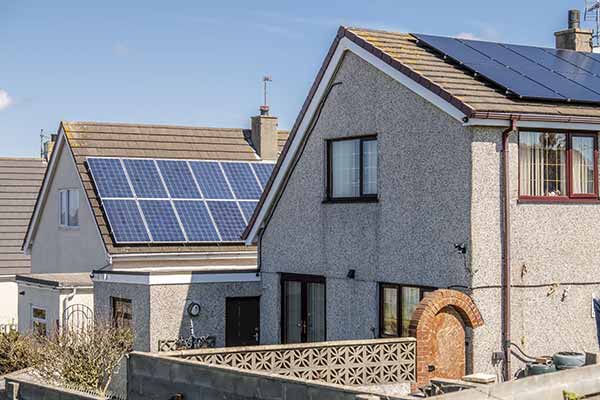
Analysts predict there’ll be a considerable increase in renewable energy next year, driven partly by significant investments in hydrogen.
Installed renewable energy capacity will likely grow to more than 270 gigawatts, analysts said, having reached a total global capacity of 227 gigawatts in 2021.
Most of the growth this past year came from residential solar installations, offshore wind, and storage projects. During the year, residential solar capacity grew to just over 25 gigawatts.
However, onshore wind installations have dropped significantly.
Hydrogen projects have grown by a multiple of seven since the end of 2020, with investments expected to reach as much as $300 billion by 2030. The UAE and other Gulf countries have expressed a keen interest in hydrogen production and are planning to invest $160 billion in renewables between now and 2050.
U.S. Firm Contracted for Green Hydrogen Study
Trinidad and Tobago has contracted the U.S. energy firm KBR to conduct a study into the country’s potential for developing a green hydrogen market.
The study is being funded by the Inter-American Development Bank and will require KBR to work with the country’s National Energy Corporation to identify ways to use existing infrastructure in the development of a green hydrogen and low-carbon economy.
KBR is also expected to provide recommendations on the technical aspects involved in developing these low-carbon initiatives.
India Launches Hydropower Projects Worth Over $1 Billion
India has inaugurated a number of hydropower projects, valued at 11,000 crores (approximately $1.48 billion). The projects include one that has been in the works for three decades and is expected to provide 40 megawatts of power annually.
The 40-MW project, known as the Renukaji Dam project, will rely on water from the Himalayas; it’s finally moving forward with the cooperation of six Indian states, including Uttar Pradesh and Delhi.
Other projects that have been initiated include a 210-MW dam project called Luhri Stage 1 and the 66-MW Dhaulasidh Hydro Power project.
Opinion writer: Jewel Fraser
The opinions, beliefs, and viewpoints expressed by the various authors do not necessarily reflect the opinions, beliefs, or viewpoints of Interactive Energy Group, LLC (IEG) or its parent companies or affiliates and may have been created by a third party contracted by IEG. Any content provided by the bloggers or authors are of their opinion and are not intended to malign any individual, organization, company, group, or anyone or anything.
Brought to you by energysavings.com
All images licensed from Adobe Stock.
Featured image: