
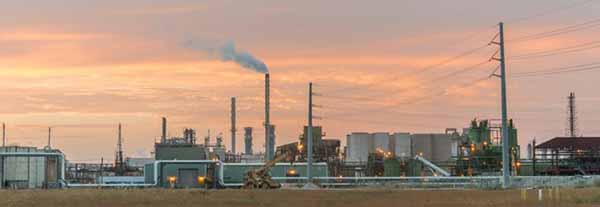
The Federal Energy Regulatory Commission has established new guidelines for granting approvals for gas pipelines that will consider environmental and climate change impacts. The guidelines are a major development after two decades of granting almost automatic approvals to builders of pipelines.
Federal Agency Revises Pipeline Permitting Guidelines
The federal agency responsible for approving pipeline projects that cross state lines has announced revised rules that include careful assessment of a project’s environmental and environmental justice impacts.
The Federal Energy Regulatory Commission (FERC) said with immediate effect all natural gas pipeline projects will be evaluated for their greenhouse gas emissions, including those emissions generated by construction and those from consumers’ use of the end product. The new guidelines are as yet interim guidelines and may be revised following a review of public responses to them.
The agency has developed a reputation for rubber-stamping gas pipeline projects that have come before it for approval over the past two decades. FERC has said the amendments will strengthen its position in the face of legal challenges that may arise over environmental concerns.
However, opponents to the new guidelines said FERC was overstepping its remit and pursuing a political agenda at the cost of ensuring the country’s energy security.
FERC also said it will soon provide revised guidelines that take into consideration the impacts of gas pipeline projects on disadvantaged communities.
In its revised guidelines pertaining to emissions, FERC will require an environmental impact statement (EIS) for any project likely to generate more than 100,000 metric tons of emissions annually. This could potentially lead to FERC rejecting applications for certain gas pipeline projects because of environmental or climate-change concerns.
An EIS is a more rigorous evaluation than the environmental assessment that several gas pipeline projects have already received.
Formerly, FERC would grant approvals on the basis of whether the pipeline developer had already secured buyers for its product, thus giving evidence of economic demand. The agency had very rarely considered environmental impacts when granting approvals.
Between 2010 and 2020, $65 billion in pipelines were laid throughout the U.S., under the oversight of FERC. But organized opposition and court challenges have blocked other billion-dollar gas pipeline projects.
Study Finds PR Firms and Big Oil Connive to Greenwash
PR firms and their Big Oil clients have systematically misled the public with regard to the oil companies’ energy transition activities, according to a just-released study by researchers at two Japanese universities.
The study, which was published in the academic journal PLOS One, contrasted the green rhetoric and the actual investments in support of energy transition by four major energy producers — ExxonMobil, Chevron, BP, and Shell.
The analysis provided extensive documentation that revealed how PR and advertising firms had supported the oil companies in developing greenwashing strategies, including helping them roll out net-zero pledges that researchers said they have done little to live up to. The study focused its “robust, empirical” analysis on the companies’ activities during the years 2009 to 2020.
The study shows that PR and marketing firms have been vital to the success of the oil majors in promoting their agenda. Recently, the House Oversight Committee has taken steps to investigate the role played by PR and advertising firms in helping fossil fuel companies mislead the public.
One expert, responding to the study’s findings, said PR firms have taken the lead in determining for the oil companies how best to deal with the issues presented by climate change. The PR experts are not merely neutral service providers but provide the talent, expertise, and creativity needed to lobby the public and prevent real progress in phasing out fossil fuels, commentators said.
The world’s largest PR firm and the world’s biggest advertising firm both work for the oil giants on their energy transition campaigns.
Several hundreds of scientists were reported to have made the call for PR and advertising firms to stop working with oil and gas companies on those campaigns. One PR firm has said it acknowledges the concerns and is working to address them.
Some of the oil companies responded to the study’s findings. They said that the study failed to capture their latest initiatives and activities that would put a different light on the matter, since the study only covers what they have done up to 2020.
Canadian Pipeline Costs Skyrocket
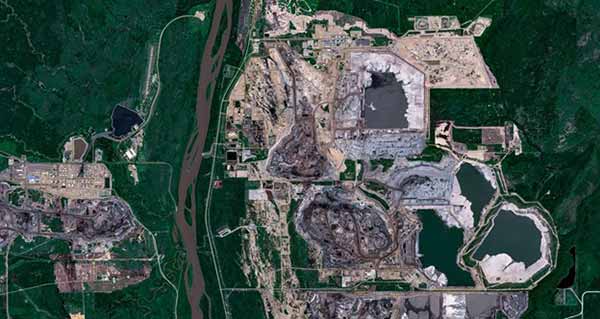
Canada’s Trans Mountain oil pipeline to the Pacific Coast will now cost $7 billion more than its last estimated cost.
The pipeline is now expected to cost over $16 billion to complete, having now experienced another cost increase following a major increase in 2020. This time, the cost increase has been attributed to various factors, including the pandemic and floods experienced in British Columbia.
The Canadian government bought the pipeline from its developer in 2018 to ensure it would be completed, since the country has substantial tar sand reserves but lacks sufficient viable means to transport the fuel after it’s mined.
The pipeline is expected to more than double the country’s capacity to ship oil, but has faced opposition over its environmental impact.
A new project completion date has been set for next year, and the government is engaging First Nations in discussions about them taking ownership of the pipeline. Meanwhile, it is seeking funders from third-party financiers, including public debt markets, since no further public funds will be spent on the project.
The government paid roughly $3.5 billion to acquire the pipeline in 2018. The latest additional costs to the project are due to project enhancements, at around $1.8 billion, scheduling issues at just over $2 million, and nearly $400 million for additional security, among other items.
Canadian officials have continued to express confidence in the project’s viability and worth.
Ethiopia Producing Electricity From Dam Despite Opposition
Ethiopia has begun producing electricity from a dam on the Nile river, despite protests from neighbors Egypt and Sudan that it will undermine their water supply.
The Ethiopian government said it has no desire to harm its neighbors, but the electricity-generating project was vital to its country, where more than half of the population is not connected to the country’s power grid.
Egypt and Sudan had been in discussions with Ethiopia about the dam’s construction, expected to cost $5 billion in total, because it depends on the Nile for water to drive the turbines.
Following the start of electricity generation, Egypt’s government issued a protest, accusing Ethiopia of violating an agreement between the three neighbors about the use of the Nile river. Egypt is upset because almost 100% of its potable water supply comes from the Nile.
The dam’s reservoir can hold approximately 75 billion cubic meters of water and is expected to produce more than 5,000 megawatts of electricity. Over the weekend, the dam began generating just under 400 MW of electricity.
The construction of the dam began more than 10 years ago but its completion was delayed due to alleged mismanagement. The country’s civil servants contributed to funding the dam, and Ethiopians are also being encouraged to buy bonds that will provide the needed funds for completion of the project.
Switzerland Outlines Strategy to Secure Its Energy Supply
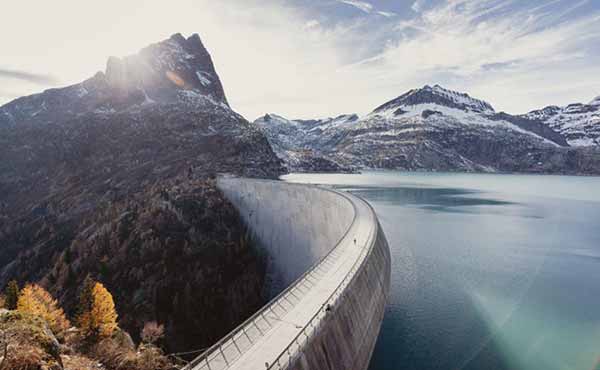
Swiss officials have proposed building electricity reserve plants at an estimated cost of nearly $1 billion, to ensure it has sufficient power supply in the event of an extraordinary power outage.
The Swiss government is considering various options for the type of reserve plants, including a few gas-fired ones that it says will operate in a climate-neutral fashion. Those plants will be built to provide up to 1,000 MW of electricity.
Plans also include increasing energy efficiency, and requiring hydropower plants to maintain a reserve supply for use in an emergency, for which they will be paid a fee.
Switzerland is working on eliminating nuclear energy from its power supply mix, while increasing the use of renewables.
Currently, more than half of Switzerland’s energy supply comes from hydropower, with nuclear providing 35%, and renewables less than 10%. It is currently in negotiations with the European Union for an electricity deal, and there are fears that failure to ensure a secure supply could plunge the country into a blackout for several weeks.
Trinidad Suffers Major Island-Wide Power Outage
Trinidad experienced a major power failure throughout the entire island that lasted for up to 12 hours for some residents.
The loss of electricity also resulted in loss of internet and phone services, as well as water supply, so that businesses throughout the island were forced to close in the early afternoon.
Its island sister, Tobago, was unaffected by the outage.
Despite optimistic assurances by the island’s power company that service would be restored within a few hours, the outage continued from around 1 p.m. Eastern Time until midnight for many.
The Trinidad and Tobago government has appointed a team of experts to investigate the reasons for the dramatic power failure.
Opinion writer: Jewel Fraser
The opinions, beliefs, and viewpoints expressed by the various authors do not necessarily reflect the opinions, beliefs, or viewpoints of Interactive Energy Group, LLC (IEG) or its parent companies or affiliates and may have been created by a third party contracted by IEG. Any content provided by the bloggers or authors are of their opinion and are not intended to malign any individual, organization, company, group, or anyone or anything.
Brought to you by energysavings.com
All images licensed from Adobe Stock.
Featured image: