
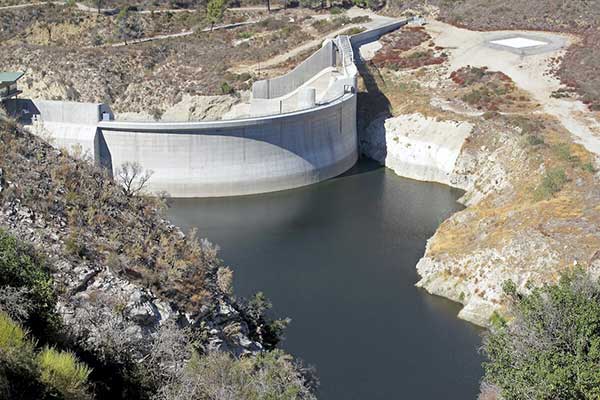
California braces for a summer of intense heat, evoking fears of power outages due to increased use of electricity for cooling and a downturn in hydropower as lakes and reservoirs dry up from lack of rain. Meanwhile, New Jersey’s largest energy company shows increased climate stewardship as it seeks to become carbon neutral. Over in Asia, Bangladesh makes a major change of plans and decides against building several coal plants.
California Heat Wave May Cut Hydropower
California is expected to have a very hot summer and, with it, a drop in the water levels of reservoirs that provide the energy for its hydroelectricity plants.
The increased heat will also mean more people using greater amounts of electricity for air conditioning. The combined effect of less water and higher electricity use means that the state will likely have to rely heavily on fossil fuels to generate electricity.
With dams reducing power generation capacity this year, California is already obtaining only 7% of its electricity from hydropower, which is out of step with its goal of having a carbon-free power grid by 2045.
Though state officials expect to avoid power outages, they are asking California residents to conserve their use of electricity so as to avoid the need for rolling blackouts. Such blackouts would require residents to not use any electricity for five hours in the afternoon every Wednesday and Thursday.
Officials also asked power plant operators to defer maintenance work on their facilities so as to ensure a steady supply of electricity. They say they also expect to bring online an additional 3,000 megawatts of electricity this summer. New large battery projects to store solar power will provide some of that projected increase.
New Jersey’s Largest Energy Company Aims for Net Zero
Public Service Enterprise Group (PSEG) has announced that it plans to reach net-zero emissions in its operations by 2030. It said it will do so partially by investing in energy-efficient technologies and modernizing its power grids. It is also looking to invest in wind power.
The company has plans to spend $14 billion on decarbonization, methane reduction, and clean energy transition, among other climate-related plans.
Its Public Service and Electric Gas Utility has reduced its greenhouse gas emissions by more than a half since 2005.
The utility supplies power to more than 2 million customers and expects that most of its electricity will come from its nuclear plants in the years ahead.
Since 2005, PSEG has also closed all of its coal-fired units and is said to have one of the smallest carbon footprints for the industry in the U.S.
Vodafone Makes 100% Transition to Renewables in Europe
The telecom giant Vodafone announced that on July 1 all of its European operations will be powered by renewable energy.
This is four years ahead of its original target to do so by 2025.
The company also said its use of more energy-efficient mobile technology has kept its energy use down even while its mobile data traffic increased by almost 50%.
In addition, Vodafone has spent 65 million euros on improving energy efficiency as well as on renewable energy projects at its sites.
The company says it hopes to accomplish a full energy transition at its operations in Africa within the next four years, and it has set its sights on achieving net-zero carbon emissions by 2030.
UNDP Project Slashes Jamaica’s Health Sector Energy Bill

Jamaica expects to reduce spending on energy in its health sector by 22% thanks to an energy efficiency program funded by the United Nations Development Program (UNDP).
The Deployment of Renewable Energy and Improvement of Energy Efficiency in the Public Sector project began in 2016 with a grant of over $1.2 million from the UNDP to Jamaica. Under this project, the health sector received help to install solar energy and energy efficiency systems at several of the country’s hospitals. Jamaica’s health sector is expected to save J$54 million annually, or roughly $360,000, from this initiative.
Among the energy efficiency solutions implemented were 5,000 LED lights and a grid-tied solar PV system.
Jamaica’s government wants to diversify its energy mix and has set the goal of having the country obtain 50% of its power from renewables in its 2009 to 2030 energy plan.
U.S. Bans Import of Solar Panel Component from Chinese Company
The U.S. government has banned imports of a key silicon component used in the manufacture of solar panels from a Chinese firm alleged to use forced labor.
The Hoshine Silicon Industry will no longer be able to export the silicon material to the U.S. because it allegedly uses members of the minority Muslim ethnic group Uyghurs under cruel and inhumane conditions for labor.
The Biden administration is also restricting exports from the U.S. to three other companies in China because of similar human rights concerns.
China responded to the ban by saying the allegations of forced labor were downright lies and rumors.
The ban is largely symbolic since Hoshine provides only a small percentage of the silicon imported by the U.S. from China, amounting to $6 million in silicon and $150 million in other raw material over the last two to three years.
More than half of U.S. renewable energy comes from solar projects.
China’s Xinjiang region provides nearly half of the global supply of solar-grade silicon.
Edinburgh Airport to Build Solar Farm
Edinburgh Airport has announced plans to build a solar farm next to its runway to supply some of its energy needs.
The proposed 11-acre farm is scheduled to be completed by next year and is part of an overall strategy by the airport known as the Greater Good. Under that strategy, the airport already buys 100% renewable electricity and diverts all waste from the landfill.
The Scottish government is giving 2 million pounds toward the project, which is expected to supply 26% of the airport’s energy needs.
The airport hopes to achieve carbon neutrality for direct emissions by 2024 as well as to establish a sustainability standard for its facility.
However, environmental group Friends of the Earth Scotland is unimpressed, referring to the project as “business as usual with some solar panels added.”
Orphaned Oil Wells Pose Expensive Hazard
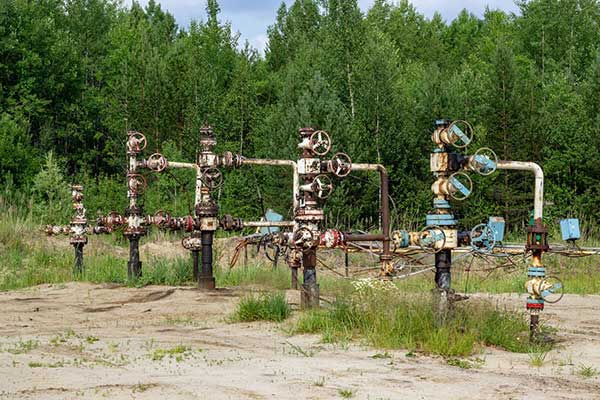
Saskatchewan is home to 75,000 inactive or abandoned oil wells that require billions of dollars to clean up and close down. One small oil company that went bankrupt last year is said to have left 671 orphaned oil and gas sites that will require up to CA$25 million to clean up.
And across the province, abandoned wells continue to pose an environmental hazard as they deteriorate and leak benzene and other harmful emissions.
Many orphaned wells were bought by smaller firms from larger companies as the wells began to decline. The smaller companies then sought to exploit any remaining pockets of oil and gas. However, these small companies have not been able to benefit from the upturn in oil prices as much as larger companies do and many have struggled to properly abandon wells.
To assist struggling companies with that task, the Canadian government announced in April that it would provide CA$400 million for cleaning up wells in the province. Saskatchewan also has an Orphan Well Fund, created in 2010 and funded by oil and gas companies, that currently holds CA$13 billion in assets.
It is estimated that CA$4 billion is needed to deal with Saskatchewan’s orphaned and abandoned wells.
Bangladesh Squashes Plans for 10 Coal Plants
Bangladesh will no longer be building 10 of the 18 coal power plants it had drawn up plans for since 2011.
The country had planned on producing 60,000 megawatts of electricity by 2041, with 35% of the power coming from coal, 35% from gas, 15% from imported and renewable fuels, 10% from nuclear power, and 5% from oil.
However, Bangladesh’s Prime Minister Sheikh Hasina, who is current chair of the Climate Vulnerable Forum, decided that there would be excess capacity and the country would have enough power without the coal plants.
She also wants the country to generate electricity through more environmentally friendly means.
Much of Bangladesh’s electricity is currently produced from natural gas, with less than 4% coming from renewable energy. The country has set a goal of meeting 40% of its energy needs from renewables by the year 2041.
Bangladesh is considered one of the countries most at risk from the impacts of climate change, including flooding.
Opinion writer: Jewel Fraser
The opinions, beliefs, and viewpoints expressed by the various authors do not necessarily reflect the opinions, beliefs, or viewpoints of Interactive Energy Group, LLC (IEG) or its parent companies or affiliates and may have been created by a third party contracted by IEG. Any content provided by the bloggers or authors are of their opinion and are not intended to malign any individual, organization, company, group, or anyone or anything.
Brought to you by energysavings.com
All images licensed from Adobe Stock.
Featured image: