

This week saw progress as well as failure in the bid to reduce global emissions. There was a welcome though unusual announcement by furniture maker IKEA: it is moving into selling renewable energy to further reduce the carbon footprint of its products and home appliances. Meanwhile, India boasts that it now has 100 GW of renewable energy installed. At the same time, the U.K. government has been warned that its efforts to make homes more energy efficient are likely to fail if significant adjustments are not made to the implementation.
IKEA App Sells Renewable Energy to Customers
Swedish furniture store, IKEA, has stepped up its efforts to reduce its carbon footprint by offering customers the opportunity to buy renewable energy through an app.
IKEA has already pledged to become climate positive by 2030, but customers using its appliances and products at home account for an estimated 20% of its carbon footprint.
To help reduce this, Ingka Group, the company that owns IKEA, hopes that by 2025 customers in all its markets will have the opportunity to “use and generate more renewable energy through our services” said Ingka Group in a statement.
As of 2019, the group has invested more than 2 billion euros in solar and wind power. It currently has installed almost 1 million solar panels in its IKEA stores and warehouses, and it operates two solar farms and hundreds of wind turbines.
The company that makes IKEA’s solar panels will purchase the energy and pass it on to customers who order through the app, without adding a markup to the purchase price.
IKEA began selling solar panels to customers in 2013 and now does so in 11 countries.
India Fourth in the World for Renewable Energy
India announced that it has achieved 100 GW of installed renewable energy, making it the country with the fourth-highest installed capacity in the world. It is fifth worldwide in solar capacity.
The country has plans to achieve 450 GW of installed capacity by 2030 and currently is inviting bids to install 27 GW. It is in the process of installing 50 GW and aims to obtain 40% of its energy needs from clean energy by 2023.
Emissions have been cut by almost 30% relative to 2005 levels, and the plan is to cut emissions further to 35% below 2005 levels by the year 2030.
Around 80% of India’s power supply is expected to come from renewables by the year 2050, the government says. It will continue to provide regulatory and policy support to help promote renewables in the country’s energy supply, until such time as advances in technology and increased competition lead to a drop in prices and make the renewable energy industry more sustainable.
U.K. Homeowners Find Decarbonization Confusing
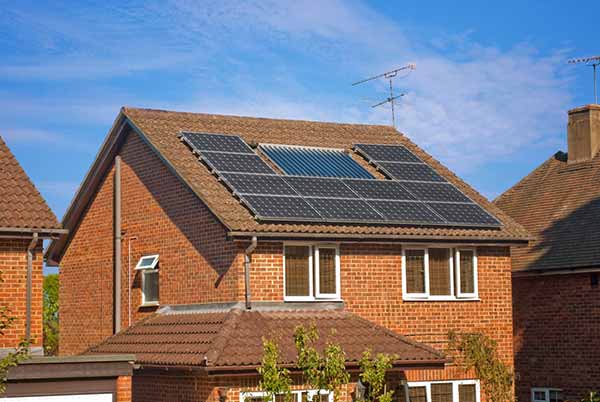
Plans to retrofit U.K. homes to make them energy efficient are floundering because they are too confusing, says a group made up of construction industry and consumer advocates.
Even though the public wishes to play its part in cutting carbon emissions, the current resources available to them leave many struggling to make the best choices. It also makes them easy prey for rogue businesses that do a poor job of installing solar panels and upgrading insulation, the group said.
The group is urging the government to make available more easily understood information on the process of decarbonizing homes, as well as better funding options and consumer safeguards.
Previous schemes have proved unsuccessful and one that was launched with the goal of insulating homes succeeded in retrofitting only 10% of the number of homes planned. The scheme was scrapped in March 2021.
The government says it is setting up an agency to offer advice and is investing more than 1 billion pounds to support homeowners in making their homes more energy efficient.
Homes in the U.K. are blamed for 14% of that country’s emissions, most due to gas heating and poor insulation. The government has set a goal of retrofitting 29 million of these homes to achieve its emissions reductions goal for 2050.
Santos Faces Greenwashing Lawsuit
An environmental group is suing Santos, one of Australia’s largest gas companies, for publishing misleading assurances about its plans to achieve carbon neutrality.
The Australasian Centre for Corporate Responsibility launched the lawsuit against Santos, claiming the company’s assurances that it will achieve carbon neutrality through carbon capture and storage projects are nothing but greenwashing. Santos has said the use of such technology along with tree planting will enable it to achieve net zero by 2040.
The lawsuit will be the first in the world to test claims about the viability of carbon capture technology, the environmental group said. The group is also seeking a declaration that Santos has been deceitful and asking that it be restrained from making further deceptive statements.
Also at issue is Santos’ failure to declare fully — at the time it made its statements about achieving carbon neutrality — its intentions to undertake new oil and gas explorations.
South Africa Prepares to Launch Carbon Capture Project
South Africa has begun mapping the terrain for a major carbon capture and storage (CCS) project that will store millions of tons of CO2 emissions each year, beginning in 2023.
The country is Africa’s largest emitter with annual emissions of over 400 million tons of CO2, much of it linked to its coal power stations that supply most of its electricity.
The plan is to inject the carbon emissions into offshore sites on the country’s coast that are estimated to have the potential to store up to 150 gigatons. The carbon will be transported through pipes from sites where coal plants are heavily concentrated to the storage sites.
South Africa has received $23 million from the World Bank for the project and expects to continue to use coal for many years to come; it hopes that the carbon capture and storage project will help it to do so responsibly.
Though the International Energy Agency sees CCS playing a major role in slowing climate warming, very little money spent on clean energy technologies has been invested in it. The agency believes CCS could capture as much as 20% of global emissions by 2050.
Little Support in Australia to Subsidize Coal, Gas Generators
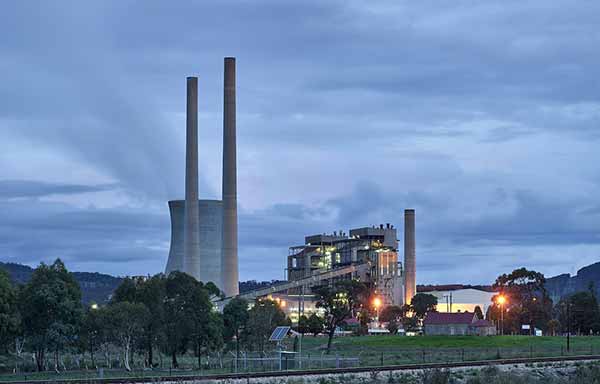
An effort by Australia’s federal government to have electricity retailers pay for spare capacity held by gas- and coal-powered generators is proving unpopular with the country’s state governments.
Energy Minister Angus Taylor is urging states and territories to agree to have the retailers pay a subsidy to all energy generators, including coal, gas, and renewables, to ensure that there is spare capacity in the system at any time that a shortfall may occur.
However, state officials are unconvinced of the necessity and are concerned that such a subsidy would seriously undermine efforts to transition to clean energy. Mr. Taylor has expressed concern over the need to provide backup in the light of the high levels of renewables in the Australian grid.
Analysts have dismissed his concern as unfounded, saying that the Australian grid meets the reliability standard for grids of ensuring power generation almost 100% of the time. They also point to the thousands of megawatts of battery storage that will be coming on stream.
In addition, the analysts suggest that a move to subsidize coal and gas power could even increase the cost of electricity for homeowners.
Pennsylvania Offers Energy Efficiency Grants to SMEs
Pennsylvania is offering small matching grants to businesses with no more than 100 workers to help them with energy efficiency projects.
The Small Business Advantage Grants are for amounts up to $5,000 and cover 50% of the cost of implementing energy efficiency solutions such as LED lighting, HVAC upgrades, or devices to prevent engine idling by trucks.
Businesses are expected to see improvements in profitability and sustainability, as well as a reduction in their operating expenses.
In 2020, grant recipients used 73 fewer tons of coal and 20,000 fewer gallons of diesel while also significantly reducing electricity use. The grants were also available for farmers wishing to protect local waterways from farm runoff.
Affluent Resort Islanders Fight Wind Project
The affluent residents of a Nantucket resort island have asked the courts to review the construction of an 800-MW wind power project that is about to be built 15 miles from their home, citing environmental concerns.
The utility-scale wind project will pose a threat to endangered right whales that nurse and forage in the waters around the island, the residents state in their lawsuit. There are estimated to be fewer than 400 such whales in existence.
The project, which involves the construction of 60 turbines more than 800 feet high at a cost of $3 billion, was approved in May by authorities. It is expected to provide electricity for as many as 400,000 homes once it is completed.
The area around Nantucket is also a prime location for fisheries, and there is concern about the impact the turbines would have on industry.
A suggestion was made to place the turbines further from the shore to make the project less problematic.
Opinion writer: Jewel Fraser
The opinions, beliefs, and viewpoints expressed by the various authors do not necessarily reflect the opinions, beliefs, or viewpoints of Interactive Energy Group, LLC (IEG) or its parent companies or affiliates and may have been created by a third party contracted by IEG. Any content provided by the bloggers or authors are of their opinion and are not intended to malign any individual, organization, company, group, or anyone or anything.
Brought to you by energysavings.com
All images licensed from Adobe Stock.
Featured image: