

The European Union has drawn up draft legislation that demonstrates increased climate ambition, with new targets for emissions reduction and an increase in the cost of carbon permits as well as expansion of the carbon permit scheme. The euro bloc is also proposing a tax on imports that are manufactured under less stringent carbon emissions rules than those that apply to companies in the EU. Meanwhile, in Australia, a government-backed project by Chevron to capture and sequester carbon emissions has proven disappointing, with only a small percentage of the promised sequestration having been achieved.
EU Aims to Cut Transport Emissions by 90% by 2050
The EU has drafted laws for the phasing out of cars that run on fossil fuels throughout the bloc by 2035 and will require all new cars in 2035 to be zero emission.
The laws are part of a drive to slash emissions in the EU by 55% by 2030 as part of Europe’s Green Deal. Passenger cars are responsible for 12% of Europe’s emissions and the draft legislation seeks to reduce emissions from the entire transport sector by 90% by 2050.
The new legislation is to be accompanied by increased installation of charging ports throughout the bloc. As of the end of 2020, there were only about 225,000 recharging facilities, most of them concentrated in the Netherlands, Germany, and France.
The new legislation also envisages placing a tax on imports from countries that do not adhere to the European Union’s strict emissions laws for businesses. Since European businesses have to adhere to those laws, their production costs are higher, which places them at a disadvantage relative to other countries’ manufacturers who do not need to follow strict carbon emissions reduction regulations.
Named the “carbon border adjustment mechanism,” the law will require EU businesses importing the goods from less highly regulated countries to pay the tax, which is expected to generate as much as 10 billion euros a year.
The draft legislation also proposes revising the bloc’s carbon emissions trading market that will see the price of a carbon credit rise from its current cost of over 50 euros. The European Commission is also proposing a parallel trading scheme for emissions from buildings and road transport.
Chevron Carbon Capture Project Fails to Deliver
The AU$54 billion carbon capture project established by Chevron in Australia to sequester 4 million tons of CO2 annually has been deemed a failure by some, after the company reported that it had only sequestered 5 million tons over the past three years.
Chevron received more than AU$260 million in funding from the Australian government to establish the carbon capture and sequestration (CCS) project for capturing and storing emissions from the nation’s Gorgon LNG plant in Western Australia. Gorgon is considered one of the country’s largest greenhouse gas emitters.
Critics say Chevron should now have to pay millions to buy carbon offsets to make up for the shortfall in its promised sequestration.
The Australian government saw the carbon capture project as an important tool in its efforts to reduce greenhouse gas emissions. However, even if the project had worked as it should have, it was designed to capture only 80% of emissions from the LNG reservoirs while leaving those from the actual processing of the LNG untouched.
That meant the project would capture only 40% of all the emissions produced at Gorgon.
Since its inception it has experienced technical difficulties, and earlier this year, the CCS system had stopped working. However, the Australia Petroleum Production and Exploration Association praised the project for demonstrating the fossil fuel industry’s commitment to tackling climate change.
Shell and ExxonMobil are partners with Chevron in the Australian project.
ExxonMobil Project to Decarbonize Industrial Zone in France
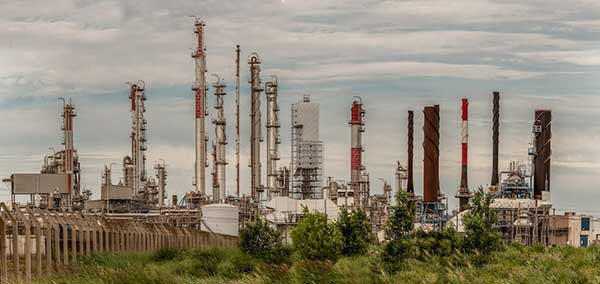
ExxonMobil has entered into a memorandum of understanding (MoU) with companies operating in France’s industrial basin in Normandy to help them decarbonize. The agreement will explore the economic and technical feasibility of developing a carbon capture and storage infrastructure to decarbonize the industrial area.
The plan is to capture and sequester 3 million tons of carbon emissions annually.
One of the partners in the project is Air Liquide, which has been using its CCS technology, known as Cryocap, since 2015 to sequester emissions at its facility in Normandy. Another partner is Yara, which aims to become carbon neutral by 2050. TotalEnergies SE TTE is also a party to the MoU.
Drought May Shut Down California Hydropower Plant
A California hydropower plant that has been supplying power for more than 50 years may be forced for the first time to stop running because of low water levels brought on by the drought.
The Edward Hyatt power plant depends on Lake Oroville for its water supply, but that lake is currently at 29% of its total capacity and water levels in it have dropped to 666 feet. If water levels in the lake drop to 640 feet, there will not be enough to turn the turbines of the hydropower plant, forcing a shutdown.
Typically, the Hyatt plant supplies up to 400 megawatts of power but is expected to supply about one-fifth of the power it supplied last year because of the ongoing drought.
California state officials say they may ask residents to cut power use between 4 p.m. and 9 p.m. to help relieve demand. The state has also been forced to relax environmental restrictions so as to allow the use of natural gas-powered plants to ensure enough power is available.
Seventeen percent of California’s power supply came from hydropower in 2019, but hydropower supplies fell by 71% this year compared to supplies in 2019.
Biden, Merkel Agree to Disagree Over Nord Stream 2
The U.S. and Germany agreed they would work together to ensure that the Nord Stream 2 pipeline that runs from Russia to Germany through the Ukraine would not be co-opted by the Russians to place pressure on the Ukraine.
The U.S. has been concerned about Russian oil pipeline’s potential to increase Russia’s power over countries in Europe. The pipeline, which cost $11 billion, is almost complete, and President Joe Biden said there would be little benefit in trying to prevent its operation.
Biden and German Chancellor Angela Merkel said they had different views on the pipeline and that friends are able to disagree. At the same time, they agreed to cooperate on climate action, energy technologies, and the energy transition around the world.
President Biden also said he would not impose sanctions on Nord Stream 2, the Swiss-based company that is operating the pipeline and owned by Russia’s Gazprom.
Racing Cars Go Electric
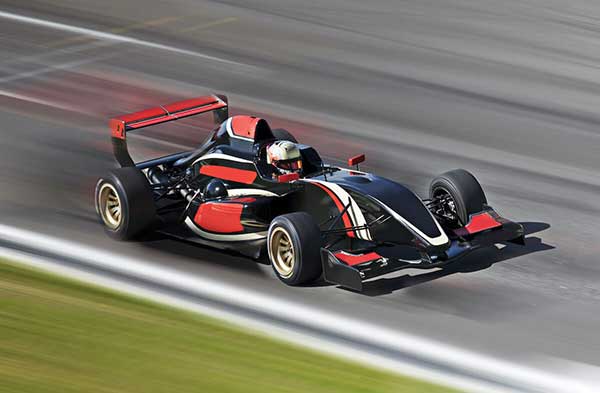
Formula E — the electric vehicle version of Formula 1 — is staking its claim as the future of racing as the automobile industry shifts toward electric vehicles. The competition launched in 2014 and has since seen major improvements in the ability of electric race cars to stay the distance.
The race’s title sponsor is electric vehicle charger manufacturer ABB, which is using the racing competition as a sort of incubator to gather data that will enable ABB to develop better and more reliable chargers for everyday consumers. Many consumers are turned off by the need to spend half an hour to an hour recharging an electric vehicle.
As many as 10 vehicle manufacturers have entered cars for the races, including Nissan. The vehicle manufacturers are also testing out new technologies, including energy management software.
One of the new technologies being looked at by those taking part in the competition is regenerative braking, which allows a car’s battery to recharge every time the brakes are used.
Cape Town Looking for Partners in Renewable Energy
Following the announcement of South African President Cyril Ramaphosa that energy projects under 100 megawatts could be built without a special license, the city of Cape Town is looking for financiers for a solar voltaic plant to supply the city with energy.
The city has sent out a call to development banks and funding agencies that have experience in renewable energy to help it develop its plans for several small-scale renewable energy projects. The proposed projects, ranging in size from 1 megawatt to 100 megawatts, will all be established on city-owned buildings.
The hope is to reduce Cape Town’s reliance on the state national grid while also ensuring residents a more stable and cleaner energy supply.
Shell Subsidiary Builds Europe’s Largest Storage Battery
Shell subsidiary Pensa Power has built Europe’s largest storage battery in Wiltshire in the U.K. The 100-megawatt battery will store the excess energy produced by renewable solar and wind power and supply it to the national grid during peak demand hours.
It is hoped that this is the first of such sites to be established across the country.
Opinion writer: Jewel Fraser
The opinions, beliefs, and viewpoints expressed by the various authors do not necessarily reflect the opinions, beliefs, or viewpoints of Interactive Energy Group, LLC (IEG) or its parent companies or affiliates and may have been created by a third party contracted by IEG. Any content provided by the bloggers or authors are of their opinion and are not intended to malign any individual, organization, company, group, or anyone or anything.
Brought to you by energysavings.com
All images licensed from Adobe Stock.
Featured image: