
Greenhouse gas emissions continue to reach new record-high levels, according to the National Oceanic and Atmospheric Administration (NOAA).
Global methane emissions jumped by a record amount in 2021, beating the previous year’s all-time high leap. Meanwhile, carbon dioxide levels increased by more than 2 parts per million for the 10th year in a row, the fastest sustained increase since monitoring began.
Some 36 billion tons of CO2 were pumped into the atmosphere last year alongside 640 million tons of methane.
NOAA administrator Rick Spinrad said: “Our data show that global emissions continue to move in the wrong direction at a rapid pace. The evidence is consistent, alarming, and undeniable.”
Methane Emissions Record Rises
Last year, NOAA scientists recorded consecutive record annual increases in methane levels in the atmosphere. Methane is second only to carbon dioxide as the most significant contributor to human-caused global warming. The gas also contributes to ground-level ozone, linked to almost half a million annual deaths globally.
Methane is a relatively short-lived gas but is very efficient at trapping radiation. Over 100 years, methane’s climate-change impact, pound-for-pound, is up to 25 times higher than carbon dioxide emissions.
In 2021, NOAA measured the annual increase in atmospheric methane at 17 parts per billion (ppb), the highest since measurements began in 1983. In 2020, the rise was 15.3 ppb. Atmospheric methane levels have now reached 1,895 ppb, some 162% higher than pre-industrial levels. NOAA estimates methane emissions in 2021 were 15% higher than in 1984-2006.
Where Is All the Methane Coming From?
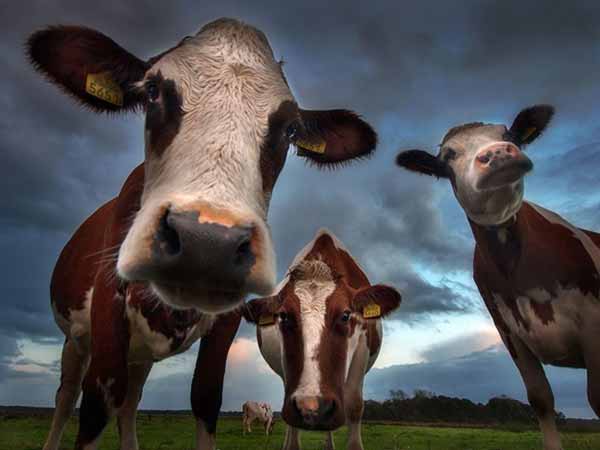
Methane is released into the atmosphere due to oil and natural gas production, shale gas drilling, livestock, landfill sites, and wetlands. The energy sector is second to agriculture for worldwide global methane emissions. In 2019, methane was responsible for 10% of U.S. greenhouse gas emissions, compared to 80% coming from carbon dioxide.
Indeed, China, Russia, and the United States are the world’s worst methane emitters. Much escapes from pipes or is deliberately released during pipeline repairs. Methane leaks in 2021 were enough to meet the entire European Union’s gas needs, and capturing it and using it would have averted the current energy price pressures.
The figures come despite more than 100 countries signing the Global Methane Pledge to cut methane emissions by 30% by 2030. China and Russia have not signed up.
The NOAA states that industrial methane leaks “are relatively simple to pinpoint and control using current technology.”
Its studies also suggest wetlands and livestock have been driving methane increases since 2006. This “biological” methane could create an uncontrollable feedback loop that sees more rainfall over wetlands, producing even more methane.
Carbon Dioxide Emissions Increases Unabated
Carbon dioxide remains the primary cause of human-driven climate change. CO2 emitted today will heat the planet for thousands of years. Last year, the global average for carbon dioxide reached 414.7 parts per million (ppm). CO2 levels have been pushed up by at least 2 ppm for 10 years straight.
Scientists compare current carbon dioxide levels with 4.3 million years ago, called the mid-Pliocene era. Sea levels were 75 feet (22.8m) higher than today, and the average temperature was some 7 degrees Fahrenheit (3.9 Celsius) warmer than before the Industrial Revolution.
Is the Worst Yet to Come?
Every year, the NOAA collects and analyses more than 15,000 air samples from more than 50 sites around the world to reach its conclusions on carbon dioxide, methane, nitrous oxide, and sulfur.
Observations show that carbon dioxide in the atmosphere has tracked global emission levels. There has been no measurable reduction in greenhouse gas pollution despite political noise about capping global temperature rises to 1.5 Celsius (2.7 degrees Fahrenheit) by 2050.
Pieter Tans, senior scientist with the Global Monitoring Laboratory, said: “The effect of carbon dioxide emissions is cumulative. About 40% of the Ford Model T emissions from 1911 are still in the air today. We’re halfway to doubling the abundance of carbon dioxide that was in the atmosphere at the start of the Industrial Revolution.”
Methane emissions are considered an easier pollutant to tackle than carbon dioxide. However, political rhetoric is not matching action, and the world continues to release ever more greenhouse gasses into the atmosphere, adding to global warming.
Opinion writer: Tom Shearman
The opinions, beliefs, and viewpoints expressed by the various authors do not necessarily reflect the opinions, beliefs, or viewpoints of Interactive Energy Group, LLC (IEG) or its parent companies or affiliates and may have been created by a third party contracted by IEG. Any content provided by the bloggers or authors are of their opinion and are not intended to malign any individual, organization, company, group, or anyone or anything.
Brought to you by energysavings.com
All images licensed from Adobe Stock.
Featured Image