

Mexico’s government took steps to better control its energy sector, proposing reforms that would shut out private electricity suppliers while also suspending the permits of global fuel traders it said were involved in fuel smuggling.
Meanwhile, California is pressing forward in its efforts toward zero emissions by passing a law to ban the use of gas-powered small equipment like lawn mowers and weed trimmers. Also, Scots were told they would need to raise £33 billion over the next two decades to achieve zero emissions in their buildings.
Mexico Moves to Shut Down Private Power Suppliers
More than 200 private energy plants that sell directly to corporate clients would be declared illegal under a constitutional reform proposal by Mexico’s President Andrés Manuel López Obrador.
Mr. Obrador says he fears that the situation in Spain, where private companies control the energy sector and electricity prices are very high, would be replicated in Mexico without the proposed reforms.
The proposal would also put an end to the contracts of several private plants that sell to the country’s national grid. By doing so, it would give greater preference in the country’s energy supply to government plants than to private, renewable energy plants.
The move by Mr. Obrador is considered an effort to reinforce the utility’s finances by giving it more control over the electricity sector.
The proposal seeks to dismantle energy reforms instituted in 2013 under a different government, which led to the establishment of several private energy firms in the country.
There have been suggestions that the proposed reform may be in violation of some sections of the Mexico-U.S.-Canada free trade accord.
Global Energy Traders Under Investigation
Mexico has suspended the permit of a global energy trader as investigations continue into alleged illegal practices by some of the world’s largest energy dealers.
Trafigura was named as one of several energy dealers engaged in smuggling, when Mexico announced that it would be suspending Trafigura’s permit. The company has denied the allegation, stating it has always complied with all applicable laws.
Another company, Vitol, has been accused of doctoring its paperwork in an attempt to evade paying taxes. The company has denied the allegations.
A number of top global energy traders are currently being investigated in probes involving several jurisdictions, including the U.S., Switzerland, and several countries in Latin America.
However, some argue that the probes in Mexico are motivated by that country’s desire to retain greater control over its domestic energy market.
New California Law Bans Gas-Powered Lawn Mowers
California has now passed a law that will make it illegal to operate a lawn mower or other off-road equipment that runs on gas.
The law is in keeping with the state’s commitment to zero emissions and follows on from a law passed a year ago that will see an end to all sales of new gas-powered cars by 2035.
Golf carts, pressure washers, and weed trimmers are included in the law, and all such equipment must be powered by batteries or electricity once the law comes into force.
Landscape professionals and others have said the new law will cause some hardship, since a zero-emissions riding lawn mower typically costs double what a gas-powered one does. They said a gas-powered commercial lawn mower typically costs no more than $11,000.
The law is slated to come into effect in 2024 or as soon as regulators determine is “feasible,” whichever is later.
An allocation of $30 million has been set aside to help small businesses in California make the transition.
California has close to 17 million such pieces of equipment operated by gas, which are said to generate almost as much emissions annually as the state’s nearly 14 million cars.
Proponents of the bill therefore see it as an accessible way to lower the state’s emissions. However, some opponents say the new law is untenable in light of the power blackouts experienced each year during the state’s wildfire season.
Fortescue to Build Green Hydrogen Facility in Queensland
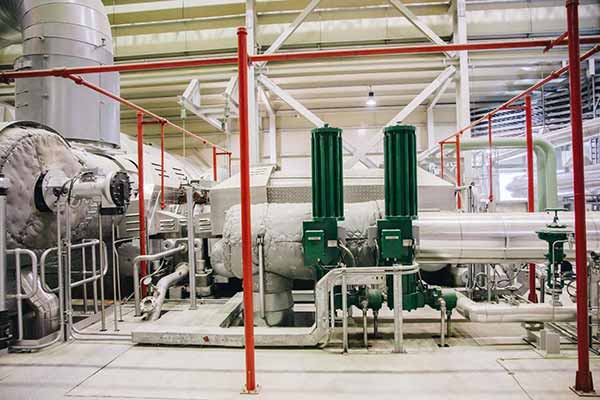
The Australian mining giant Fortescue Future Industries has announced plans to invest hundreds of millions of dollars into building a green hydrogen production facility in Queensland.
The facility will produce infrastructure for green hydrogen production, including turbines and electrolysers. The first stage of the project, a facility to produce hydrogen electrolysers, will involve the construction of an AUS$115 million facility that is expected to provide employment to more than 50 people, who will be responsible for its operation.
Fortescue’s chairman, Andrew “Twiggy” Forrest, has predicted that his investment will lead to a doubling of worldwide green hydrogen production capacity.
Queensland officials expressed high hopes for the facility and said it would lead to as many as 300 jobs in the coming years.
Construction of the facility is expected to begin next year, and its first batch of electrolysers is expected in 2023.
Hong Kong Weighing Decarbonization Options
In its latest Climate Action Plan, Hong Kong revealed that it will focus more on decarbonizing its electricity supply through greater use of solar and wind power, while also considering hydrogen and nuclear power.
The Special Administrative Region is hoping to end the use of coal for power generation within the next 15 years and significantly increase the share of renewables in its energy mix, which currently stands at 1%.
Most of its energy is currently supplied by coal, natural gas, and nuclear energy. Nuclear power supplies 25% of Hong Kong’s energy at present, and increasing the share of nuclear power remains an option for the government, though some do not favor such an increase.
The region is also looking into stronger guidelines for energy efficiency by hotels and other facilities with high energy demand.
Hydrogen power is being looked at to help Hong Kong reach its goal of carbon neutrality by 2050, and hydrogen-fuel-cell buses are being deployed on a trial basis.
To help with the transition to more sustainable energy, the government will be issuing more than US$22 billion in green bonds.
However, green activists in Hong Kong said the government still was not doing enough, even as the country experiences extreme weather events more frequently.
Lights Go Back on for Lebanese After Outage
Lebanese are once again getting a few hours of electricity supply each day from the national utility grid after a total blackout due to lack of fuel.
Two power plants crucial to the operation of the country’s electricity grid stopped working on Saturday after running out of fuel. The country’s army then stepped in with a supply of 6,000 liters of fuel that enabled the plants to begin functioning again.
Government officials also announced that the country’s central bank was lending $100 million so that the country could buy oil from Iraq, and Lebanon also was negotiating buying electricity from Jordan.
The power outages are said to be exacerbating the misery of Lebanese, who are already struggling with increasing poverty and high living costs.
The government has also cut subsidies and has increased the price of fuel, making things more difficult for many who relied on electricity supplied by private operators.
Lebanon’s electricity company loses as much as $1.5 billion annually, and the World Bank and the International Monetary Fund (IMF) have urged a reform of the energy sector.
Scots to Spend £33 Billion to Cut Building Emissions

Scotland government officials estimate that businesses and homeowners will have to spend as much as £33 billion between now and 2045 to reach zero emissions.
Buildings are said to account for about 20% of Scotland’s carbon emissions, and the government has laid out a strategy to remove carbon-emitting heating infrastructure and make all buildings energy efficient.
Known as the Heat in Buildings strategy, it aims to have one million homes and thousands of business buildings achieve net zero emissions by 2030 as a step toward zero emissions for the entire building sector. To achieve the 2030 goals, spending of around £2 billion will be needed.
The government has said it can provide £1.8 billion in total to help with the energy transition, but the rest of the £33 billion must come from a mix of financing by homeowners, businesses, and financial institutions.
A law prohibiting the sale of homes that do not reach the required energy efficiency standard will also be introduced by 2025. The law is expected to achieve full implementation by 2033.
Tory Conservatives were critical of the Heat in Buildings plan and said it was ironic that the business sector was being relied upon to make the government strategy a success.
Iraq to Build Five Solar Plants in Deal With UAE
Iraq will receive the help of the United Arab Emirates (UAE) in installing 1,000 MW of solar power with the construction of five solar plants.
The 1,000-MW deal is part of a drive by Iraq to add more than 7,000 MW to its electricity grid by 2023.
Iraq also recently signed a contract worth billions with French company TotalEnergies for another 1,000-MW solar plant.
Iraq currently produces just over half of the electricity its population needs and imports electricity from Iran to help make up for its shortfall.
Opinion writer: Jewel Fraser
The opinions, beliefs, and viewpoints expressed by the various authors do not necessarily reflect the opinions, beliefs, or viewpoints of Interactive Energy Group, LLC (IEG) or its parent companies or affiliates and may have been created by a third party contracted by IEG. Any content provided by the bloggers or authors are of their opinion and are not intended to malign any individual, organization, company, group, or anyone or anything.
Brought to you by energysavings.com
All images licensed from Adobe Stock.
Featured image