
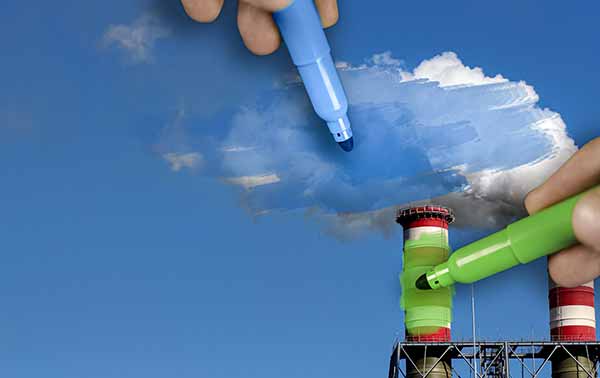
Natural gas and nuclear energy could both be defined as green energy by the European Commission, according to a new draft proposal.
Just two months after COP26, where countries pledged to keep temperature rises to 1.5 degrees Celsius (2.7 degrees Fahrenheit), the news has caused friction within the trading bloc.
The Commission hopes gas and nuclear can help its 27 members transition to cleaner power and decarbonize economies. But some feel the reclassification is a backward step in the fight against climate change.
What Does the Commission’s Draft Proposal State?
The Commission’s draft guideline proposals would set strict standards for any gas or nuclear plants applying for green energy status. Nuclear power plants must adhere to strict waste disposal requirements and conform to up-to-date technological standards.
Gas plants must comply with similarly high standards. The investment can be labeled green if:
- A plant’s emissions are below 270g of CO2 produced per kilowatt-hour (kWh)
- It replaces a more polluting fossil fuel power plant
- Receives construction approval before the end of 2030, committing to use low-carbon gases by December 31, 2035
The step is one of many towards the EU’s declaration of reaching net-zero emissions by 2050. Natural gas is cleaner relative to the other fossil fuels, and gas advocates argue it can be used as a transition fuel on the way to carbon-neutral economies.
How Have Countries Reacted to the Draft Proposal?
The plan to reclassify nuclear and gas energy as green energy comes as France takes over the Presidency of the Council of the European Union for six months. And it’s France and Germany that are seen to be at the center of issues at the heart of the plan.
The Green Party’s Robert Habeck is Germany’s Vice-Chancellor and economy and climate minister. He said the ideas would “water down” current plans and was “greenwashing,” disguising environmentally harmful practices with apparently climate-friendly policy.
Germany has recently shut down three of its last six working reactors, with its final phase-out of nuclear power expected by the end of 2022.
France is a more pro-nuclear country, with some 70% of its electricity supplied via nuclear power. However, the government has pledged to close 12 reactors by 2035 and cut its reliance on nuclear-powered electricity by half in the next 15 years.
Member states have until January 12 to react to the proposals, which, if approved by a majority of countries, would come into effect in 2023.
How Does the European Commission Justify Its Stance?
The European Commission acknowledges the challenges countries face in transitioning to carbon-neutral economies. However, it feels the proposals will “accelerate the phase-out of more harmful sources, such as coal, and in moving us towards a more low-carbon greener energy mix.”
It continued: “The Commission considers there is a role for natural gas and nuclear as a means to facilitate the transition towards a predominantly renewable-based future.
“Within the Taxonomy framework, this would mean classifying these energy sources under clear and tight conditions (for example, gas must come from renewable sources or have low emissions by 2035), in particular as they contribute to the transition to climate neutrality.”
Mixed Messages on Energy Could Muddle Climate Thinking
The European Commission’s proposals appear the result of intense political wrangling between member states in favor or against nuclear and gas energy in the renewables mix.
The compromise approach to appease all sides may result in a temporary patch to green energy policy. However, as net-zero targets loom closer on the horizon, it wouldn’t be surprising to see nuclear and gas classification as green energy revisited.
In the interim, mixed messages may undermine public confidence in the political will to address the causes of climate change truly.
Brought to you by energysavings.com
All images licensed from Adobe Stock.
Featured Image