

When Russia launched its invasion into Ukraine, as onlookers had feared it was planning to do, the world’s oil and gas prices also felt the effects. Because Russia is one of the world’s largest suppliers of oil, the price of oil surged to heights last seen more than seven years ago. Sanctions and other punitive measures against Russia have also begun to affect the oil and gas industry.
Meanwhile in the United States, West Virginia is leading a coalition of states as they argue before the Supreme Court that the Environmental Protection Agency (EPA) shouldn’t be allowed to make any rules without prior approval from Congress.
Surge in Global Oil Prices Follows Russian Invasion
Russia’s invasion of Ukraine on Feb. 24 led to a surge in oil prices to just over $100 a barrel for West Texas Intermediate (WTI), before settling just below that figure at around $93 by the end of the day.
Analysts warned that the conflict in Ukraine would continue to place an upward pressure on oil prices globally, since Russia is a leading supplier of gas and oil to Europe and other markets around the world.
Currently, inventory and spare supply of oil are also low, as a consequence of rising demand with the reopening of economies after the shutdown from the pandemic.
The rise in oil prices is expected to fuel inflation, especially in Asia, which relies heavily on imports. Meanwhile, there’s hope that relief will come if Iran and the U.S. broker a deal to remove sanctions on Iran’s oil sales.
The last time crude oil prices surpassed $100 was in 2014, with the highest price for Brent crude occurring in the summer of 2008, when it reached just under $150 a barrel.
With the U.S. now experiencing its highest inflation in 40 years, there are fears that rising fuel prices will lead to increases in the costs of manufacturing and shipping goods, which will in turn lead to even greater inflation.
Since Russia’s invasion of Ukraine, natural gas prices have also climbed significantly. About 40% of the European Union’s gas comes from Russia. While the U.S. doesn’t rely on Russia for energy supplies, the rise in prices globally will have an indirect effect on the U.S. and consumers there.
The U.S. has taken steps to punish Russia and announced sweeping and aggressive economic sanctions against it, which analysts say will seriously affect the global economy and further exacerbate inflation.
Since Russia and Ukraine are also responsible for about 30% of global wheat exports, the invasion of Ukraine will likely lead to a disruption of this supply globally. U.K. analysts said the war will probably lead to higher food prices, making life even more difficult for consumers already battling with one of the steepest rises in inflation in that country since the late 20th century.
Meanwhile, Germany has decided it will not grant permission for the Nord Stream 2 pipeline from Russia to operate and send gas to Western Europe. The U.S. has announced sanctions against the company that built the Nord Stream 2 pipeline, as one of the measures to punish Russia.
BP has also experienced a fallout from the invasion, having been compelled to give up a nearly $14 million share in the Russian-owned oil company Rosneft. It will write the investment off of its books by way of non-cash charges, it said.
BP has had business interests in Russia for over three decades, a company official said.
Supreme Court Hears Case Against EPA’s Power
Nineteen states, mostly Republican-led, are currently arguing a case before the Supreme Court that the Environmental Protection Agency (EPA) must first obtain permission from Congress before it enacts rules to curb emissions.
The states’ case is being led by West Virginia’s attorney general and, if successful, will likely severely cripple President Joe Biden’s effort at reducing that emissions that cause climate change.
The court, which is predominantly conservative in its composition, has demonstrated its distaste for federal agencies having too much power and appears to be leaning in favor of the case presented by the coalition of states.
However, experts said that a potential ruling that requires the EPA to seek permission from Congress before setting rules would have knock-on effects in other areas overseen by regulators, such as public health and consumer protections.
In 2016, West Virginia had successfully led a challenge before the Supreme Court that blocked a plan for emissions reductions from power plants.
The present lawsuit is backed by the coal industry, which wants regulatory oversight of power plants emissions to be curtailed. However, the EPA doesn’t currently have any rules in place because court appeals prevented legislation proposed by previous administrations from becoming law.
The fact that no law currently exists has led experts to suggest there’s no real mandate for the court to rule on the issue. Therefore, the decision by SCOTUS to hear the lawsuit has caused some surprise, since the case basically involves challenging a “nonexistent regulation,” according to one expert.
A favorable ruling by the justices would also mean that the EPA wouldn’t be able to act upon new scientific evidence without first obtaining permission from Congress to do so.
The Supreme Court challenge to limit the EPA’s powers has been framed as a “major question” issue, meaning that federal agencies should be required to seek permission from Congress before making decisions with regard to major issues.
Experts point out that this would mean Congress would be required to move swiftly whenever evidence of a new environmental threat or other hazard is presented, in order to grant federal regulators permission to establish rules to safeguard against new or evolving threats.
Australian Mining Magnate Invests Billions in Renewables
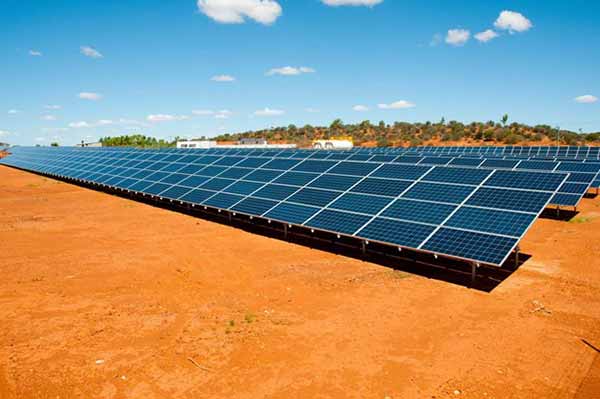
Australian billionaire Andrew Forrest is investing more than $2 billion into a renewable energy project he has acquired in Queensland.
Forrest, who made his fortune in the iron ore industry, is keen to turn his company, Fortescue Metals Group, into a major green energy firm. He said his investment in the renewable energy project at Clarke Creek, Queensland, which consists of wind, solar, and battery development, is meant to end his country’s reliance on fossil fuels.
The new project is expected to be completed in 2026 and provide enough energy for 40% of Queensland’s households.
His company has also begun construction of a major electrolyzer facility with a view to supporting the production of green hydrogen both domestically and internationally. His facility is expected to double world production of electrolysers, and already is receiving orders for the equipment.
Forrest said he wants Queensland to be the renewable energy hub of the Southern Hemisphere. He’s also promised that other, bigger renewable energy projects will soon be launched by his company.
Vietnam Struggles With Gasoline Shortages
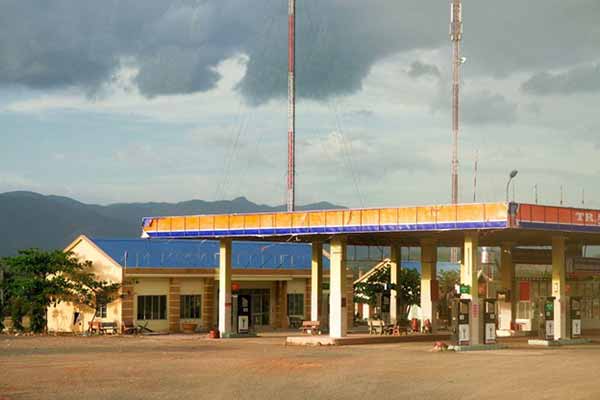
Gasoline supplies have been running low in Vietnam, with the price for a liter of gasoline reaching new highs and many dealers without fuel to sell. The government has responded to the crisis by deciding to auction off some of its national oil reserves.
An oil refinery that supplies about a third of the country’s needs is currently producing about 60% of its normal supply, as it struggles to reach a consensus over how to pay for new crude oil purchases.
The refinery isn’t expected to resume full production until late in April. To ensure there’s sufficient fuel for domestic use and industry, the government has begun importing significantly more petroleum products.
At the same time, the government is stepping up inspections to ensure no hoarding of gasoline products takes place.
Consideration is also being given to cutting the environmental tax on fuels to ease the impact of price increases.
Asian countries have been suffering partly from a reduction in fuel supplies from the U.S., and the next few months will probably see a continued constriction in supply as refineries on that continent shutter for routine maintenance.
Vietnam is also hamstrung by its inadequate resources and personnel for conducting appropriate market analysis and forecasting that would enable it to forestall such problems, a Vietnamese economist said.
Asia-Pacific to See Major Growth in Offshore Wind Power
The Asia-Pacific region will add more than 100 gigawatts in offshore wind capacity between now and 2030, says consultancy firm Wood Mackenzie, with the lion’s share being in China.
It said China is expected to add 93 GW of installed capacity during this decade, while other Asian countries, including Taiwan and South Korea, will add up to 29 GW in the same period.
China is focused on boosting its renewable energy resources to achieve its goal to peak its emissions within the next 10 years. Currently, almost half of the region’s energy needs are supplied from coal, and only 10% comes from renewables.
In 2020, there was about 750 GW of installed wind capacity globally, and this form of energy will likely become cheaper than coal for Asia in the coming decade as prices continue to fall. Wind power is also very attractive because it generates only about 1% of the emissions resulting from coal.
Opinion writer: Jewel Fraser
The opinions, beliefs, and viewpoints expressed by the various authors do not necessarily reflect the opinions, beliefs, or viewpoints of Interactive Energy Group, LLC (IEG) or its parent companies or affiliates and may have been created by a third party contracted by IEG. Any content provided by the bloggers or authors are of their opinion and are not intended to malign any individual, organization, company, group, or anyone or anything.
Brought to you by energysavings.com
All images licensed from Adobe Stock.
Featured image: