
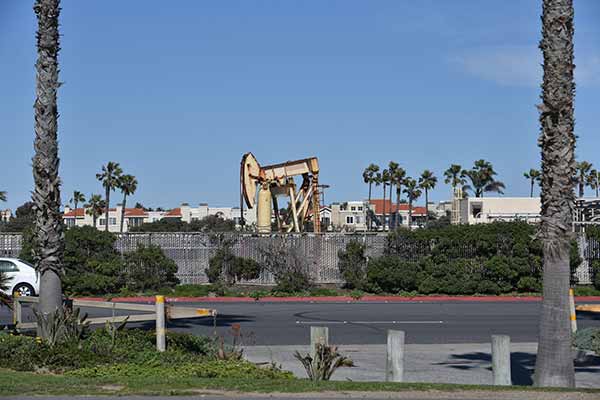
Californians were alarmed to learn that an oil pipe released over one hundred thousand gallons of crude oil off of the state’s shore, posing a threat to wildlife and ecosystems and prompting the closure of some beaches in the state. Meanwhile, Puerto Ricans and Lebanese struggle with the effects of an unreliable electricity supply. And, some in Europe face the prospect of losing their service because of being unable to pay their electricity bill.
Oil Spill Off California Coast Causes Alarm
A breach in a pipeline owned by Amplify Energy has led to more than 120,000 gallons of crude oil flowing into the ocean around Southern California since Saturday, raising concerns about dangers to human health and wildlife.
The cause of the spill had not yet been determined when the leak was stopped on Sunday. Cleanup efforts are continuing.
The U.S. Coast Guard placed booms in the water to contain the spread of the oil and managed to remove more than 3,000 gallons of oil from the water over the weekend.
Orange County officials said they were concerned about the impact the oil spill was having on wetlands and wildlife in the area. They told residents to stay out of the water or seek medical attention if they had come into contact with the ocean since the oil spill.
The city of Laguna Beach also closed all beaches to the public.
Though the spill is small in comparison to some other spills, such as the Exxon Valdez oil spill in Alaska in the late 1980s and the 2010 Deepwater Horizon spill, some officials expressed frustration.
Some said the spill underscored the need to put a stop to drilling off of California’s shores.
450-Mile Cable From Norway Sends Power to U.K.
A 450-mile power cable running under the North Sea, known as the North Sea Link, is now carrying hydropower from Norway’s west coast to Northumberland in the U.K.
Norwegian company Stattnet and the U.K.’s National Grid are behind the 1.6 billion-pound project, which took six years to complete and is expected to reduce the U.K.’s reliance on fossil fuels for energy.
The hydropower from Norway will likely result in a reduction of 23 million tonnes of carbon dioxide being produced by the U.K. energy sector by 2030, officials said. The U.K. already has power interconnections with France, Belgium, and the Netherlands.
The hydropower interconnection from Norway is currently carrying 700 megawatts (MW) of power to the U.K. and is expected to increase to twice that amount by year-end. When it does, it will supply enough energy for nearly 1.5 million homes in the U.K.
Such interconnections between European countries are viewed as important to achieving sustainable levels of renewable energy supplies. The U.K. has been suffering from the effects of low wind speeds, which has hindered its ability to generate enough electricity and has forced it to rely on gas, which is currently selling at very high prices.
About a quarter of the U.K.’s energy typically comes from wind power.
Rise in Number of Energy Poor in Europe

A recent study says almost 80 million Europeans are facing difficulty in keeping their homes warm.
At the same time, activists in Europe say around 7 million people receive disconnection notices every year because of unpaid bills. They say that number will likely increase because of financial hardships caused by the pandemic and the steep rise recently in gas and electricity prices.
An analyst said in 2019, before the pandemic began, about 12 million European households had fallen behind in payments on their utility bills.
Though general poverty in the European Union is around 20%, those living without access to adequate energy supplies for keeping warm are said to amount to over 60% in some countries.
Some activists have pushed for a ban on disconnections of utility services, saying that energy is a basic human right like water.
Governments in Europe are doing what they can to mitigate the impact of energy poverty on the most vulnerable. France announced a one hundred Euro one-time payment to households it is already providing energy vouchers to — around 6 million households, while Italy provides billions in energy subsidies for millions of citizens. Spain has reduced energy taxes for homeowners. These countries are also implementing additional measures to provide support.
Puerto Ricans Struggle With Ongoing Blackouts
Power outages in Puerto Rico are taking a toll on the island’s population, with the elderly and remote workers among the most affected.
Puerto Rico’s power generators are twice as old as those on the U.S. mainland, and lack of maintenance as well as lack of investment to upgrade them have been identified as among the main reasons for the constant power outages.
Luma, a private company responsible for power transmission and distribution, has said that it intends to invest more than $3 billion on upgrades.
Puerto Ricans have taken part in organized protests against the outages, which often occur after parts of power generation machinery fail. At other times, Luma has cut supplies for periods to manage what it said was excessive demand.
The island has gone without power for days at a time, causing homeowners to throw out food that went bad because of lack of refrigeration and people with diabetes to throw away their insulin because they could not store it properly.
Meanwhile, the pandemic has forced many people to work from home, but the lack of electricity has led to significant loss of earnings for some people.
Lebanon Loses Part of Power Supply
Lebanon will no longer be receiving power supplies from Karpowership, a Turkish company that supplied 25% of its electricity supply for nearly a decade, after the company said it would not be seeking to renew the contract.
Karpowership said it did its best to help out, but Lebanon owes it more than $100 million, and when its contract expired at the end of September, the service would end.
Lebanon experiences blackouts that last almost an entire day, and corruption in the energy sector has led to perpetual fuel and power shortages.
About a third of Lebanon’s population lives in extreme poverty, and the economic situation has been made worse by the inconsistent power supply.
The country has made plans to import power from Jordan and natural gas from Egypt, and the newly elected government has said that it is making the power supply issue a priority on its agenda.
Five States Collaborate on EV Charging Network

Five states in the Midwest have announced a Regional Electric Vehicle Midwest Coalition that will set up electric vehicle charging stations throughout the region.
The states of Michigan, Illinois, Indiana, Wisconsin, and Minnesota are involved in the plan — known as REV Midwest — and hope to benefit from economic and job opportunities by attracting EV manufacturers.
At the same time, they are expecting health benefits due to reduced CO2 emissions from vehicles. It is hoped that the electric vehicle charging infrastructure that will be put in place through this initiative will also serve to safeguard transportation in the states.
The plan will first focus on commercially significant routes in the region.
In the infrastructure bill now before the House, a total of $12.5 billion has been allocated for electric vehicle charging investments
Altogether there are roughly 3,000 charging stations in the five Midwestern states.
Large Hydropower Station in China Begins Operations
China’s Lianghekou hydropower station, said to be the world’s second highest in terms of altitude, has begun operations almost exactly 7 years after construction work on it began.
Situated along the Yalong River in Sichuan Province, the station consists of 11 high slopes and is expected to produce 11 billion kilowatt hours (kwH) of electricity each year while eliminating more than 20 million tons of CO2 emissions annually. It will also help China to reduce its coal consumption.
China has plans to build 13 hydropower plants.
Trinidad and Tobago Introduces Fuel Cash Card
The Trinidad and Tobago government introduced a fuel cash card in its 2022 budget, as it moved forward with plans to remove subsidies on car fuel. The cards will be given to financially disadvantaged citizens who will be severely affected by the removal of subsidies on gas that will take place in the coming months.
With the removal of the subsidies, gas dealers will determine their own profit margin.
During the 2022 budget presentation, the government also expressed the desire to diversify the country’s economy and end its heavy reliance on the oil and gas industry, though it expects a significant increase in natural gas production during the coming year.
Opinion writer: Jewel Fraser
The opinions, beliefs, and viewpoints expressed by the various authors do not necessarily reflect the opinions, beliefs, or viewpoints of Interactive Energy Group, LLC (IEG) or its parent companies or affiliates and may have been created by a third party contracted by IEG. Any content provided by the bloggers or authors are of their opinion and are not intended to malign any individual, organization, company, group, or anyone or anything.
Brought to you by energysavings.com
All images licensed from Adobe Stock.
Featured image: