
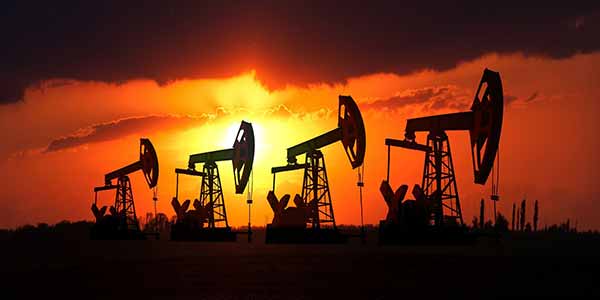
Oil demand will hit pre-pandemic levels in the first quarter of 2022 despite the emergence of the Omicron coronavirus variant, according to a new report from the Organization of the Petroleum Exporting Countries (OPEC).
While OPEC predicts oil’s continued recovery from the pandemic, the World Health Organization is sending out warning signs about the risk to the globe from Omicron.
Oil’s resurrection comes hot on the heels of November’s COP26 meeting in Glasgow, Scotland, which claimed to have reached “global agreement to accelerate action on climate (crisis) this decade.”
Daily Oil Demand Close to 100 Million Barrels
OPEC’s monthly report foresees average world oil demand averaging 99.13 million barrels per day (bpd) in the first quarter of 2022. The revised figures are 1.11 million bpd higher than last month’s forecast. Oil demand may well surge past 100 million bpd in the third quarter of 2022 — levels not seen since 2019.
The report states: “Some of the recovery previously expected in the fourth quarter of 2021 is now shifted to the first quarter of 2022, followed by a steadier recovery throughout 2022.
“The impact of the new Omicron variant is expected to be mild and short-lived, as the world becomes better equipped to manage COVID-19 and its related challenges.”
COVID Cases Impact Upon Global Oil Prices
In December 2019, oil prices for West Texas Intermediate were around $66 a barrel. COVID-19’s arrival triggered a price slump to a $20 average per barrel in April 2020, when much of the world was in lockdown. Demand went into freefall, and at one point, U.S. oil prices plunged into unprecedented negative price territory, with producers renting tankers to store surplus production.
By January this year, demand had picked up sufficiently for prices to reach $55 per barrel. Prices started to rise as economies reopened, peaking at $84 a barrel in October 2021 and mirroring a rise in inflation and energy bills in many countries.
However, the Omicron variant’s discovery provoked a 10% drop in the price of Brent crude on November 26 as countries rapidly introduced travel restrictions. However, December’s prices have since stabilized around the $68-73 per barrel price.
Oil Demand Increases at Odds With COP26 Announcement
Overall, OPEC expects a 4.3% rise in oil demand in 2022 compared to last year, up 4.15 million barrels per day.
Only last month, world leaders hailed a historic agreement at the COP26 in the United Kingdom. They heralded the Glasgow Climate Pact “to keep 1.5C alive” and restrict global temperature increases to that limit by 2050.
Much was made of reducing coal use and transitioning to electric vehicles at COP26. But it is oil, at 33.1% in 2019, that drives global energy production, albeit its overall emissions are not as high as coal.
In the United States, 8% of total residential sector energy use is from petroleum products. Light-duty vehicles accounted for 17% of total U.S. carbon emissions. Overall, the transportation industry burned through around 14 million barrels of oil a day, 69% of the country’s oil use.
Fossil Fuel Success and the Green Recovery
Oil’s post-COVID resurgence may not come as a surprise to industry observers. Billions of dollars have been handed to fossil fuel industries by G7 nations since the COVID-19 pandemic, outstripping support for clean forms of energy.
Between January 2020 and March 2021, the G7 nations of the U.K., U.S., Canada, Italy, France, Germany, and Japan pumped $189 billion into fossil fuels, compared to $147 billion into clean energy.
OPEC’s positive outlook for oil demand suggests that the post-pandemic world will be similar to the pre-pandemic one — that’s to say, fossil-fuel driven. Indeed, peak demand for fossil fuels is not expected until 2025, giving OPEC’s predictions plenty of gravitas.
Omicron, and people’s attitude for a green recovery may alter the short- and long-term outlook for fossil fuels, but, for now, it seems to be business as usual for the oil industry.
Opinion writer: Tom Shearman
The opinions, beliefs, and viewpoints expressed by the various authors do not necessarily reflect the opinions, beliefs, or viewpoints of Interactive Energy Group, LLC (IEG) or its parent companies or affiliates and may have been created by a third party contracted by IEG. Any content provided by the bloggers or authors are of their opinion and are not intended to malign any individual, organization, company, group, or anyone or anything.
Brought to you by energysavings.com
All images licensed from Adobe Stock.
Featured Image