

Royal Bank of Canada has received a petition from dozens of top celebrities who are urging the bank and one of its subsidiaries to withdraw their support for a gas pipeline project in Canada that’s alleged to violate the rights of First Nations peoples. The pipeline project builders countered that they have the support of many First Nations groups and are interested in ongoing dialog. Meanwhile, Italy, Spain, Greece, and Portugal met to discuss a way forward for the EU bloc in the face of rising gas prices and geopolitical instability.
RBC Threatened With Boycott Over Pipeline Financing
RBC subsidiary City National Bank (CNB), known as the “bank to the stars” has received a petition from dozens of high-profile celebrities urging it to cease funding of a pipeline they say violates the rights of indigenous peoples in Canadian province British Columbia.
The Coastal GasLink pipeline’s construction is being opposed by Wet’suwet’en Nation leaders, through whose territory it will run.
“Avengers” star Mark Ruffalo, Jane Fonda, Leonardo DiCaprio, and Scarlett Johansson are among the stars who signed the petition.
RBC responded to the media by saying it had no comment about the petition.
However, the Coastal GasLink pipeline builder issued a press release stating it had full government approval, as well as the support of all the First Nation band councils, whose territory will be affected by the pipeline’s construction. The Wet’suwet’en leaders opposed to the project have said, however, that the band councils don’t have the requisite authority to greenlight the project.
The petition is part of a campaign called “No More Dirty Banks,” launched by an indigenous activist group against the pipeline. Ruffalo explained that the celebrities are using their status to support the campaign because of the need to prioritize protecting the environment for future generations.
The petition was signed by nearly 70 celebrities and was published as an advertisement in Variety magazine. Though the campaign targets RBC and its subsidiary, several other banks are also funding the Coastal GasLink pipeline.
Many of the celebrities who signed the petition are said to be clients of CNB. Director of the hit Netflix climate change satire “Don’t Look Up,” Adam McKay, also took part in a rally in Los Angeles targeting RBC and CNB over the pipeline project. McKay, who was described as outraged, intends to move his company from CNB if it continues to invest in the pipeline.
The rally organizers have also urged the California Teachers Association to divest its hefty pension fund, worth more than $20 billion dollars, from fossil fuel activities.
The company building the pipeline, TC Energy, has said it continues to seek dialogue with those opposed to the pipeline to find the most satisfactory way for the project to be completed.
Southern Europe Agrees on Energy Strategy
The countries of Spain, Italy, Portugal, and Greece, in the south of Europe, agreed at a meeting to urge EU states to work together to stockpile sources of energy and impose a cap on gas prices throughout the bloc.
The leaders of those countries pointed out that Russia’s invasion of Ukraine exacerbated an already vulnerable situation with regard to energy in the EU. Farmers and truckers were engaged in protests in different EU countries because of high energy prices around the same time the leaders were holding their meeting.
The leaders urged all EU states to take a united stand on energy issues to protect small businesses and citizens, in particular, from soaring energy costs, which further underlined the need to diversify energy sources, the leaders said.
Italy also announced it will be providing relief for about five million economically disadvantaged families, who’ll have caps set on the amount they must pay for energy. The country imports nearly half of its gas supply from Russia, and uses gas as its main energy source.
Italy’s prime minister said the EU would benefit from joint purchases of gas for the entire bloc, since this would allow countries to pay less and strengthen their contractual position.
Some of the Mediterranean countries are also considering cross-border energy projects to meet their gas supply needs. At the same time, new suppliers are being sought in North Africa and elsewhere.
A week earlier, the southern European states were left out of a high-level meeting between U.S. President Joe Biden and northern Europe’s leaders over the Russian invasion, which caused some consternation.
Study Shows Pollution Reduces India’s Solar Power
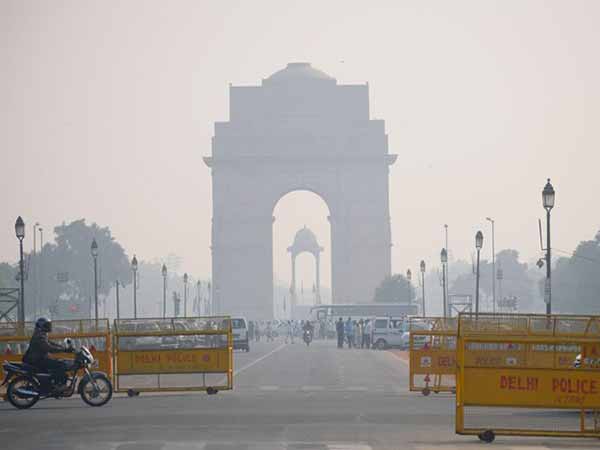
A study by IIT Delhi scientists shows that India’s air pollution problems have resulted in its grids receiving significantly less sunlight and producing considerably less solar power, depending on the grids’ location and the type of solar system employed.
The researchers found that the reduction in sunlight absorbed varied from between 10% and 16%, which in turn led to a drop in solar energy produced by the grids of between 12% and just over 40%. The study covered the period from 2001 to 2018.
The extent of loss due to pollution was noticeably lower on simple solar systems, such as a fixed-tilt system, than the loss occurring on more complex solar panel systems, including those that rotate on their axis or move with the sun.
The report, published in Physics World, suggested that efforts by India’s government to reduce aerosol pollution through its National Clean Air Programme would significantly increase the economic benefits of the country’s solar energy.
The scientists said that the proposed reduction in aerosol pollution by as much as 30% under the program would result in economic benefit worth hundreds of millions of dollars annually, while realizing as much as 8 terawatts per hour of additional renewable energy annually.
The result would be that India would be able to save on additional investments in new installations, the researchers suggest, since 76 gigawatts of installed solar power capacity would yield almost as much solar energy as 100 GW under the current conditions of heavy air pollution.
Further, the eastern and northeastern regions’ grids would especially benefit from the increased solar generation, since in those regions people make heavy use of fossil fuels and burn biomass as a fuel.
India’s air pollution problem is considered to be among the worst in the world.
Belgium Rolls Back Plans to Eliminate Nuclear Power
The Belgian government in response to Europe’s ongoing crises has decided to extend the life of nuclear reactors that were scheduled to shutter by 2025.
The deadline for closing the country’s nuclear energy reactors has now been moved back to 2035, in an effort to ensure Belgium has a reliable energy supply in the face of soaring gas prices across the continent. Belgium obtains about 40% of its energy from nuclear power, and the nuclear reactors that will continue operating would provide electricity for over 1 million Belgian homes.
The government has stated that any excess production from the reactors will be used to support the country’s energy transition; specifically, the excess supply will be put into the production of green hydrogen. The country was also considering expanding its network of gas power stations to meet energy needs.
The continuation of nuclear power will help Belgium wean itself from fossil fuels, the government said. It will also spend just over 1 billion euros on renewable energy projects, as well as investing several million euros over the next four years to explore the potential of modular nuclear reactors.
Soaring Energy Prices Benefit Trinidad and Tobago
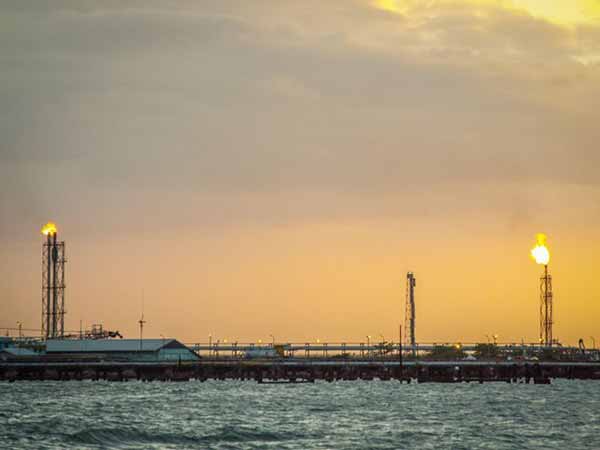
The International Monetary Fund (IMF) has said that Trinidad and Tobago will likely experience a 5.5% growth in its economy, thanks to the steep rise in energy prices globally.
While it praised the T&T government’s handling of the pandemic crisis, the IMF said the country did experience a setback because of it. However, the current rise in gas and oil prices will likely see the country do better than previously projected for this fiscal year, the IMF said
It pointed out that the country has considerable potential for further fossil fuel exploration, including more than a dozen offshore deep-water blocks currently under production, and a number of new blocks onshore or close to shore that will be made available for bids shortly. The increased production of oil and gas will likely improve the country’s foreign exchange position as well, the agency said.
The IMF urged Trinidad and Tobago to review the tax regime for its hydrocarbon sector to ensure competitiveness, as well as continue to look for ways to reduce the sector’s emissions and transfer to renewables.
EU Funds Project to Make Caribbean Power Supply Resilient
The EU has provided over 460,000 euros to an umbrella organization of Caribbean electricity suppliers, with the aim of boosting the resilience of the region’s power supply.
The project being undertaken by the industry group CARILEC will focus on strengthening local utilities’ ability to withstand economic shocks due to climate change, COVID-19, and other global crises.
A regional education program on energy conservation to help homeowners reduce their energy bill is one of the project activities. Other activities include training for professionals to provide sustainable energy services.
Brought to you by energysavings.com
All images licensed from Adobe Stock.
Featured image: