
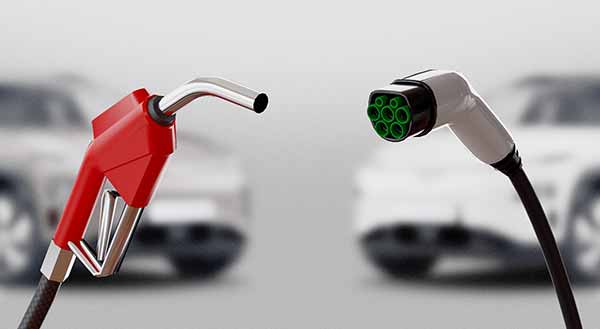
The reduction of new vehicle emissions might be plateauing despite hitting record efficiency levels in 2020, according to a new report.
The United States Environmental Protection Agency (EPA) figures painted a complicated picture. The average estimated real-world CO2 emission rate for all new vehicles manufactured in the U.S. in 2020 fell to a record-low 349 g/mi.
Fuel economy also improved, up 0.5 miles per gallon to 25.4 miles per gallon, another best.
Transportation Continues to Dominate U.S. Emissions
All 14 large car manufacturers in the U.S. met the EPA’s greenhouse gas emissions targets for new vehicles built in 2020. Companies used a combination of technological improvements and carbon dioxide credits to reach compliance.
Overall, CO2 savings from these new cars are not as high as they could have been. People have been buying more emission-heavy SUVs than smaller, less polluting cars.
Transportation accounted for 29% of all the United States CO2 emissions in 2019. Within the transport sector, 58% of those emissions come from light-duty vehicles.
Electric Vehicles Expected to Boost Emissions Savings
The record EPA figures maintained the motor industry’s general carbon emissions reduction pattern since 2005. However, improved fuel efficiency and fewer emissions are flatlining. It may take electric vehicle (EV) adaptation to make U.S. transportation carbon emissions plummet.
Globally, electric vehicle (EVs) sales grew 168% in the first half of 2021 compared to the first six months of 2020. Tesla led the way, selling 386,000 cars, and the Volkswagen group selling 332,000 vehicles. An estimated 6.4 million electric cars will be sold overall this year, albeit that makes up just 6.3% of total global light-vehicle purchases.
The potential market is being backed by the big players. Ford Motor Company has committed to having a global capacity to produce 600,000 EVs annually by 2023.
However, it’s not all smooth sailing (or driving, as it were). Significant emissions and fuel efficiency varies between various EV models, based on the EPA’s 2020 figures.
Tesla’s all-electric fleet posted the lowest tailpipe emissions by some distance plus the highest fuel economy between the large manufacturers. The following best were Honda, Subaru, and Hyundai. Stellantis recorded the lowest fuel economy and the highest average emissions, followed by Ford, then General Motors (GM).
President Joe Biden wants half of all new vehicles sold in the U.S. to be zero-emission cars by 2030. EPA figures suggest the United States will reach between 4-9% of all national light-duty vehicle production to be electric or hybrid by year-end.
Diesel Car Emissions Targeted With Funding Cash
While celebrating the record figures and EV sales, the EPA is also looking to clean up diesel engines. Some $77 million in grants will support projects that reduce diesel emissions from older, dirtier vehicles in the U.S.
Money will go to upgrade school buses and port and construction equipment, plus replace existing high-emissions vehicles with zero-emissions alternatives. Priority went to areas suffering from poor-quality air, ports, and transport zones for goods. Ongoing benefits and involvement with local communities helped secure funding, too.
Many governments across the world are looking at a multitude of ways to reduce their greenhouse gas emissions. They hope that fewer pollutants spewed into the atmosphere will help counter climate change and prevent global temperatures from rising by more than 1.5 Celsius (2.7 Fahrenheit) before 2050.
The electrification of many vehicles, from scooters to HGV lorries, is a critical plank in policies that allow citizens to retain the choice transport brings while balancing environmental concerns.
The EPA Thinks the United States Is on Track to Reach Emissions Targets
The EPA came into existence in 1970 under President Nixon in response to public concern about pollution. Current administrator Michael S. Regan said: “Today’s report is a great indicator that automakers are following through with their promise of achieving clean car standards while providing consumers with great vehicle options.
“I am optimistic that the innovation and marketing power of the auto industry, coupled with President Biden’s unprecedented support for a zero-emissions future, will accelerate cleaner technologies, sharply cutting pollution to meet the climate challenge.”
The auto industry’s transitional phase from combustion engines to electric vehicles gathers pace. However, it is still very much a gasoline-based industry, despite the record efficiency, emissions, and expansion in EV production.
Opinion writer: Tom Shearman
The opinions, beliefs, and viewpoints expressed by the various authors do not necessarily reflect the opinions, beliefs, or viewpoints of Interactive Energy Group, LLC (IEG) or its parent companies or affiliates and may have been created by a third party contracted by IEG. Any content provided by the bloggers or authors are of their opinion and are not intended to malign any individual, organization, company, group, or anyone or anything.
Brought to you by energysavings.com
All images licensed from Adobe Stock.
Featured Image