

European businesses in need of cash to develop clean energy projects are being invited to apply for funding through a climate fund established by Bill Gates for projects including carbon capture, green hydrogen, and other difficult to scale technologies. Meanwhile, the U.S. DoE has invited Americans to apply for numerous professional jobs in a climate unit that is being established to work on the country’s energy transition to renewables.
Gates’ Climate Energy Fund Invites European RFPs
The Breakthrough Energy fund established by billionaire Bill Gates to invest in nascent clean energy technologies has sent out an RFP for European projects.
The fund is looking to pour billions into technologies that reduce carbon emissions but that have so far been difficult to scale and are very expensive to adopt.
Among the technologies the RFP is interested in are those related to green hydrogen, carbon capture, and sustainable aviation fuels.
The fund’s RFP is being made through its Catalyst program that has so far raised well over a billion dollars and is designed to support projects through public-private partnerships. The program is aiming to raise $1 billion over the next five years for European projects that may potentially attract funding from the European Commission and European Investment Bank.
There are plans to launch an RFP for the UK in due course, and later for other parts of the world.
Last year, Bill Gates had promised to make more than a billion dollars available for joint partnerships with the U.S. government once the $1.2 trillion infrastructure bill was passed. That bill became law last November and supports investments in clean technology, the power grid, and other infrastructure that has a direct bearing on carbon emissions.
US Agency Recruiting 1,000 Climate Workers
A new unit in the U.S. Department of Energy (DoE), called the Clean Energy Corps, is currently recruiting 1,000 workers to assist in the country’s effort to make the energy transition.
The new workers will join a number of DoE employees who will also join the unit that is being established under the bipartisan infrastructure bill.
The DoE was allocated $62 billion of the funds designated for projects by the bill, which will be used to help the country make the transition to renewables.
Americans are invited to apply to be part of this opportunity to tackle the climate crisis. The DoE stressed its desire that the cohort of successful applicants should reflect the country’s diversity, particularly with respect to those historically most adversely affected by climate change.
Jobs on offer include roles in engineering, project management, communications, public policy, and human resources.
The recruitment drive is the agency’s largest since its establishment 45 years ago.
Other clean energy initiatives announced by the government include a wind auction that is hoped to yield as much as 7 GW of renewable energy from more than 488,000 acres offshore, with an additional up to six auctions planned for the next few years.
Work will also begin on making improvements to the power grid.
Hydrogen Predicted to Reshape Geopolitics
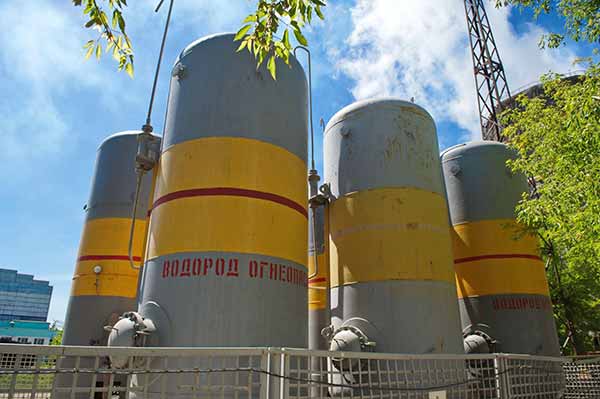
A green hydrogen market will shift the balance of power geopolitically and permit new players to establish themselves as centers of influence, a recent report by the International Renewable Energy Agency (IRENA) suggests.
The IRENA said that the hydrogen market will be configured very differently from today’s oil and gas market and will offer economic and industrial opportunities for both developed and developing countries.
It said the transition to a global hydrogen economy will promote greater inclusiveness and democracy as new suppliers and routes emerge to facilitate the transition.
Hydrogen is expected to provide as much as 12% of global energy needs within the next three decades, and currently has a market valued at $174 billion.
A significant portion of this fuel will be traded across borders, the IRENA said, and is likely to exceed the amount of cross-border trade in natural gas in the years ahead.
At the same time, some countries that may not be able to produce enough of their own green hydrogen have begun establishing diplomatic relationships to ensure they can import the necessary supplies.
Other countries that are well-established exporters of oil and gas are looking to set themselves up in the clean hydrogen market as well.
The hydrogen market has a potential future value of $600 billion. The Bank of America estimates the market could generate several trillion in revenues in the years ahead.
Developing countries, such as those in Africa, Latin America, the Caribbean, and the Middle East, have the greatest capacity to develop a clean hydrogen economy, the IRENA said, while Europe and Asia have less capacity for such development.
Gulf Arab states have already begun working on plans to develop and use clean hydrogen.
However, considerable constraints remain on the development of a global hydrogen economy, including the costs associated with production, transportation, and storage.
Major Green Hydrogen Facility for Dutch Port
The Port of Rotterdam in the Netherlands will be the site of a large-scale green hydrogen project being developed by Shell to complement fuel operations it already possesses in that location.
The Hydrogen Holland I project will feature a 200 MW facility that relies on an alkaline water electrolysis module. Electricity to drive the production will come from an offshore wind farm.
A 25-mile pipeline will carry the green hydrogen from the project to Shell’s Energy and Chemicals Park Rotterdam. The production is expected to serve primarily the transport and industrial sectors.
The facility will use solar panels to achieve net-zero emissions in its operations and will have a center hall that is nearly five acres in size.
Shell is expected to make a final decision as to whether to invest in this project by early this year. If it resolves to proceed with the project, construction of the facility will begin in a few months, with hydrogen production expected to commence in 2024.
The Port of Rotterdam already has an MoU with the Australian state of Tasmania to explore the possibility of green hydrogen exports from that state to the Netherlands.
China’s Reliance on Renewables Keeps Growing
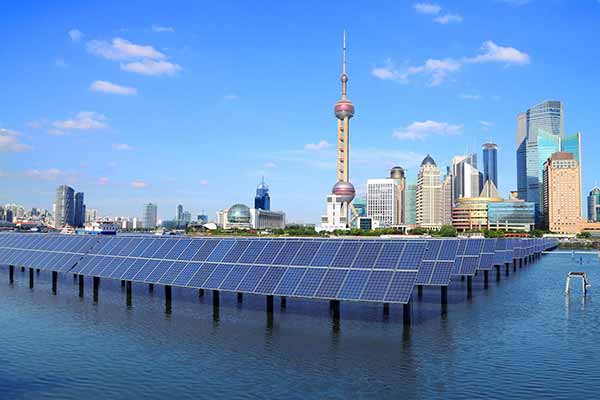
The International Energy Agency (IEA) predicts that China will steadily displace coal with renewables as an energy source in the coming decades, pointing to a steady decline in incremental demand for coal to meet its electricity needs.
China has already stated it plans to peak coal consumption by 2025, as its contribution to combating global warming.
To reduce its reliance on coal for electricity, the country has been steadily increasing its renewable energy capacity.
Renewable energy is expected to meet over 70% of the country’s new energy demand in the short term, and wind and solar energy capacity is expected to provide a total of 930 GW within the next few years.
Last year, China obtained 64% of its electricity from coal fuel, but coal’s contribution to incremental electricity demand has fallen to 46% since 2015. The IEA predicts this decline in the contribution of coal to China’s energy mix will continue in the years ahead.
The country is also in the process of scaling up considerably its available hydropower and non-hydropower energy storage capacity. The IEA said its energy efficiency will also likely improve.
To succeed in decarbonizing its electricity supply, China’s focus is on maintaining a reliable energy supply by meeting new demand with renewables while transitioning existing energy demand gradually from fossil fuels to cleaner sources of energy when circumstances favor doing so.
Texan Firm Proposes Carbon Storage Project
A pipeline that would transport liquefied carbon dioxide from four states to underground storage sites in Illinois has been proposed by Navigator CO2 Ventures.
The Texan firm says its planned 1,300-mile-long pipeline would run through Illinois and four other Midwestern states and would capture as much as 15 million metric tons of liquefied carbon dioxide from those states’ industrial emissions.
The company says that is equivalent to removing more than 3 million cars from the road annually.
The pipeline would be buried no less than five feet below ground and carry the carbon dioxide to two permanent storage sites in Illinois where the geologic formations are ideal for such storage.
Farmers whose properties would be affected are being encouraged to educate themselves fully on the effects of such an easement on their properties and to seek legal advice to ensure they negotiate the best terms for the long-term project.
Once government regulators approve the project, pipeline construction will begin in 2025.
India Outlines New Rules for EV Charging Ports
EV owners in India have now been granted permission to charge their vehicles at home using their domestic electricity supply, and will not pay an increased rate for the electricity they use when doing so.
This change in rules governing EV charging is one of a set announced by the government. Additionally, the government has outlined a large-scale project for building public charging stations that will encourage investment by private investors and individual states.
Indian states will have the option of entering into revenue-sharing agreements with the central government to build charging infrastructure to service the country’s largest cities.
Currently, there are just under 950,000 registered EVs in India, while the country has roughly 1,000 charging stations.
India hopes EVs will be 30% of all private car sales and 70% of commercial vehicle sales by 2030.
Opinion writer: Jewel Fraser
The opinions, beliefs, and viewpoints expressed by the various authors do not necessarily reflect the opinions, beliefs, or viewpoints of Interactive Energy Group, LLC (IEG) or its parent companies or affiliates and may have been created by a third party contracted by IEG. Any content provided by the bloggers or authors are of their opinion and are not intended to malign any individual, organization, company, group, or anyone or anything.
Brought to you by energysavings.com
All images licensed from Adobe Stock.
Featured image: