
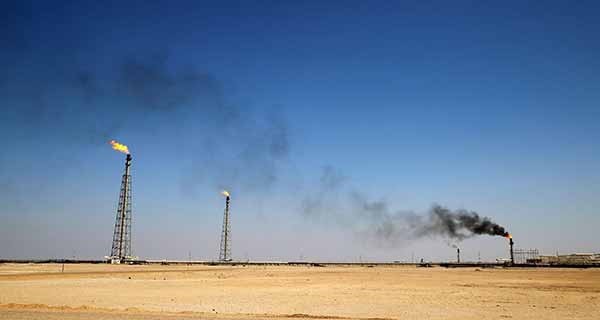
Saudi Arabia and China both announced major steps toward achieving the energy transition, with the Saudis promising to spend almost $200 billion to compensate for carbon emissions caused by its continued exploitation of its oil industry. Meanwhile, China has expressed its determination to drastically reduce its use of fossil fuels in the coming decades. Elon Musk’s company, Tesla, also captured attention after it was valued at $1 trillion, only the sixth company in the U.S. to achieve that status.
Saudi Arabia Aims for Net Zero by 2060
Saudi Arabia announced it is aiming to achieve net-zero emissions by 2060 and will rely heavily on carbon-offsetting measures to help it do so.
The Persian Gulf state plans to spend almost $200 billion on offsetting programs, like carbon capture and storage technology as well as tree planting, to make up for emissions it produces, as it continues to exploit its vast oil and gas resources.
The country also wants to reduce its methane emissions by almost a third within the next 10 years.
However, Saudi Arabia is counting only the emissions produced in its country; it is not taking responsibility for the emissions from fuel it ships overseas.
It is hoping to reduce domestic emissions by almost 280 million metric tons by the year 2060 under the Saudi Green Initiative.
Though seeking to diversify its economy to reduce its heavy reliance on fossil fuels, the country has made little headway in doing so. At the same time, it has been slow to adopt renewable energy for its own use and opened its first renewable energy plant earlier this year.
Saudi Arabia’s leaders say they expect there will be a continued demand for their oil and gas exports for many decades to come.
The country’s oil revenue is expected to be around $150 billion this year, and it supplies about 10% of the world’s oil requirements.
China Pledges to Drastically Reduce Coal Use
Chinese authorities announced plans to curtail the use of fossil fuels to under 20% by 2060, including the use of coal which currently provides about 60% of its total energy needs.
The plan is in harmony with its promise to achieve carbon neutrality by 2060, with an interim goal of achieving peak carbon emissions by 2030. It also hopes to increase the use of clean energy sources to 25% by the year 2030. That year is also the target date for achieving 1,200 gigawatts (GW) of renewable energy in the form of wind and solar power.
It is expected these changes will lead to a significant fall in CO2 emissions per unit of GDP.
China’s leaders acknowledge that its industrial system will require deep restructuring to make these goals a reality.
Since the resumption of economic activity after the shutdown due to the pandemic, China has ramped up the production of coal to help with a shortage of energy. It has also started work on bringing several new coal mines into production.
The country says it has to be careful to balance the need for the energy transition against the need to ensure energy and food security for its citizens, and it was important not to overreact in the drive to reduce emissions.
India and the U.K. Team Up to Launch Worldwide Grid
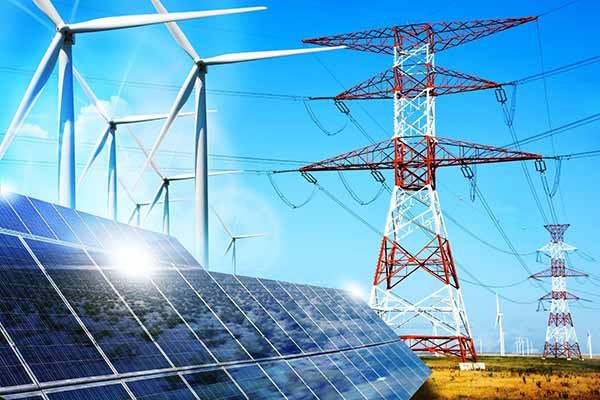
India is partnering with the U.K. on a project to build a solar grid that will span the world and share solar power internationally.
Referred to as the GGI-OSOWOG (Green Grids Initiative-One Sun One World One Grid) initiative, the proposed venture is currently being studied by the International Solar Alliance (ISA). The ISA includes dozens of countries that enjoy an abundance of sunshine throughout most of the year.
The idea behind GGI-OSOWOG is that as the earth spins on its axis, the international grid will be able to receive solar energy from anywhere in the world 24/7. It is hoped this will reduce the need for storage capacity, which continues to be a constraint on the use of renewable energy.
India had first proposed the idea in 2018 and has been working on promoting it, as its country struggles with energy shortages. India currently obtains around 40% of its energy from clean or renewable sources.
In May of 2021, the U.K. agreed to combine its own green grid initiative with India’s to support the international solar grid concept. Bloomberg Philanthropies has thrown its weight behind the idea and will be working with the ISA to secure $1 trillion to launch the international grid.
BP Philanthropies said in a recent report that demand for energy is expected to grow considerably in many countries in the developing world over the next 30 years.
However, some analysts say that though the venture is a good idea, it may not be viable in the light of the hurdles with regard to building political consensus among 140 countries spanning the globe, from Africa and the Middle East, to Asia, and Europe.
Analysts pointed out that within India itself, it has taken many years to achieve connectivity to the national grid for the entire country, and 70 years after its independence some parts of the country still are not connected. They said an international grid would multiply the challenges India has faced on a global scale, making it difficult to realize.
Though transnational grids do exist, such as the Nord Pool that connects countries in northern Europe and the Australia-Singapore energy sharing project, they are regional in scope, not international.
Another issue confronting the proposed GGI-OSOWOG include the high cost of laying cables to transport the power from the grid around the world, which could wipe out any gains from the lower cost of solar energy.
Hertz Deal Pushes Tesla Valuation to $1 Trillion
 source
The rental car company Hertz has placed a large order for electric vehicles with Tesla that is estimated to be worth approximately $4 billion.
The purchase by Hertz of 100,000 electric vehicles (EVs), worth approximately $40,000 each, helped to briefly move Tesla’s valuation into the $1 trillion range.
About 20% of Hertz’s fleet will soon be electric vehicles, as pressure mounts on companies to do more to combat climate change. Analysts believe Hertz’s purchase is partly an attempt to appeal to consumer sentiment, as it seeks to rebuild its brand following a bankruptcy brought on by high indebtedness and a downturn in rentals due to the pandemic.
NFL star Tom Brady has been hired to help with Hertz’s marketing campaign as the company rolls out its new car-rental line at airports in the U.S. The company also will make the car available in some European locations.
The investment by Hertz will also likely have a positive impact on EV sales because it will give consumers the opportunity to experience driving one.
Hertz is expected to also invest in new charging port infrastructure to support the deployment of its electric vehicles.
Tesla is now the most valuable automobile maker in the world, worth billions more than its second-place rival Toyota. Its worth is said to be equivalent to that of the value of 11 global automakers combined.
Tesla has sold more than 600,000 cars this year, whereas last year it sold just 500,000.
Facebook is the only other company that has achieved a $1 trillion valuation more quickly than Tesla. Five other U.S. companies, most of them tech companies, are currently worth more than $1 trillion.
Experts Say Higher Price on Carbon Needed
Setting the price for carbon emissions at $100 per ton would help discourage use of fossil fuels while helping to furnish the $44 trillion needed to achieve net-zero emissions globally by 2050, experts say.
In a recent poll, 19 of 28 experts stated they thought carbon should be priced above $75, with 17 among that number preferring a price of $100 or more per ton.
Two of the world’s biggest emitters — the U.S. and India — do not as yet have a carbon pricing mechanism. China launched its carbon emissions trading scheme earlier this year with a price of just under $8 per ton. The EU has an emission trading system where prices are currently just under $70 per ton.
The International Monetary Fund has proposed that the price of carbon be set at $75 per ton.
Experts warned that though putting a high-enough price on carbon emissions would likely lead to reduced reliance on fossil fuels, such a tactic alone would not be sufficient. They advised that a focus on regulatory policies was needed to make the energy transition a reality.
Opinion writer: Jewel Fraser
The opinions, beliefs, and viewpoints expressed by the various authors do not necessarily reflect the opinions, beliefs, or viewpoints of Interactive Energy Group, LLC (IEG) or its parent companies or affiliates and may have been created by a third party contracted by IEG. Any content provided by the bloggers or authors are of their opinion and are not intended to malign any individual, organization, company, group, or anyone or anything.
Brought to you by energysavings.com
All images licensed from Adobe Stock.
Featured image