

Royal Dutch Shell is rumored to be thinking about selling off its Permian oil fields worth millions of dollars, in a move to lower debt and boost its energy transition. Meanwhile, a Florida utility imploded a coal chimney to make way for a new solar energy center. Finally, a study shows that low-income Americans spend more to stay warm.
Shell May Sell U.S. Oil Fields Worth Billions
Anonymous sources say that oil giant Royal Dutch Shell is considering selling off its holdings in the U.S. Permian Basin, which is estimated to be worth billions of dollars.
The sale would supposedly permit Shell to lower its net debt to below $65 billion and would benefit its energy transition strategy, as it seeks to invest in more renewables, hydrogen, and low-carbon technologies. The company has not yet confirmed the sale.
Shell’s Permian fields yield around 4.5 million barrels daily, or 6% of its global oil and gas production and 40% of its U.S. output.
The company is under some pressure from investors and a recent court ruling to reduce its greenhouse gas emissions, and it plans to reduce investments in oil incrementally each year leading up to 2030.
It had planned on cutting emissions by 20% by 2030 and by 100% by 2050 from 2016 levels, but a Dutch court has ruled that it must cut emissions by 45% by 2030 from 2019 levels.
NATO Wants to Reduce Carbon Footprint
The North Atlantic Treaty Organization, known as NATO, has announced it will pursue ways to reduce its carbon emissions in light of the impact on its military operations caused by adverse climatic events.
NATO, a military alliance between European and North American countries, has therefore asked its leaders to devise a concrete and realistic plan for emissions reduction while assessing whether it can achieve net zero in its operations.
In the meantime, it has developed a tool to help its member countries measure the emissions of their military installations with a view to cutting those emissions.
Though no one knows for sure how much emissions military operations produce, attempts at estimating them have suggested they are considerable.
While NATO stresses that any efforts to reduce emissions must prioritize the protection of its personnel and operations, it says that climate change will affect its military infrastructure and planning, and create harsher conditions for its personnel.
The U.S. is considering manufacturing weapons that produce less emissions, while the U.K. wants to convert its air force to run on biofuels.
Researchers estimate that in 2017 the U.S. military produced 59 million tons of carbon emissions; the EU’s military emissions are estimated to be 25 million tons annually.
Vote in Switzerland Against Climate Tax
Efforts by the Swiss government to pass a law that would have taxed car fuel and air flights were narrowly defeated in a referendum.
Swiss citizens voted 51% “against” and 49% “for” the new law, which was meant to help the country fulfill its commitments to reduce emissions under the Paris Agreement. The government had hoped the law would help Switzerland cut its greenhouse gas emissions by the year 2030 to half what they were in 1990.
The defeat of the proposed law means that the government will now find it much more difficult to achieve the goal of net-zero emissions by 2050.
All major decisions in Switzerland are decided by voting and are subject to ballot once 100,000 signatures are collected for a national vote on any issue.
Musk Changes Tack Again on Bitcoins

Bitcoins are back in vogue after Tesla CEO Elon Musk tweeted that he will accept bitcoin as payment for his cars once the coins are mined using at least 50% clean energy.
His declaration was followed by an increase in the price of bitcoin to $40,000.
In March, Musk had said his company would accept payment in bitcoin, only to reverse the decision in May over concerns about the environmental impact of producing bitcoins, which is a very energy-intensive process. The majority of bitcoins are mined in China, a country that relies heavily on coal for its energy.
Florida Utility Demolishes Coal Chimney
One of Florida’s largest electricity producers, Florida Power & Light (FPL), demolished the last coal chimney at a plant it owns to make way for a solar energy facility.
The demolition company hired to do the job used more than 100 pounds of explosives to implode the stack.
The coal plant was formerly the Indiantown Cogeneration Plant. It was bought by FPL in 2017 and shut down in 2018. Its demolition clears the way for a planned $100 million solar energy center that is part of a 20-year strategy by FPL to move toward clean energy.
The company says it hopes to have installed 30 million solar panels throughout Florida by the year 2030.
FPL’s first utility-scale solar plant, the Martin Next Generation Solar Energy Center, began operating in 2016.
Concerns Over Contaminant Spark Review of Coal Mines
Canada’s federal government has decided to do environmental assessments of coal mining operations that could potentially release the toxic contaminant selenium.
The decision will affect eight steelmaking coal exploration projects in Alberta.
Many people in Alberta had become concerned about the environmental impact of coal mining after the provincial government repealed a 1976 law banning open-pit coal mining. The subsequent outcry led the Albertan government to reverse its position and reinstate the law.
Canada’s federal government said that since selenium could adversely affect the country’s fisheries, which fall under national rather than provincial jurisdiction, it has the authority to impose the new regulation to review coal mine projects throughout the country.
Selenium is pervasive in Alberta’s coal fields and highly toxic to fish. It is difficult to control once it is released into waterways.
Reviews of coal operations that could pose a threat of selenium contamination will take into consideration the extent to which the selenium is diluted and whether it can be further treated to lower its toxicity.
The government is also updating rules for effluent from coal projects and says there is little likelihood that new coal projects for electricity will be approved.
GM to Spend $35 Billion on EVs and Autonomous Vehicles
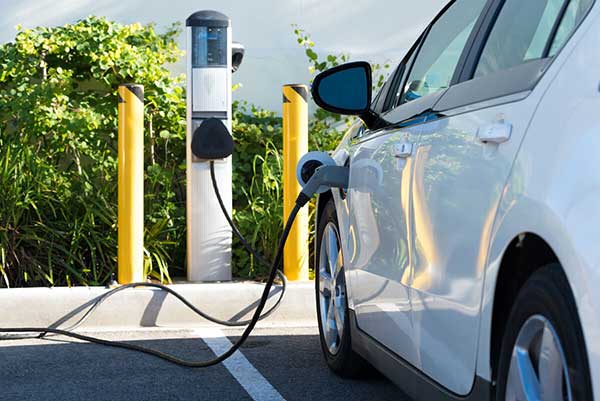
General Motors recently announced that it will be spending $35 billion by 2025 on developing its electric and autonomous vehicle lines, as well as on speeding up production of battery and fuel cell technologies.
With record pretax earnings over the past three quarters, General Motors is looking to increase the amount of money it will spend on new types of vehicles. Last year, the company had announced that it would spend $20 billion but has now decided to raise its goal.
It says it hopes to sell one million electric vehicles annually by 2025.
Currently, GM sells electric vehicles in its Chevy Bolt and Hummer lines of cars. It plans to extend its range of electric cars across all of its brands, including Cadillac, Chevrolet, and Buick.
It also has plans to produce an electric Chevy pickup truck.
Low-Income Americans Spend More on Energy
A recent study in the Proceedings of the National Academies of Science has revealed that people in low-income communities use 25% to 60% more energy per square foot than people in wealthier neighborhoods.
Even where incomes were comparable, non-white residents invariably used more electricity to heat the same-sized accommodation. It was only among the wealthiest of households that this difference in energy use linked to color was not evident.
The study’s authors suggest that racial inequities may be at the root of the differences in energy use, perhaps because low-income residents of communities made up predominantly of people of color benefit less from energy efficiency programs rolled out by utility companies.
Other contributing factors over how much energy is consumed may be tied to whether people own their homes or are renting.
The study’s findings are important in light of the Biden administration’s assertion that it wants federal climate financing to benefit marginalized groups and intends to put more money into energy efficiency.
It is hoped that the data from the study can help better inform that federal climate policy.
Opinion writer: Jewel Fraser
The opinions, beliefs, and viewpoints expressed by the various authors do not necessarily reflect the opinions, beliefs, or viewpoints of Interactive Energy Group, LLC (IEG) or its parent companies or affiliates and may have been created by a third party contracted by IEG. Any content provided by the bloggers or authors are of their opinion and are not intended to malign any individual, organization, company, group, or anyone or anything.
Brought to you by energysavings.com
All images licensed from Adobe Stock.
Featured image: