

UK environmentalists hailed the decision by Shell to withdraw from an oil exploration project off the country’s coast. Shell said it determined the potential returns from the investment weren’t great enough, but its decision was seen as a major setback for the project. In California, an oil company responsible for one of this century’s worst oil spills in the state is seeking permission to resume operations there. Meanwhile, South Africans are protesting an oil exploration project by Shell in one of their country’s pristine coastal areas.
Oil Project in Scotland Suffers Major Setback
The Cambo project off the coast of Scotland’s Shetland Islands suffered a major setback with the announcement by Shell that it was no longer interested in being a part of the venture that would conduct oil exploration in the area.
In announcing its decision, Shell said that it had reviewed the economics of the project and came to the conclusion that it wasn’t a sufficiently viable investment, and was also likely to experience delays.
Environmentalists hailed the decision as the deathblow to the controversial project, which they said was in direct contravention of the UK’s commitment to work toward keeping global warming at 1.5 degrees Celsius relative to pre-Industrial era temperatures.
Scotland’s First Minister Nicola Sturgeon has also stated she felt that the project shouldn’t go ahead on the basis of its likely impact on the environment.
Various groups have been planning to take legal action against the UK government should it decide to grant permission for oil exploration to begin at the Cambo site. The government had first granted Siccar Point Energy approval to explore for oil there in 2001.
Siccar Point expressed disappointment over Shell’s decision to withdraw from the project, but vowed to press on in its effort to use the permit granted to it.
Shell said that its decision was purely based on its assessment that the Cambo project would not yield sufficiently attractive returns on its investment. The company said it was committed to continuing oil and gas exploration in the UK to ensure the country’s energy security and smooth the path to an energy transition that wouldn’t disrupt lives.
Business leaders in Scotland warned against impulsive negative reactions to investments like Cambo, saying that thousands of jobs would be lost if the energy transition wasn’t managed responsibly. They said oil and gas would continue to be needed for many years while the UK achieves energy transition, and the use of local oil and gas would likely have a smaller carbon footprint than imported fossil fuels.
Europe Divided on How to Tame Gas Prices
European Union countries have aligned themselves into two blocs for and against reform of the EU’s energy regime as the way to tame record-high gas prices experienced this year.
On the one hand, several states including Denmark, Luxembourg, Austria, Finland, and Germany, insist there’s no need for reform of the way the EU sets energy prices for the bloc. They said the price hikes are temporary and any attempt to reform the EU system would hamper electricity trade among members and hobble efforts to transition to renewables.
On the other hand, six states including Spain, France, and Poland, are insisting that reforming the energy rules is necessary to curb high prices. They’re urging caps on energy prices and the reining in of speculators operating in the EU’s carbon market. They also propose that the EU develop a strategy for members to join together to buy gas reserves.
While the European Commission indicated it would pursue joint purchasing of reserve gas supplies, the bloc’s energy regulators dismissed allegations of carbon market manipulation by financial speculators.
The EU said work is also needed on improving the bloc’s electricity grid and interconnectivity.
EU countries have spent more than 3 billion euros this year on provisions, including subsidies, to cushion citizens from the impacts of escalating energy prices.
Sharp Growth in Wind Power Projects
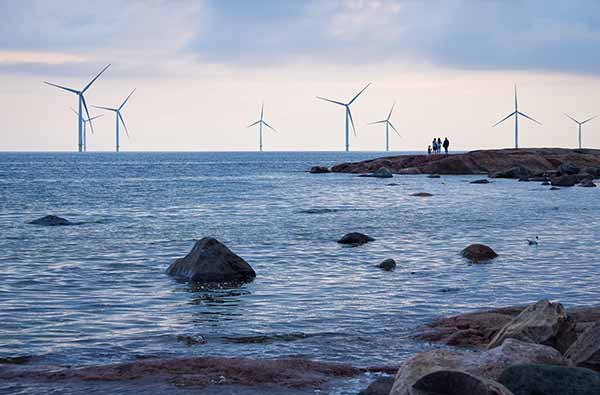
Projects to install wind power capacity increased substantially in the latter part of this year, with the larger share of new wind projects being offshore.
A report by Fitch Solutions said wind power grew by 100 gigawatts, with the offshore wind sector being valued at just over $300 billion compared with onshore — valued at less than half that amount.
North America and Europe are the leaders with regard to wind power projects, as countries seek ways to cut their reliance on fossil fuels that cause climate change.
Europe currently leads the way in installed wind capacity with 190 gigawatts, while the U.S. has plans to install more than 30 gigawatts to its existing offshore wind capacity over the rest of the decade.
Meanwhile, Asia is rolling out projects that will add more than 300 gigawatts to installed wind capacity worldwide by 2030.
The Fitch Report also noted that almost three-quarters of all renewable energy projects planned for the next 10 years are either wind or solar projects.
ExxonMobil Aiming for Permian Operations to Be Net Zero
ExxonMobil announced what analysts described as its first concrete or quantifiable commitment to cut greenhouse gas emissions, by promising to cut emissions from its highly productive Permian Basin operations.
The company says it hopes to make its Permian fields net zero by 2030 with regard to its own operations there, and the indirect emissions linked to electricity it purchases to run the operations.
Parts of the basin lie in New Mexico and Texas, and ExxonMobil’s fields there account for less than 15% of its total annual oil and gas production.
The company also recently announced that it would allocate $15 billion to find further solutions to greenhouse gas emissions.
Investments in wind, solar, and other forms of renewable energy are part of the plan to achieve the net-zero goal the company has set.
However, analysts point out that its investments in renewables are designed to support its continuing exploitation of fossil fuels, unlike other big oil companies that are investing in green energy as part of a planned energy transition.
Authorities in New Mexico, where part of ExxonMobil’s Permian operations lie, have been progressively imposing tighter regulations on the oil and gas industry, including better methane leak detection and cessation of the practice of flaring.
ExxonMobil said it expects that flaring will be down 75% compared to its 2019 levels by the end of this year and the methane intensity of its operations would fall by half. The company is hiring a non-profit to certify its claims about reductions in emissions.
The company has no plans that focus on reducing emissions from consumer use of its products.
Plains Seeks to Restart California Pipeline Involved in Major Spill
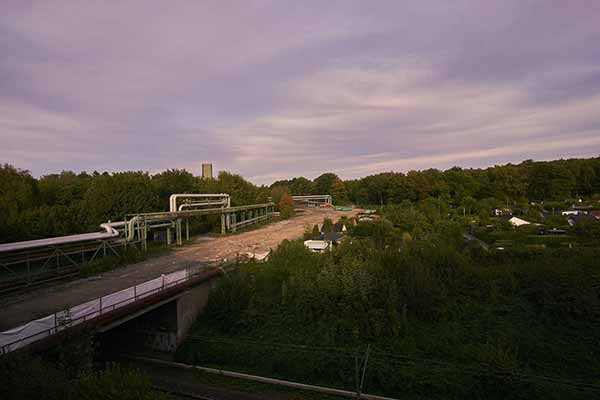
Plains All American Pipeline has filed documents with Santa Barbara County seeking permission to restart an oil pipeline running along the county’s coast, six years after acknowledging responsibility for a major environmental disaster in the area.
County officials are reviewing the company’s request, with one official pointing out the benefit in terms of jobs created. The fact that Plains intends to build a new pipeline and not just repair the old ones is also a good sign, the official said.
California’s fossil fuel industry supports nearly 375,000 jobs in the state, either directly or indirectly.
Nevertheless, environmentalists and others are opposed to the proposal, pointing to the possibility of future spills and the need for California to live up to its commitments to make the energy transition, including phasing out the use of gasoline-powered vehicles by 2035.
The company stands to transport as much as $1 billion in oil annually through the pipeline if it resumes operation, based on its own estimates.
It says it can move the oil safely, having transported nearly 100 billion gallons last year. A Plains spokesman insisted the company intended to ensure its operations are conducted safely.
However, some ranch and vineyard owners have launched a class action lawsuit against the pipeline because the proposed new Plains pipeline will traverse their properties without their consent.
At the same time, others who are opposed point to the fact that the area has a high risk of earthquakes since there are several active fault lines running through it, which increases the potential for pipelines to be damaged by tremors.
Plains was fined $3 million for the 2015 spill that was considered the worst in the area in a quarter of a century. The spill released 140,000 gallons of oil into the ocean and onto the beach. Cleanup of the spill cost as much as $100 million.
South African Activists Lose Case Against Shell
A South African court has ruled that environmental activists failed to provide compelling evidence to prove that seismic explorations Shell aims to conduct in that country’s waters will cause substantial environmental harm.
The South African activists had sought to have the court halt Shell’s plans to conduct seismic exploration for oil in a pristine area known as the Wild Coast on the eastern coastline. They said the blasting with air guns to map oil and gas reserves would cause severe distress to marine life in the area.
Local fishermen also are worried that they’ll be unable to carry out their livelihoods during the four or five months of the seismic survey in the area.
In ruling against the environmental activists, the court said that Shell had already invested millions in the project and the evidence presented against Shell was not sufficiently strong enough to warrant the company losing that investment.
Opinion writer: Jewel Fraser
The opinions, beliefs, and viewpoints expressed by the various authors do not necessarily reflect the opinions, beliefs, or viewpoints of Interactive Energy Group, LLC (IEG) or its parent companies or affiliates and may have been created by a third party contracted by IEG. Any content provided by the bloggers or authors are of their opinion and are not intended to malign any individual, organization, company, group, or anyone or anything.
Brought to you by energysavings.com
All images licensed from Adobe Stock.
Featured image: