

Using hybrid breakthrough ironmaking technology, SSAB successfully makes fossil-fuel-free steel. In the U.S., photovoltaic (PV) shipments soared to record numbers in 2020. Helix Power seeks investors for patented short-term energy storage development. Vermont launches an incentive program for ground-source heat pumps, and California legislators address solar property tax exemption.
Swedes Use Hydrogen Instead of Coal to Produce Fossil-Free Steel
Sweden’s SSAB — a Swedish consortium owned by the steelmaker Vattenfall, a state-owned utility, and mining company LKAB — tested fossil-fuel-free steel production on Monday, Aug. 31, 2021. Using Hydrogen Breakthrough Ironmaking Technology (HYBRIT), the test successfully used a hydrogen-powered hybrid process to produce carbon-emission-free steel for the Volvo Group. Volvo intends the steel for its truck production line.
SSAB says substituting hydrogen and zero-carbon electricity for coking coal and the fossil fuels traditionally used in steelmaking will reduce carbon emissions. As a result, the firm aims to have fossil-free steel on the market by 2026, even though commercial production could take longer.
Martin Lindqvist, President and CEO of SSAB, said, “The first fossil-free steel in the world is not only a breakthrough for SSAB, it represents proof that it’s possible to make the transition and significantly reduce the global carbon footprint of the steel industry. We hope that this will inspire others to also want to speed up the green transition.”
Several European, American and Canadian steel companies are also exploring ways to decarbonize steel production in preparation for a projected drastic increase in demand. SSAB company executives aggressively pursued green steel production in anticipation of Sweden’s 2045 carbon neutrality deadline.
The steel industry is responsible for approximately 5-8% of global carbon dioxide emissions and around 10-15% of its total coal demand. However, due to increasing expenses because of environmental regulations, company officials expect prices for fossil-free steel to come down to competitive levels.
Policy changes aside, experts believe it will take years to bring the price of low- or zero-carbon steel production down enough to compete with traditional steel. In Europe, consultants at McKinsey speculated that purely hydrogen-based steel production will become cost-competitive between 2030 and 2040.
The Nation’s Solar PV Shipments Break Record in 2020, Despite Pandemic
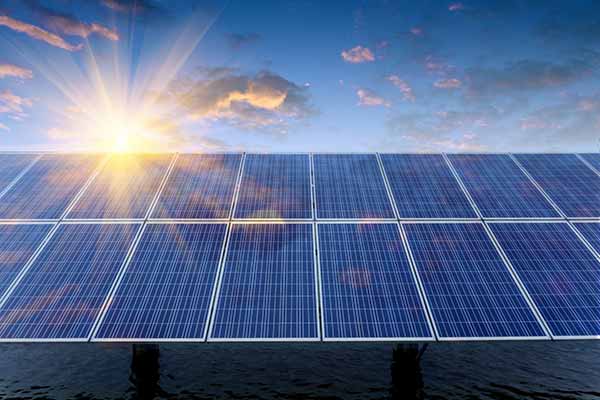
U.S. shipments of solar photovoltaic modules hit a record 21.8 million peak kilowatts in 2020, overcoming the global pressure of the coronavirus pandemic. That figure includes imports, exports, and domestically produced modules.
Per new data released by the Energy Information Administration (EIA), U.S. solar PV shipments increased by 33% over 2019, increasing 5.4 million peak kW.
“Demand for residential solar installations increased in 2020 in part because people were spending more time at home, which in turn resulted in an increased interest in home improvement,” the EIA report notes.
Other reasons included lowered costs for solar systems as well as expiring tax credits aimed at photovoltaic systems.
The Solar Energy Industries Association (SEIA) reported that the solar market set a quarterly installation record in 2020, with more than 8 GWdc (gigawatts direct current) of solar PV.
Utility-scale projects rushed to meet the anticipated reduction in the investment tax credit rate (ITC). As a result, the ITC rate fell to 22% at the end of 2020. Many expect the $3.5 trillion budget reconciliation process before Congress to include an extension to the ITC.
Since 2010, the steady decline in the cost of solar PV modules has fueled growth in the national market. Over the 10 years ending in 2020, the average value of solar shipments decreased to $0.38 from $1.96 per peak watt in 2010.
New Solar Manufacturing Plants Opened in August
Also, this week, Silfab Solar announced it doubled its U.S. manufacturing capacity by bringing a new plant online in Washington. The company’s Burlington, WA, highly automated facility — 24 miles north of its Bellingham PV module assembly plant — will produce the Silfab Prime 370wt series module.
The company manufactures back-contact and mono PERC PV modules for residential and commercial markets in North America.
In addition, Heliene, a Canadian-based solar panel module manufacturer, launched a new facility in Riviera Beach, Florida, in August, its third in North America. Heliene takes over the facility previously occupied by SolarTech Universal, which closed more than a year ago. The company will produce its 66-cell HJT 370W module at the Florida plant.
Renewables Falling Short of 2030 Goal Despite Continued Growth
The SUN DAY Campaign reviewed data recently released by the Federal Energy Regulatory Commission (FERC) and the EIA. It reported that renewable energy sources (biomass, geothermal, hydropower, solar, and wind power) dominated new U.S. electrical generating capacity additions, increasing their contribution to the country’s electrical production in the first half of 2021. However, despite the continuing growth, we may still fall short of Biden’s 2030 goal for clean energy.
FERC’s latest monthly “Energy Infrastructure Update” reported renewable energy sources made up 91.6% — 10,940 megawatts (MW) — of the 11,940 MW of new capacity added in the first half of 2021. Wind added 5,617 MW, while solar was 5,279 MW. In June 2021, wind and solar were the only sources of added capacity in June 2021.
Massachusetts Startup Relies on Crowdfunding for Development of Short-Term Energy Storage Technology
Helix Power Corporation is seeking seed capital investors to further develop its patented flywheel, short-term energy storage technology. The Massachusetts-based startup set a goal of at least $500,000 and up to $1.07 million to build and market the technology.
For a minimum investment of $1,000, investor benefits include 5% interest over 24 months. In addition, for individuals investing less than $75,000, their securities will be held in a custodial trust that will act as a single shareholder of record.
Popular for solar PV development and build-out, crowdfunding can also be used for other distributed energy resources, including storage.
With five years of development behind the technology, Helix Power intends to produce scalable 1-megawatt units with a vacuum-sealed carbon fiber rotor and frictionless magnetic bearings. As a result, an estimated 95% of the stored energy can be returned to the source.
Similar to batteries, the charge/discharge response time is approximately 90 seconds. The company estimates that the technology could deliver more than 1 million cycles over a 20-year-plus life span.
The technology, designed primarily for grid balancing, includes other applications such as regenerative braking in transit systems, seaport cranes, and microgrid storage.
Helix Power projects a market size of more than 75,000 units, with production ramping up after 2024. The company estimates it could reach 1,000 units with $1 billion in annual sales by 2035.
Previous funders included the New York State Energy Research & Development Authority and the U.S. Department of Energy’s Sandia National Laboratories.
With building and testing slated for Q1 2022, the company is procuring the full-scale prototype flywheel system hardware, followed by a second prototype in Q4 2022 and commercialization in Q4 2023.
Vermont Digs in on Incentives to Boost Geothermal Heat Pumps

This summer, Vermont launched an initiative to promote its ambitious effort to meet its decarbonization goals. The state intends to develop a small market for ground-source heat pumps (also known as geothermal heat pump systems).
Depending on where customers live, the new incentives toward new geothermal systems in Vermont offer as much as $2,100 per ton of heating capacity. The state’s distribution utilities and Efficiency Vermont are offering these incentives.
In addition, Efficiency Vermont’s statewide rebate program offers $300 per ton toward projects in conjunction with participating utilities. Likewise, a 26% federal tax credit can also help lower the cost.
Ground-source heat pumps generally use less electricity than air-source. As a result, they are more efficient to use and have lower operating costs than air-source. In Vermont’s cold winters, that’s a plus for homeowners.
The challenge for Vermont is that even with generous new incentives for homeowners, installation is expensive. Costs can run from $25,000 to $40,000.
Although ground-source heating isn’t a new technology, the market is still a fraction of the market for air-source heat pumps. Vermont’s incentives for ground-source are higher than for other heat pump technologies, partly because increased demand for other systems has decreased the use of rebates.
Estimates vary, but before incentives, the total cost is $4,000 for a ductless mini-split heat pump and approximately $10,000 for a centrally ducted one. Ground-source heat pumps start at about $25,000. The comparison isn’t apples-to-apples: Air-source systems are typically supplementary, and ground-source systems are whole-home heating.
A federal tax credit that is specifically for ground source heating pumps could shave off about 25% of the bill. Likewise, incentives from the state could lower the cost even more, bringing the bottom line to around $20,000.
In recent years, many New England states have been moving more aggressively toward decarbonization. For example, Massachusetts law requires net-zero carbon emissions by 2050. Last year, Vermont also codified its emissions goals, while Maine aims to have 115,000 homes using whole-home heat pumps by 2030. The states’ efforts toward decarbonization are bound to require options such as ground-source heat pumps.
California Legislature Passes Fix for Solar Project Financing
This week California lawmakers extended a property tax exemption for solar projects that change ownership through the “partnership flip” financing structure.
Legislative analysts said Senate Bill 267 aligns the state’s property tax system with the federal government’s renewable energy tax credits, currently at 26% for projects begun this year or next.
The property tax exclusion applies to homeowners who install residential solar energy systems or businesses that generate excess solar energy for sale to investor-owned or municipal utilities.
Rick Umoff, senior director and counsel for SEIA said, “This much-needed fix will help to stabilize the California solar market and attract new solar and storage development to help meet our clean energy and reliability needs.”
Several solar and clean energy proponents supported the bill.
Opinion writer: Lynette Garet
The opinions, beliefs, and viewpoints expressed by the various authors do not necessarily reflect the opinions, beliefs, or viewpoints of Interactive Energy Group, LLC (IEG) or its parent companies or affiliates and may have been created by a third party contracted by IEG. Any content provided by the bloggers or authors are of their opinion and are not intended to malign any individual, organization, company, group, or anyone or anything.
Brought to you by energysavings.com
All images licensed from Adobe Stock.
Featured image: