
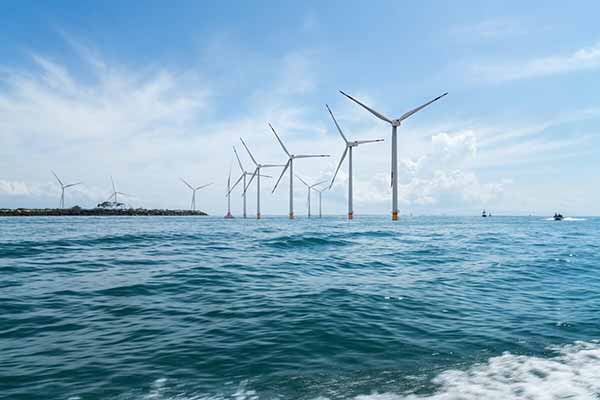
U.K. Prime Minister Boris Johnson is pursuing his goal to reduce carbon emissions from the country’s housing sector by offering millions of pounds in subsidies to offshore wind developers to supply most of the country’s residential electricity. Meanwhile, the U.S. Department of Energy has highlighted the major role solar energy should be playing and states most of the country’s electricity needs can be met by solar in due course. However, analysts say this would require billions in investments and policy changes.
U.K. Renewable Energy Firms to Get Major Subsidies
The UK government is allocating more than 200 million pounds in subsidies to help renewable energy companies, with the lion’s share going to those involved in offshore wind production.
The remainder of the funds will go to other technologies, including onshore wind and solar farms and those using tidal power.
The government hopes its support will encourage as much as 20 billion pounds of additional financing from private investors.
Prime Minister Boris Johnson has said he wants to have 40 gigawatts (GW) of offshore wind power by 2030 to help reduce carbon emissions from housing; a plan that would contribute toward the U.K. meeting its climate commitments under the Paris Agreement.
The U.K.’s housing sector is said to contribute about 14% of that country’s annual emissions because of poor insulation and outdated gas heaters.
The subsidies being offered to onshore wind and solar farms are intended to support the development of 5 GW of renewable energy.
The funds will be allocated to firms through a competitive auction process, with the lowest bidder being given a guaranteed price for the energy they produce.
The new offshore wind projects funded by this means are expected to provide enough electricity to power 8 million homes in the U.K.
U.S. Focuses on Scaling up Solar Power
The Biden administration is placing its hopes in solar power to provide sufficient renewable energy to decarbonize the country’s electricity grid by 2050.
A recent report from the Department of Energy (DOE) suggests that solar energy could provide 1,600 GW by 2050, enough to meet all current power needs for homes and businesses.
The DOE study also states that sufficient solar power can be produced to meet the electricity
needs of all homes in the U.S. by 2035. One gigawatt provides enough power for around 750,000 homes.
However, to meet that goal, the U.S. would need to double and eventually quadruple its current rate of solar energy installations. Though such a shift would save lives and safeguard health, it would also require major policy changes and billions of dollars of investment from the government.
At the same time, at least on energy research consultancy expects the cost of solar power to rise for the first time in many years, as problems mount with regard to materials and imports for solar installations.
In the wake of Hurricane Ida, President Biden said it is imperative to stop climate change because everyone is feeling the effects of the climate crisis.
Other forms of clean energy, such as wind, are expected to make up for any shortfall from solar. Solar power would be able to provide nearly half of the electricity used in the country by 2050, as well as provide as many as 1.5 million jobs.
Russia Says Nord Stream 2 Ready to Begin Operations
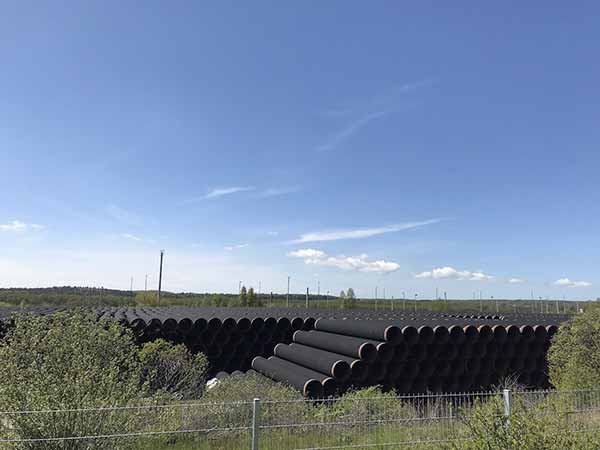
Russia says the controversial Nord Stream 2 gas pipeline was completed on September 10 and may begin transporting gas to Germany by October 1.
However, it may take another four months before certification by the German regulator is complete.
The pipeline runs 760 miles under the Baltic Sea from Russia to Germany and was built at a cost of $11 billion. Its construction has been strongly opposed by Ukraine, which stands to lose transit fees normally paid to it when gas pipelines run through its territory.
At the same time, the U.S. views it as a political threat because it fears Europe will become more dependent on Russia for gas. German environmental groups have also expressed opposition because of its potential contribution to climate change.
Nevertheless, the project by Russian energy firm Gazprom was heavily financed by European companies.
The Nord Stream 2 still faces several hurdles. It must be pre-commissioned, ensuring there are no leaks or other defects, and it must receive certification that it is fit for purpose. Further complicating matters, both companies that had originally been contracted to carry out the pre-commissioning work and the certification withdrew from the project after threats of sanctions from the U.S.
After pre-commissioning and certification, it must finally be certified by the German regulators as being in compliance with EU laws.
China Seeks to Boost Renewable Energy Storage
China has set its sights on quadrupling its renewable energy supply so as to meet its net-zero emissions target for 2060. It is encouraging suppliers to place greater emphasis on storage capacity.
To meet the midterm goal of peak emissions by 2030, China must produce more than 1,200 GW from solar and wind within this decade.
However, the fluctuating nature of renewable energy supplies has led China to prioritize storage capacity for renewable energy. The country has set itself a target of 200 GW of energy storage by 2030, with much of it in the form of pumped energy storage.
Pumped energy storage is achieved by storing water at a higher elevation and then releasing it at a later date in the form of hydropower when other sources of renewable energy fall short.
Renewable energy suppliers who have acquired at least 20% storage capacity will receive preferential treatment when it comes to having their service connected to the national grid.
China’s tariff model for electricity is designed to encourage greater investment in storage capacity by renewable energy firms.
EV Makers Object to Tax Breaks Favoring Unionized Plants
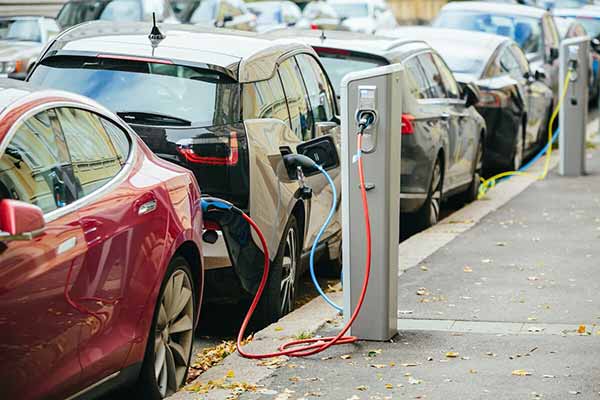
A bill proposed by U.S. House Representatives would give an additional $4,500 in tax breaks to Americans who buy their electric vehicles from companies whose workers are unionized. Detroit’s automakers, whose workers are unionized, would benefit the most.
Other EV manufacturers, including Toyota, that have opposed unionization were severely critical of the bill, saying it discriminates “against American autoworkers based on their choice not to unionize.”
The additional tax credit would come at a cost of around $33 billion over a 10-year period and supports President Joe Biden’s plan for higher EV sales and good-paying union jobs.
Buyers of EVs from unionized U.S. automakers may receive up to $12,500 in tax breaks, whereas those who buy from foreign EV makers that are not unionized, like Toyota and Tesla, can receive around $8,000 in tax credits.
Only vehicles under $60,000 are eligible for the credits, however.
The United Auto Workers union said the bill will support well-paying jobs in the U.S.
Major Carbon Capture Project Announced
A carbon capture and utilization storage (CCUS) project will soon be launched in North Dakota at the Great Plains Synfuels Plant.
The project has been described as the largest coal-based carbon capture project in the world and is expected to store 3.5 million tons of carbon dioxide annually underground. It will involve transmitting the carbon dioxide created during the synfuels plant’s operations to permanent storage underground.
Illinois Votes for Carbon-Free Grid
Eleven Republican senators joined with Democrats in voting for measures that would effectively shut down Illinois’ privately run oil- and coal-fired power plants or require them to eliminate carbon emissions within the next 25 years. Coal plants run by the state would also be required to significantly reduce their emissions under the proposed legislation.
Power plants would be allowed to use carbon capture technologies as a means toward cutting emissions.
The vote supports Illinois’ electric grid becoming carbon-free by 2045. As a consequence, monthly electricity rates will go up by a small percentage for commercial and residential consumers. Much of those increased revenues will be spent on maintaining the state’s nuclear power plants as well as wind and solar projects.
Opinion writer: Jewel Fraser
The opinions, beliefs, and viewpoints expressed by the various authors do not necessarily reflect the opinions, beliefs, or viewpoints of Interactive Energy Group, LLC (IEG) or its parent companies or affiliates and may have been created by a third party contracted by IEG. Any content provided by the bloggers or authors are of their opinion and are not intended to malign any individual, organization, company, group, or anyone or anything.
Brought to you by energysavings.com
All images licensed from Adobe Stock.
Featured image: