
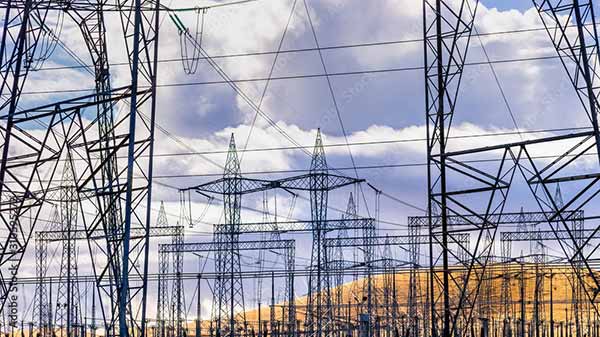
The U.S. House passed the Biden administration’s $1 trillion infrastructure bill that includes billions for building a more reliable power grid and promoting electric vehicle use. The bill received support from some Republican House representatives. In Glasgow, the global climate change conference that took place welcomed more representatives of the oil and gas industry than that from any single country. Activists are calling for oil and gas industry delegates to be banned from such meetings.
Infrastructure Bill Will Soon Be Law
President Joe Biden’s infrastructure bill, which earmarks billions for electric vehicles and the power grid, was successfully passed in the House on Friday, when 13 Republicans broke with their party to vote in support of it.
This vote paves the way for the bill to be signed into law, since it had already been passed in the Senate in August, again with bipartisan support, where the vote was 69-30.
That means $1 trillion will be made available for infrastructure investments when the President signs it into law soon. The Biden administration said 2 million jobs will also be created annually because of the bill.
Among the infrastructure that will receive funding is the nation’s power grid. An allocation of $65 billion has been earmarked to make the grid more resilient while adding clean energy sources of electricity to it.
Nearly $13 billion will be spent on installing electric vehicle charging stations and replacing diesel-powered school buses with electric or hybrid ones. The bill also provides $39 billion to be spent on public transportation, some of which will be used to buy zero-emission buses.
Another $25 billion is expected to be spent on improving or upgrading aging airport infrastructure, including their runways and air traffic control towers. Some $110 billion will be spent on repairing bridges and roads.
The bill also allocates spending a total of $21 billion on environmental cleanup projects, including work on abandoned mines and orphaned wells.
The Congressional Budget Office has calculated that the infrastructure bill will lead to a budget deficit of more than $250 billion over the next ten years. Money for the bill’s programs will come from unspent COVID-19 aid relief funds, among other measures.
However, some progressive Democrats who voted against the bill said it did not go far enough to address climate change. On the other hand, supporters of the bill say the companion Build Back Better bill, which will spend an additional almost $2 trillion over 10 years, will address some of those climate change concerns more comprehensively.
Supporters say the infrastructure bill paves the way for the Build Back bill.
Fossil Fuel Interests Flock to COP26
Fossil fuel representatives made up the largest single group in attendance at the COP26 conference, according to an analysis conducted by environmental activist group Global Witness.
The group shared its report showing that 500 corporate attendees who were granted accreditation to the COP26 were either directly associated with companies like Shell and BP, or belonged to groups that lobby on behalf of the fossil fuel industry.
By way of contrast, the fossil fuel delegates outnumbered the representatives from each of the eight of the countries that have suffered the most from climate-related disasters.
More than 100 fossil fuel companies were represented, as were 30 of the industry’s trade associations. One of these was the International Emissions Trading Association (IETA) that had 103 delegates, including people who work for its members like BP.
Meanwhile, the two countries with the largest delegations were Brazil with 479 and Turkey with 376 representatives. Canada sent a little over 270 representatives, whereas the UK sent 230 delegates.
Environmental activists are urging that delegations representing fossil fuel interests be banned from meetings like the COP26. They say until they are banned, no real progress will be made on the issue of emissions reductions. Activists point to the history of tobacco smoking where, they said, progress to ban smoking occurred only after tobacco companies were banned from World Health Organization meetings
But the IETA insists that the industry must contribute to the search for solutions because emissions reduction will be a gradual process and the end of burning of fossil fuels will not happen overnight.
The UN’s climate agency said it did not provide conference accreditation to the fossil fuel industry delegates. It said the delegates were chosen by countries that attended the conference, and the agency had no control over whom the countries chose to send.
Fossil fuel producers are planning to increase production over the next 10 years, with production that is incompatible with a goal of limiting global warming to 1.5 degrees Celsius or even 2 degrees Celsius above pre-Industrial levels.
Netherlands Joins Agreement to Stop Fossil Fuel Financing

The Netherlands has announced it will join more than 20 other countries that made a commitment during the first week of the COP26, in Glasgow, to end financing of overseas fossil fuel projects.
The countries have promised to follow through on this commitment by the end of next year. The Netherlands spends around over 1 billion euros on average on overseas fossil fuel projects.
However, the government said that COP26 was the best time to take the step of ending such support.
The European Investment Bank, the Dutch development bank known as the FMO, Canada, the U.K., the U.S., and Finland have likewise agreed to cease funding overseas projects in coal, oil, and gas.
It is hoped that the funds will be spent on green energy projects instead, with about $19 billion becoming available annually from funds diverted from fossil fuels.
Several Dutch companies are currently involved in major international oil and gas projects, backed by guarantees from the Dutch state.
Maine Votes Against Quebec Hydropower Project
A vote by Maine residents to reject a transmission corridor that would carry hydropower from Canada through their forests must now be certified by the state government within 30 days.
Maine residents voted 60-40 in a referendum against allowing construction of the transmission corridor. Once the vote is certified by the government, the project will only be able to continue once two-thirds of the legislature vote to permit its continuation.
The proposed corridor would carry hydropower 233 kilometers from a hydropower plant in Quebec, Canada, to connect with line bound for Massachusetts.
Known as the New England Clean Energy Connect (NECEC), the project was expected to generate billions in revenue for the Canadian hydropower company while providing enough electricity for 1 million homes in Massachusetts. It was also expected to cut greenhouse gas emissions equivalent to that produced by 700,000 cars annually.
Quebec’s premier said he still believes there are options that will allow the project to continue.
The Canadian company also indicated that it would continue construction work while it reviewed the results of the referendum.
The project is a partnership between Central Maine Power and Hydro-Québec that was designed to help drive down emissions in New England and help fight climate change.
UK and India Launch Global Solar Grid Project
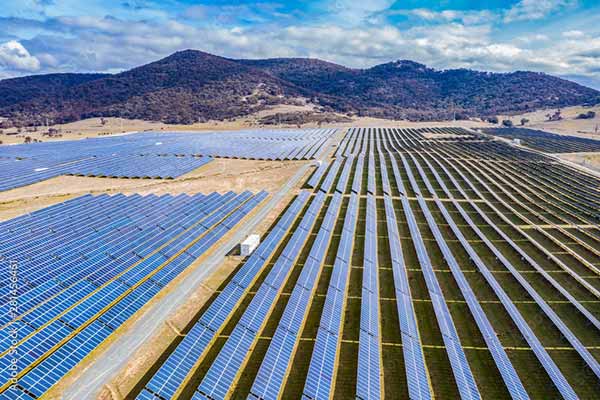
India and the U.K. used the platform of the COP26 in Glasgow to launch their One Sun One World One Grid (GGI-OSOWOG) initiative with the support of U.S. and World Bank officials.
The US Department of Energy said it will be a partner in the initiative, whose steering committee also includes Australia and France.
The plan for the GGI-OSOWOG grid was announced by India’s prime minister in 2018. GGI-OSOWOG is a plan for an intercontinental solar grid connecting 80 countries with transmission lines crossing frontiers that will connect regional and national grids as well as connections to other renewable energy sources.
The World Bank expressed its support, saying that such an intercontinental grid will facilitate greater use of renewables and reduce global reliance on fossil fuels for energy.
The International Solar Alliance overseeing the project is seeking to raise $1 trillion within the next decade to fund the project.
The project is expected to generate green sector jobs and investments while fostering sustainability and mitigating climate change.
UK Energy Firms Shutter
At least two U.K. energy firms have gone out of business over the past few months because the government’s cap on energy prices made their operations unsustainable.
The crisis brought on by skyrocketing gas prices has also affected the country’s food industries, which use CO2 in their manufacturing process. The food manufacturers obtain the CO2 from fertilizer manufacturers that produce it as a byproduct, but fertilizer production has also been severely affected by the increased gas prices.
Opinion writer: Jewel Fraser
The opinions, beliefs, and viewpoints expressed by the various authors do not necessarily reflect the opinions, beliefs, or viewpoints of Interactive Energy Group, LLC (IEG) or its parent companies or affiliates and may have been created by a third party contracted by IEG. Any content provided by the bloggers or authors are of their opinion and are not intended to malign any individual, organization, company, group, or anyone or anything.
Brought to you by energysavings.com
All images licensed from Adobe Stock.
Featured image: